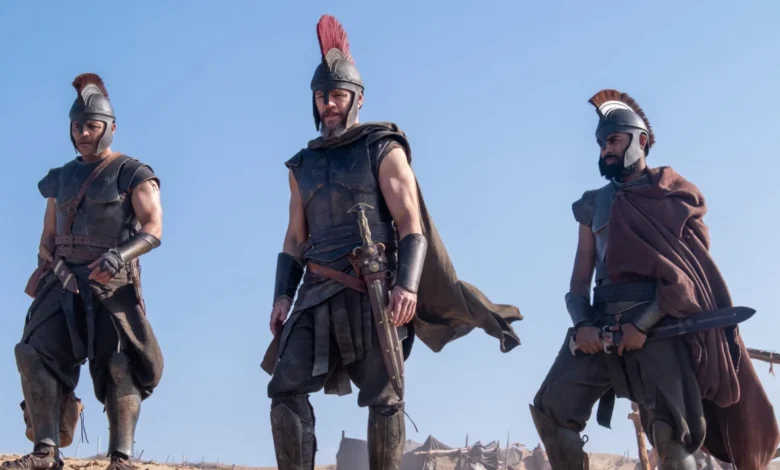
The cinematic interpretation of Homer’s epic, Christopher Nolan’s "The Odyssey," introduces a chilling antagonist that transcends the mythological monsters and divine interventions of the original tale. Beyond the hypnotic allure of sirens, the brute force of the Cyclops, the seductive sorcery of Circe, or the perilous descent into the underworld, the film presents a more insidious threat: the "Sea People." These enigmatic entities, emerging from unknown origins across the Aegean and Ionian Seas, are depicted as an existential menace, far exceeding the might of any single kingdom or warrior, including the formidable King Priam of Troy. As the film culminates, the weathered Odysseus, portrayed by Matt Damon, offers a starkly ominous theory regarding their identity and their role in the impending ruin of the Mycenaean civilization. This narrative innovation is particularly striking, as the Sea People, unlike most elements within Nolan’s rendition, are not products of pure myth but are rooted in tangible historical events, sparking enduring debate among historians and classicists about their causal role in the catastrophic collapse of the Late Bronze Age and the ensuing centuries of darkness in Greece. Their impact undeniably spelled doom for numerous prominent neighbors of the Mycenaeans, with roots tracing back, ironically, to the very conflict that defined the Trojan War.
The Real Sea Peoples and the Collapse of the Bronze Age
During the Late Bronze Age, a period mirroring the setting of "The Odyssey," the city-state of Ugarit stood as a formidable coastal power along the eastern Mediterranean. Situated in present-day Syria, Ugarit was a respected trading partner and ally to the Hittites and Egyptians during the zenith of their New Kingdom empires, and was recognized by the Ancient Greeks during their so-called Age of Heroes. However, Ugarit was among the first to fall victim to the encroaching threat.
A desperate message from the last King of Ugarit, intended for his counterpart in Cyprus, paints a grim picture: "The enemy ships are already here. They have set fire to my towns and done very great damage in my countryside." This poignant plea, discovered by modern archaeologists still in the rubble of the kiln where it was being fired onto a clay tablet, was never delivered. By the time of its discovery, it was too late. The king’s city, left vulnerable after dispatching armies to aid an ally besieged by these seafaring invaders, was sacked and devastated, its history reduced to ruins. Ugarit was never rebuilt.
This account is one of many that historians and archaeologists have meticulously pieced together to unravel the mystery of the Sea Peoples. The term itself was coined by 19th-century French Egyptologists, serving as a collective descriptor for various naval forces and invaders mentioned in Egyptian texts who posed a significant threat to the pharaohs’ armies during the 19th and 20th Dynasties. Ugarit’s fate was far from an isolated incident; numerous other cities succumbed to this onslaught.
Toby Wilkinson, in his seminal work "The Rise and Fall of Ancient Egypt," vividly describes the widespread destruction: "All along the eastern seaboard of the Mediterranean, cities were being sacked and torched, harbors burned and looted, entire nations laid low. While coastal communities had been harried by pirates for decades, this new onslaught was of an entirely different order of magnitude. Most frightening of all, it had come out of the blue, the sighting of enemy ships on the western horizon being the first warning of an impending attack… As Egypt watched from afar, great cities and civilizations were reduced to rubble, and the cultural achievements of centuries went up in smoke."
The fall of Ugarit was a harbinger of greater calamities. The Hittite Empire, a significant rival and occasional ally to both Egypt and the Mycenaean Greeks, was also brought to ruin by these maritime invaders. Urgent diplomatic messages from the Hittite ruler, like those from Ugarit, spoke of battling a sea-borne enemy. Hattusa, the Hittite capital, was utterly decimated, its vital grain stores plundered. Following this destruction, all written historical records from the Hittites abruptly cease, plunging their civilization into obscurity.
The Great Bronze Age Collapse: Cause or Symptom?
Scholarly debate continues to this day regarding whether the Sea Peoples were the direct cause of the Late Bronze Age collapse or merely a symptom of its underlying destabilization. Evidence suggests that the Hittites, for instance, were already grappling with severe drought conditions prior to the invasions. Furthermore, disruptions in trade networks, exacerbated by the sacking of neighboring states by these mysterious Mediterranean ships, could have led to the collapse of economies reliant on international commerce even before cities were set ablaze. If the Sea Peoples themselves were displaced by drought or famine, their migrations could represent a symptom of a broader ecological crisis.
Regardless of the precise causal link, substantial archaeological evidence and Egyptian written records point to invaders from the sea significantly exacerbating or even instigating widespread destruction across the region, including within the Mycenaean city-states immortalized by Homer. By the 12th century BCE, the Mycenaeans had developed a sophisticated written language and a network of kingdoms that rivaled the Minoans on Crete and extended their influence into the Near East, possibly encompassing the city of Troy. However, like their neighbors, they too experienced invasion, economic ruin, and a collapse so profound that Greece entered a three-century period of illiteracy and regression, now known as the "Greek Dark Ages."
Intriguingly, our understanding of this catastrophic period is significantly informed by the resilience of one empire that these invaders failed to conquer: Egypt. Inscriptions on the walls of Medinet Habu, a mortuary temple dedicated to Ramses III near Luxor, and within the Karnak complex in ancient Thebes, detail multiple attempts by various "peoples from the sea" to invade Egypt, including incursions along the Nile Delta in the 12th century BCE. The Egyptians, however, masterfully lured the invaders’ formidable naval fleet into the narrow confines of the Delta, where they were decimated by archers and capsized by grappling hooks, resulting in mass drownings. The survivors were subsequently enslaved.
The Elusive Origins of the Sea Peoples
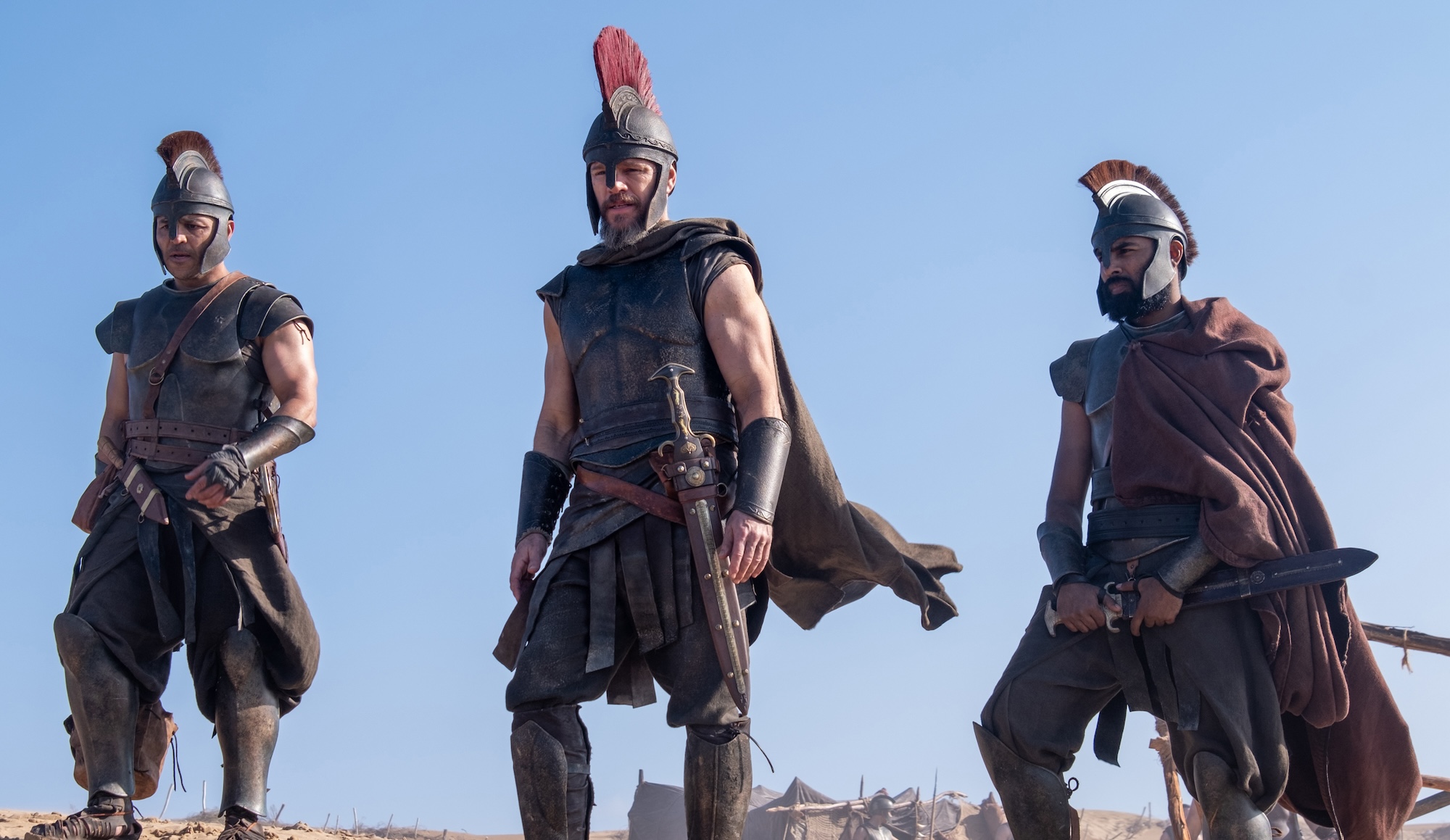
The designation "Sea Peoples," a plural term, is a modern construct attributed to 19th-century Egyptologists who used it to categorize a diverse array of tribes and invaders, some known and others mysterious, active during the 12th and even 13th centuries BCE. Ancient Egyptian texts referred to them more generally as "of/from the sea." Among these groups were the Peleset, often considered the precursors to the Philistines who later settled in Canaan. Other identified groups include the Sherden, likely originating from Sardinia and parts of Greece, and the Denyen, potentially Aegean Greeks. Evidence also suggests that some of these seafaring nomads hailed from the Anatolian peninsula (modern-day Turkey), and others from the Etruscan civilization in Bronze Age Italy.
The precise origin, or origins, of the peoples collectively identified as "people of the sea" by the sole surviving major civilization of the era—Egypt—remains a profound historical enigma. However, it is known that the entire Mediterranean basin experienced nearly a century of intermittent drought and famine during the 12th century BCE. A prevailing theory posits that many of these Sea Peoples were inhabitants of distant cultures, possibly Etruscans or groups further west in Europe, who embarked on eastward migrations in search of fertile lands, resorting to force to acquire sustenance and wealth. Wilkinson notes that they traveled with women, children, and ox-drawn carts, indicating a large-scale migration. This influx may have severely destabilized the already precarious economies of cultures like the Mycenaean Greeks, whose reliance on trade was already strained by the prevailing droughts.
This theory gains traction from a 2019 genetic study of skeletons unearthed in the Philistine city of Ashkelon. The study revealed the presence of common European DNA in the Levant, suggesting a significant exodus from Southern Europe around or during the Bronze Age collapse.
"We Are the Sea People": Nolan’s Thematic Interpretation
While the historical Sea Peoples represent a profound enigma and a catalyst for widespread destruction, their inclusion in Christopher Nolan’s "The Odyssey" appears to serve a distinct thematic purpose. Throughout the film, the erosion of fundamental societal values, such as the sacred rights of guests and hosts, is a recurring motif in the post-Trojan War era. The Cyclops embodies a brutal violation of hospitality, while the suitors vying for Penelope’s hand and Odysseus’s throne in Ithaca exploit the traditional Greek recognition of guest-host obligations, known in the film as "Zeus’s law."
As the narrative unfolds, the film depicts a pervasive collapse of civic responsibility and respect for divine and social laws, alongside a breakdown in human empathy. Early in the story, Telemachus dismisses his mother’s concerns about the potential ruin of their home and civilization, confident in the strength and grandeur of their established order. Yet, it is within this very stronghold that Odysseus is forced to shed the blood of pretenders who, while consuming his family’s bounty, would deny sustenance to a starving beggar upon his disguised return.
Odysseus ultimately theorizes to Penelope that the pervasive tales of raiders from the sea are not of foreign invaders but are, in fact, the broken and brutalized survivors of the Trojan War returning home, stripped of their civility and humanity. Compounding this horror, the film suggests a new generation is being shaped by the very depravity Odysseus himself inflicted upon the Trojans, using a gift of peace as a pretext for mass rape and slaughter. The film boldly implies, "We are the Sea People."
This interpretation artfully connects with scholarly debates concerning the origins of the Sea Peoples, including theories that some of the tribes identified by the Egyptians were of Greek descent. Furthermore, while the historical existence of Troy is widely accepted, some scholars speculate that the city-state, a vassal of the Hittites, was destroyed by the Sea Peoples. Nolan’s film, however, places this internal conflict at the heart of its narrative.
Ultimately, this thematic exploration underscores Nolan’s broader point: the collapse of civilization often originates from within, stemming from the corruption and erosion of fundamental civility. The character of Antinous, portrayed by Robert Pattinson as the son of a wealthy elite who buys his way out of military service and parades as a warrior while attempting to usurp another man’s wife, epitomizes this decay of civic values.
Despite the compelling internal narrative, as someone who has personally witnessed the grandeur of Ramses III’s Temple at Karnak, the film’s depiction of Odysseus and Penelope fleeing the perceived rot of Mycenaean Greece by sailing westward is somewhat perplexing. If their aim is to escape the ruin wrought by the Sea People’s invasion, a more logical refuge might have been to sail southeast towards the Nile, the only empire that successfully repelled these formidable forces.
"The Odyssey" is currently in theaters.