Jack Quaid Embarks on a Utterly Baffling Yet Intriguing New Journey as a Cosmic Cube in God of War Laufey

Following his pivotal role in thwarting a sociopathic Superhuman’s tyrannical ambitions in the critically acclaimed series The Boys, actor Jack Quaid has embraced a profoundly different, yet equally committed, new role. Quaid is set to lend his distinctive talents to the upcoming PlayStation title, God of War Laufey, taking on the surprising persona of a cosmic cube. PlayStation recently unveiled a behind-the-scenes look at the motion-capture process for the game’s cast, offering a glimpse into the dedication Quaid brings to even the most unconventional characters. This development marks a significant departure from his gritty superhero-adjacent narrative, plunging him into a fantastical realm where his acting prowess will be tested in an entirely new dimension of character embodiment.
The Unveiling of God of War Laufey’s Diverse Cast
PlayStation’s official "Meet the Cast" video for God of War Laufey has generated considerable buzz within the gaming community. The short featurette provided fans with an intimate look at the actors bringing the game’s new and returning characters to life. Among the notable additions is Jack Quaid, whose previous work on The Boys has garnered widespread acclaim for his ability to portray characters grappling with immense pressure and moral ambiguity. His transition to the God of War universe, a franchise renowned for its epic storytelling and complex mythological landscapes, signals an exciting new chapter in his burgeoning career.
The video also confirmed the return of Deborah Ann Woll, a familiar face to fans of the God of War saga. Woll, who previously voiced the character of Faye, will reprise her role and take on a significantly expanded capacity within God of War Laufey. Faye is a legendary warrior whose presence has been a central element in the narrative tapestry of the series, and her deeper integration promises to add substantial emotional and narrative weight to the upcoming installment. Her continued involvement underscores the continuity and depth that PlayStation is aiming to achieve with this new iteration of the beloved franchise.
Introducing Rue: A Sentient Sword Companion
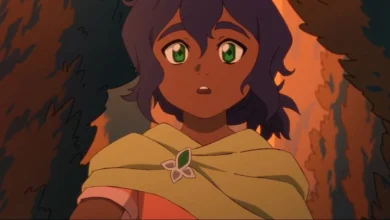
Adding another layer of unique characterization to God of War Laufey is Perlina Lau, who makes her debut in the video game industry with this role. Lau will portray Rue, an unusual and compelling character described as the conscious, "badass" ribbons attached to Faye’s sword. Rue’s primary function appears to be that of a vigilant companion, constantly alerting her wielder to impending dangers. However, the description hints at a more dynamic and action-oriented role once combat commences, leaving players to ponder the exact nature of Rue’s capabilities—whether she "rolls," "whips," "swings," or "flutters." This enigmatic portrayal suggests a character that is not only a passive observer but an active participant in the game’s challenging encounters.
Jack Quaid’s Transformative Role as Phranque, the Cosmic Cube
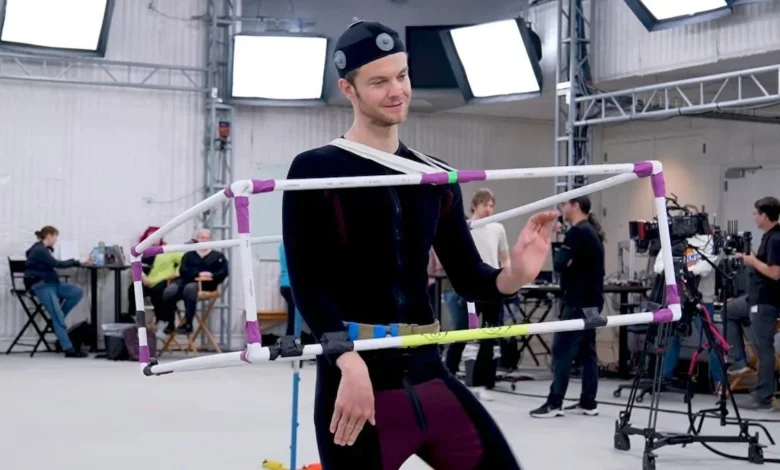
The most striking revelation from the "Meet the Cast" video, and indeed the focus of much of the ensuing discussion, is Jack Quaid’s character: Phranque. The visual of Quaid enveloped in a complex motion-capture suit, surrounded by a peculiar structure of plastic tubing, immediately sparks curiosity. This elaborate setup is necessitated by the character’s unique form. Phranque is not a humanoid figure but a "cosmic cube" originating from a dimension known as "The Everywhen."
Quaid himself shared insights into his character’s motivations and origins. "Phranque is… a cosmic cube that you meet in this world called the Everywhen," he explained. "When you start playing this game, you get the feeling that the Everywhen is in trouble and Phranque will stop at nothing to protect all the living creatures that inhabit this world." This declaration highlights a profound sense of duty and protectiveness, core tenets that resonate with Quaid’s established performance style.

The choice of Quaid for this role appears to be a deliberate and inspired one. His ability to convey genuine empathy and unwavering dedication, demonstrated so effectively as Hughie Campbell in The Boys, directly aligns with Phranque’s role as a guardian of life. The inherent absurdity of portraying a sentient cube, coupled with the character’s deep-seated protective instincts, creates a fascinating juxtaposition that Quaid is uniquely positioned to explore. His willingness to embrace the visual and physical challenges of such a role, even if it means appearing "as silly as possible," speaks volumes about his commitment to his craft and his understanding of character embodiment.
The Significance of Motion Capture in Modern Game Development
The behind-the-scenes footage of Quaid in his motion-capture suit offers a valuable window into the intricate process of modern video game development. Motion capture technology has revolutionized how game characters are created, allowing for more nuanced and lifelike performances. By tracking the movements, expressions, and gestures of actors, developers can translate these performances into digital avatars with unprecedented fidelity.
The specific setup for Quaid’s character—the cube-like structure surrounding him—is a testament to the innovative techniques employed to represent non-traditional character forms. This approach ensures that even abstract entities can possess a tangible presence and dynamic physicality within the game world. The technology not only captures the actor’s physical movements but also serves as a visual guide for the animators, helping them translate abstract concepts into believable on-screen actions. This level of detail and technical sophistication is crucial for immersing players in the rich narratives and fantastical environments that titles like God of War Laufey aim to provide.
Historical Context of the God of War Franchise
The God of War series, developed by Santa Monica Studio and published by Sony Interactive Entertainment, has a storied history dating back to its PlayStation 2 debut in 2005. Initially, the franchise was centered on the Greek mythological pantheon, with Kratos, a Spartan warrior driven by vengeance, as its protagonist. The early games were characterized by their brutal combat, intricate puzzles, and mature themes, quickly establishing a dedicated fanbase and critical acclaim.
A significant evolution occurred with the release of God of War in 2018, which rebooted the franchise by shifting the setting to Norse mythology. This installment introduced a more mature, introspective Kratos and his son, Atreus, embarking on a deeply personal journey. The 2018 game was lauded for its compelling narrative, stunning visuals, and refined gameplay mechanics, earning numerous Game of the Year awards. Its sequel, God of War Ragnarök, released in 2022, continued this narrative, further expanding the lore and character relationships.
God of War Laufey appears to build upon the foundation laid by the 2018 reboot and Ragnarök, introducing new characters and dimensions to the established universe. The mention of "The Everywhen" suggests a potential exploration of multiversal concepts or dimensions beyond the traditional realms of Norse mythology, hinting at an ambitious expansion of the series’ narrative scope. The introduction of characters like Phranque and Rue could indicate a move towards more abstract or allegorical storytelling, pushing the boundaries of what a God of War game can be.
Analyzing the Implications of Character Choices
The casting of Jack Quaid as a cosmic cube in God of War Laufey is more than just a surprising role choice; it’s a strategic decision that speaks to the evolving nature of character development in interactive media. In an era where audiences are increasingly seeking diverse and unconventional narratives, the God of War franchise’s willingness to experiment with character archetypes is a significant indicator of its creative direction.

Phranque’s role as a protector of "all living creatures" suggests a thematic exploration of preservation and responsibility. This could offer a counterpoint to Kratos’s often violent and destructive past, introducing a character whose primary motivation is safeguarding life. The contrast between Phranque’s abstract form and Quaid’s human performance underscores the power of voice acting and motion capture to imbue even the most unconventional beings with relatable emotions and motivations.
The inclusion of Rue, the sentient ribbons, further emphasizes this trend towards unique character designs and functionalities. Such characters not only add visual flair but also contribute to the game’s mechanical and narrative complexity. Their existence challenges traditional notions of character agency and interaction within a game world, potentially leading to novel gameplay experiences.
Broader Impact on the Gaming Industry
The continued innovation in character representation and storytelling within major franchises like God of War has a ripple effect across the entire gaming industry. It encourages other developers to push creative boundaries, explore diverse character concepts, and invest in advanced performance capture technologies. The success of such ventures can lead to a broader acceptance of non-traditional protagonists and narrative structures, enriching the overall landscape of video games.
Furthermore, the casting of popular actors in unique video game roles helps to bridge the gap between film and gaming audiences. It brings attention to the artistry and technical sophistication involved in game development, elevating its status as a legitimate and powerful storytelling medium. For actors like Jack Quaid, venturing into these diverse roles demonstrates a commitment to exploring the full spectrum of performance, proving that compelling characters can be found in any form or dimension.
As God of War Laufey approaches its release, the anticipation surrounding Jack Quaid’s portrayal of Phranque and the game’s other unique characters continues to grow. The "Meet the Cast" video has not only provided a glimpse into the game’s development but has also ignited the imagination of fans, eager to discover how these unconventional characters will weave into the epic tapestry of the God of War saga. The commitment to innovative character design and performance suggests that God of War Laufey is poised to be another landmark title in the celebrated franchise.