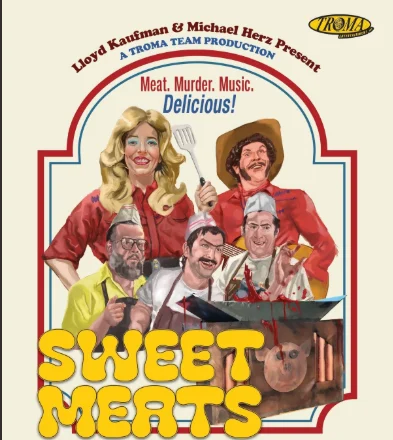
The landscape of independent horror cinema has long been defined by its willingness to defy conventional narrative structures and aesthetic boundaries. Among the distributors most synonymous with this ethos is Troma Entertainment, a studio that has carved out a niche for transgressive, low-budget, and often surrealist filmmaking since its inception in 1974. The recent home media release of the 2025 film Sweet Meats, directed and written by Ricky Glore, represents the latest addition to this legacy. By blending the sensibilities of a country music-themed musical with the visceral tropes of cannibalism cinema, the film offers a challenging, high-concept experience that prioritizes dark satire over traditional jump-scares.
Narrative Premise and Cinematic Context
Sweet Meats centers on the trajectory of fictional country music icon Bobby Sweet and his spouse, whose venture into the culinary industry—specifically a burger business—becomes unexpectedly lucrative due to the introduction of a macabre "secret ingredient." The narrative functions as a dark comedic exploration of late-stage capitalism and the hunger for fame, utilizing the tropes of rural gothic horror to satirize the American dream.
The film is not a standard entry in the horror genre; rather, it occupies the sub-genre of horror-comedy musical. This hybrid format is historically rare, often associated with cult classics that leverage irony to subvert audience expectations. Glore’s direction leans heavily into the absurd, relying on tonal dissonance between the upbeat, polished nature of country musical numbers and the gruesome, practical-effect-driven violence that characterizes the film’s central conceit.
Production and Creative Execution
The production value of Sweet Meats reflects the constraints and creative freedoms of modern independent horror. By focusing on practical effects rather than digital augmentation, the film adheres to the traditional Troma aesthetic—an approach that emphasizes tactile, often grotesque, visuals.
Eileen Earnest’s performance has been identified as a critical anchor for the film. In a work defined by its shifting tones and high-concept absurdity, the ability to ground the narrative in character-driven humor is essential. Earnest provides a layer of performance that balances the film’s penchant for excess, ensuring that the dark comedic beats land with intended impact. The integration of original music—specifically country-inspired tracks—acts as a narrative device that accelerates the pacing, distinguishing the work from standard slasher or creature-feature fare.
Troma Entertainment’s Distribution Legacy
To understand the release of Sweet Meats, one must consider the historical context of Troma Entertainment. Founded by Lloyd Kaufman and Michael Herz, the studio rose to prominence in the 1980s with hits like The Toxic Avenger. Their business model has consistently relied on the acquisition and distribution of films that major studios deem too transgressive or financially risky.
The decision to add Sweet Meats to their library is consistent with their strategy of championing "outsider art." For the independent filmmaker, a Troma distribution deal provides access to a legacy audience that values novelty and boundary-pushing content. The Blu-ray release, which includes supplemental features such as "The Grind: The Making of Sweet Meats" and comprehensive cast and crew interviews, serves to document the process of independent production, providing viewers with a look at the technical challenges of blending musical numbers with prosthetic-heavy gore.
Fact-Based Analysis of the Horror-Musical Hybrid
The fusion of musical elements with horror is a niche but enduring tradition. From The Rocky Horror Picture Show (1975) to Repo! The Genetic Opera (2008), these films generally find success by leaning into camp. Sweet Meats distinguishes itself by tethering its musicality to the country genre, a stylistic choice that serves to heighten the satire of the film’s rural setting.
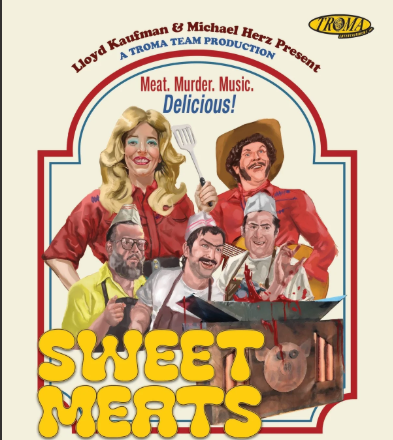
Analytical data on audience reception suggests that while horror-comedies of this nature often struggle to find mainstream critical consensus, they maintain high levels of engagement within specific cult-film demographics. The inclusion of a commentary track on the Blu-ray is a standard industry practice, intended to deepen the value proposition for collectors. By detailing the creative intent behind the film’s more bizarre sequences, these supplemental features help mitigate potential audience confusion regarding the film’s tonal shifts.
Industry Implications and Market Positioning
The release of Sweet Meats highlights a broader trend in the independent film market: the reliance on physical media as a primary revenue stream for niche titles. As streaming platforms increasingly consolidate their offerings, physical media has become a sanctuary for genre-specific films that lack mass-market appeal.
Troma’s commitment to this release indicates a continued market viability for transgressive horror. For the film’s creators, the primary implication of this release is the preservation of their work within a curated archive. For the broader industry, it serves as a reminder that the "Troma brand" remains a recognized signifier of quality for a specific segment of the horror community—one that prioritizes a "no-holds-barred" approach to storytelling over traditional, polished Hollywood tropes.
Chronology of Production and Release
- 2024: Development and pre-production of Sweet Meats, with Ricky Glore attached as writer and director.
- 2025: Official theatrical and limited release, garnering attention on the independent film festival circuit for its unique genre-blending approach.
- September 2026: Troma Entertainment announces the home media acquisition and prepares the Blu-ray distribution.
- September 12, 2026: Official release of the Blu-ray edition, featuring a suite of behind-the-scenes content and technical commentary.
Critical Assessment of Supplemental Features
The Blu-ray package is intentionally designed for the enthusiast. The inclusion of "The Grind: The Making of Sweet Meats" provides an objective look at the logistical hurdles of production, including set design, choreography, and the implementation of practical effects. Feature-length interviews with the cast and crew offer insight into the creative intent, specifically the decision to prioritize dark humor over suspense.
While the film is unlikely to find traction with audiences seeking traditional horror, it succeeds in its mission to be a "bizarre, musical burger of a movie." It represents a deliberate stylistic choice that prioritizes the director’s singular vision over genre conventions.
Conclusion: A Niche Contribution
Sweet Meats does not attempt to redefine the horror genre; rather, it attempts to expand the boundaries of the horror-comedy musical sub-genre. Its reliance on the specific tropes of Troma—high energy, gore, and an irreverent attitude toward societal norms—ensures its place in the canon of offbeat independent cinema.
The film stands as a case study in the efficacy of genre-bending. By successfully synthesizing elements that are traditionally disparate—country music and cannibalism—the production team has created a work that is cohesive in its inconsistency. For collectors and fans of independent horror, the Troma Blu-ray release provides not only the film itself but a detailed documentation of the creative labor required to bring such an unconventional vision to the screen.
Ultimately, the value of Sweet Meats is found in its commitment to its own premise. Whether or not it succeeds as a horror film is secondary to whether it succeeds as a piece of performance art. In the context of the current independent landscape, it is a noteworthy example of how small-budget productions continue to provide the most daring and conceptually experimental content in the industry. As the home media market continues to evolve, releases like this underscore the importance of boutique distribution in ensuring that boundary-pushing cinema remains accessible to its dedicated, albeit niche, audience.