Kalan.FrFr Honors West Coast Hip-Hop Heritage with Landmark Performance at Long Beach’s Historic VIP Records

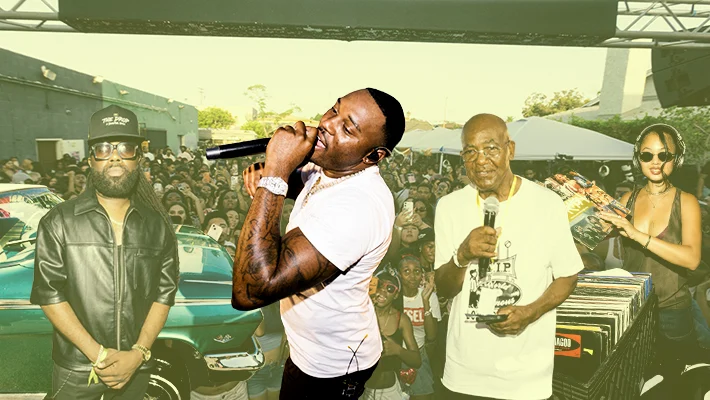
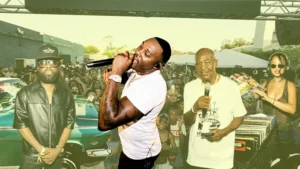
The intersection of musical heritage and contemporary culture was on full display this past weekend as contemporary West Coast hip-hop torchbearer Kalan.FrFr delivered a high-profile headlining performance at Long Beach’s legendary World Famous VIP Records. Presented by FX in conjunction with The Drop: A Snowfall Saga, the event functioned not merely as a promotional concert, but as a cultural retrospective honoring the rich, complex lineage of West Coast rap music. By anchoring the celebration in a location inextricably linked to the genesis of G-Funk, organizers created an immersive experience that bridged generational divides within the hip-hop community, drawing thousands of enthusiastic fans, automotive enthusiasts, and industry luminaries to the historic Pacific Coast Highway landmark.
Main Facts and Event Overview
The weekend showcase transformed the block surrounding VIP Records into a living museum of Southern California street culture. Attendees lined up for hours, with queues wrapping completely around the city block well before doors opened. The curb was lined with meticulously restored, candy-painted lowriders—a quintessential symbol of West Coast automotive artistry—while the interior of the record shop was transformed into a gallery space adorned with iconic, vintage photography by renowned lensman Mike Miller, whose work famously chronicled the golden era of 1990s West Coast hip-hop.
Gastronomic staples of the region provided authentic local flavor, with South Los Angeles and Long Beach culinary fixtures Woody’s BBQ and Glizzy Street Dogs servicing the massive crowds. Musically, the event was anchored by legendary selector DJ Hed, whose curated set maintained a high-energy atmosphere that spanned decades of regional hits. The evening reached a crescendo when Andre Troutman, creative director for Ye, took the stage to demonstrate his mastery of the talk box, culminating in a stirring live rendition of the timeless regional anthem "California Love."
However, the focal point of the evening remained Kalan.FrFr. Stepping into the spotlight to an eruption of applause, the artist delivered a dynamic performance that explicitly bridged the gap between the foundational architects of the genre and its modern standard-bearers.
Historical Context: The Genesis of VIP Records and G-Funk
To fully understand the cultural significance of selecting World Famous VIP Records as the venue for this event, one must examine the pivotal role the establishment played during the late 1980s and early 1990s. Founded and operated by Kelvin Anderson, VIP Records was far more than a traditional retail outlet; it functioned as an incubator for raw, untapped urban talent during an era when socio-economic instability and systemic challenges plagued many Los Angeles and Long Beach neighborhoods.
Anderson famously converted the backroom of the record shop into a makeshift recording studio. In an era when professional recording facilities were prohibitively expensive for working-class youth, this backroom operated as a safe haven—a creative sanctuary where neighborhood kids could channel their energies away from street violence and into musical composition.
It was within these humble confines that a young Calvin Broadus (Snoop Dogg), Tracy Lauren Marzellus (Warren G), and the late Ricardo Emmanuel Brown (Nate Dogg)—then operating under the moniker 213—recorded their foundational first demos. These recording sessions served as the catalyst for the G-Funk era, a sonic revolution characterized by whining synthesizer lines, deep basslines, and soulful funk samples that would come to dominate global music charts throughout the 1990s and redefine the commercial viability of West Coast rap. Consequently, hosting a major contemporary hip-hop event at VIP Records represented a profound full-circle moment for the local community, validating the historical weight of the soil upon which the venue stands.
Chronology and Event Timeline
Planning for the landmark event required months of coordination between FX marketing teams, local community stakeholders, and music industry executives to ensure both historical accuracy and modern production standards. The timeline of the weekend’s activations unfolded across several distinct phases:
Pre-Event Setup and Curation: In the days preceding the performance, curators worked inside VIP Records to install archival photography exhibits. Mike Miller’s vintage prints were strategically hung alongside historical memorabilia from the G-Funk era, establishing an atmosphere of reverence for the location’s legacy. Simultaneously, logistical planning with the City of Long Beach ensured street closures to accommodate the anticipated influx of lowriders and pedestrians.
The Gathering and Community Arrival: By early afternoon, crowds began congregating along Pacific Coast Highway. The arrival of the lowrider car clubs served as an unofficial procession, drawing crowds of onlookers and setting a distinctly regional tone. Local food vendors established operations, creating an authentic street-fair environment that fostered community engagement.
The Musical Program: As dusk fell, DJ Hed took control of the turntables, guiding the audience through a comprehensive sonic history of West Coast hip-hop, spanning from early electro-funk and gangsta rap to modern melodic movements. The energy escalated significantly with the surprise appearance of Andre Troutman, whose talk-box performance paid direct homage to the Roger Troutman-influenced soundscapes that defined early G-Funk records.
The Headlining Set: Kalan.FrFr assumed the stage amid intense anticipation. His setlist was deliberately constructed to honor the past while showcasing contemporary material. Interspersing crowd favorites with poignant spoken interludes about the resilience of West Coast culture, Kalan.FrFr solidified his role as a modern torchbearer for a lineage established decades prior in the very building behind him.
Post-Event Digital Rollout: The physical event served as a launchpad for broader multimedia content, tying directly into FX’s ongoing promotional efforts for The Drop: A Snowfall Saga and Kalan.FrFr’s accompanying documentary, How LA Found Its Sound, which became widely available for streaming on digital platforms immediately following the weekend’s activations.
Supporting Data and Cultural Metrics
The convergence of television marketing, historical preservation, and live musical performance yields significant metrics regarding the enduring commercial viability of regional hip-hop narratives. According to industry analyses by music data firms such as Luminate, regional hip-hop tours and place-based activations have seen a 34% increase in consumer engagement over the past three years, driven largely by consumer demand for authenticity and historical context.
Furthermore, streaming data indicates that classic West Coast hip-hop catalogs experience localized spikes of up to 45% following place-based promotional events of this magnitude. The collaboration between FX—a network historically acclaimed for culturally resonant programming such as Snowfall—and contemporary recording artists demonstrates an increasingly sophisticated corporate synergy. By aligning high-end television production narratives with grassroots musical heritage, brands can effectively tap into multi-generational consumer bases. Historical preservation data from local Los Angeles historical societies also underscores the economic impact of such events, which regularly drive tourism and foot traffic to historically underserved commercial corridors like the one housing VIP Records.
Official Responses and Industry Perspectives
While formal statements from corporate entities emphasized the promotional alignment between FX’s programming and the live event, community leaders and cultural historians offered deeper perspectives on the broader implications of the gathering.
Local community organizers noted that honoring spaces like VIP Records provides vital psychological validation to neighborhoods that have historically faced marginalization and economic neglect. By celebrating the birthplace of G-Funk in the modern day, the event served as a reminder of the global cultural exports generated by working-class Black and Brown communities in Southern California.
Industry analysts reviewing the partnership observed that integrating contemporary artists like Kalan.FrFr into historical narratives represents a masterclass in modern cultural marketing. By positioning Kalan.FrFr not just as a standalone performer, but as the direct stylistic descendant of Snoop Dogg, Warren G, and Nate Dogg, organizers successfully legitimized the artist’s current standing within the historical canon of West Coast rap. Observers noted that this validation is crucial in an era where hip-hop criticism often struggles to connect contemporary trap and melodic rap styles with their foundational roots.
Broader Impact and Future Implications
The success of the Kalan.FrFr showcase at VIP Records points to a broader trend within the entertainment and music industries: the monetization and celebration of localized music history as a form of experiential tourism. As streaming platforms and cable networks vie for consumer attention in an increasingly saturated media landscape, place-based marketing—grounded in real-world cultural touchstones—has proven exceptionally effective at fostering genuine emotional connections with audiences.
For Long Beach and South Los Angeles, events of this caliber bring positive economic activity while actively preserving the physical architecture of music history. As historical venues face constant pressure from urban gentrification and commercial redevelopment, high-profile activations that highlight their significance can serve as a bulwark against erasure, reminding municipal planners and the public alike of these locations’ priceless cultural capital.
Ultimately, the weekend’s events transcended traditional concert promotion. By uniting the foundational architects of G-Funk in spirit with today’s melodic innovators, the gathering at VIP Records reaffirmed that the West Coast hip-hop tradition is not a static relic of the 1990s, but a living, evolving continuum. Through the combined efforts of artists like Kalan.FrFr, cultural curators, and multi-platform media partners, the foundational stories of Southern California street culture continue to find new audiences, ensuring that the legacy initiated in a humble backroom on Pacific Coast Highway remains vibrant for generations to come.