
The story of BAGWORM unfolds with Carroll at a personal nadir. Following a string of unsuccessful romantic encounters and equally fruitless professional endeavors, he retreats to his dilapidated home. It is within this setting of decay and despair that a new and potentially life-threatening peril emerges. The simple act of stepping on a rusty nail marks a pivotal turning point, initiating a descent into a world that grows increasingly hostile and hallucinogenic. As Carroll grapples with the escalating symptoms, the specter of tetanus looms large, transforming his physical ailment into a psychological and existential crisis. The film artfully blurs the lines between reality and hallucination, mirroring Carroll’s deteriorating physical and mental state.
A Debut of Distinctive Vision and Execution
The directorial prowess of Oliver Bernsen, coupled with the sharp writing of Henry Bernsen, marks BAGWORM as a significant entry into the independent film landscape. The film’s ability to seamlessly weave together disparate tones—from darkly comedic to genuinely unsettling—is a primary indicator of its sophisticated filmmaking. This is immediately evident in the opening sequence, where Carroll’s interactions with a date expose his deeply ingrained hypocrisy, his argumentative nature, and his self-righteous worldview. The camera’s subtle withdrawal as he launches into his diatribe is a masterstroke, signaling to the audience that Carroll’s pronouncements hold little objective truth and that he exists within his own peculiar, insular reality, far removed from conventional relatability. This deliberate distancing technique allows the audience to observe Carroll as an object of study, rather than an empathetic protagonist.
The film’s aesthetic, particularly its makeup and special effects, plays a crucial role in this immersive experience. As Carroll’s sickness progresses, the visual effects become increasingly kaleidoscopic, a vibrant and unsettling manifestation of his internal decay. These effects, appearing to form in real-time, enhance the visceral nature of his suffering. Complementing this are the meticulously crafted set designs, especially the depiction of Carroll’s squalid apartment. The overwhelming sense of filth and disarray in his living space contributes to an otherworldly atmosphere, further alienating the character and solidifying the film’s thematic exploration of isolation. The overall effect is akin to observing a peculiar, damaged organism under a microscope – a detached, yet morbidly fascinating, examination of a solitary existence.
Peter Falls’ Tour de Force Performance
At the heart of BAGWORM‘s success lies the remarkable performance of Peter Falls as Carroll. Falls imbues the character with a palpable bitterness and rage directed at a world he perceives as having no place for him. His portrayal goes beyond mere animosity, subtly revealing a desperate yearning for connection that is not driven by empathy but by a profound, almost primal, need for company. Falls masterfully articulates the paradox of Carroll’s character: he craves companionship yet actively alienates everyone he encounters. The audience understands precisely why Carroll finds himself friendless; his very being, as presented on screen, is inherently off-putting. This nuanced portrayal avoids sentimentality, presenting a raw and unflinching look at a man consumed by his own negativity.
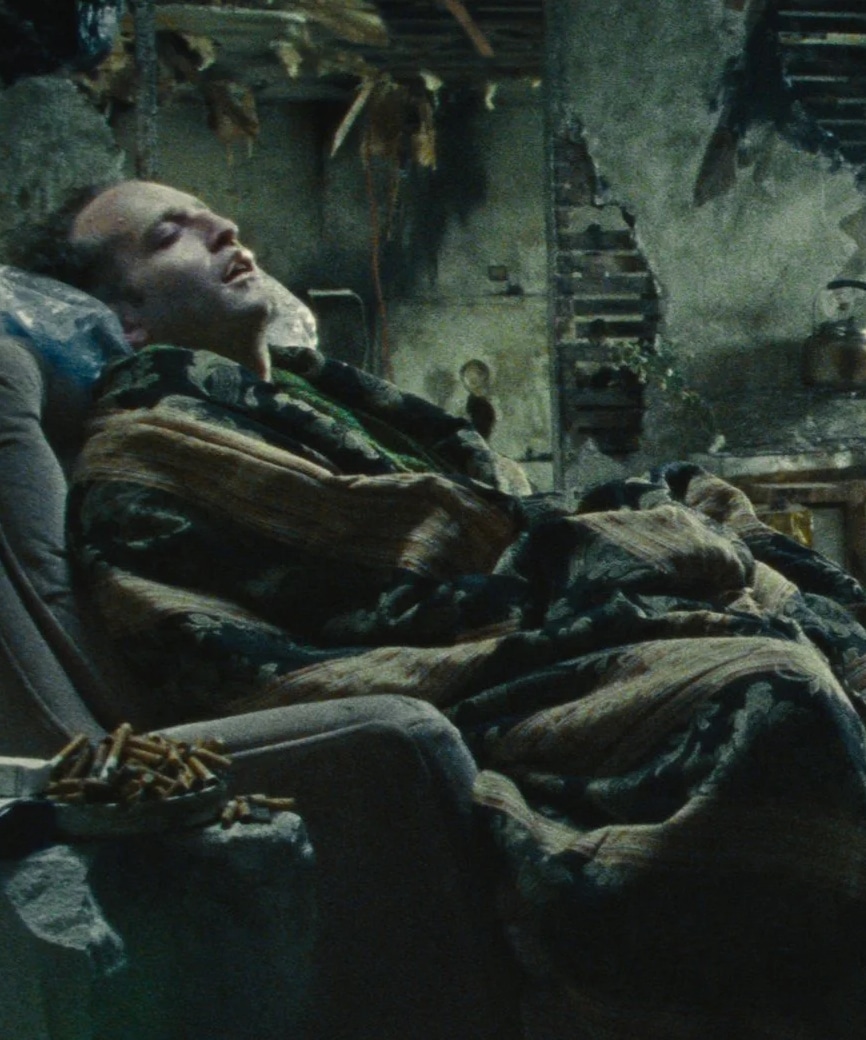
The film’s critical reception has highlighted Falls’ contribution as a pivotal element. Critics have noted his ability to convey the deep-seated resentment that fuels Carroll’s actions and his subtle expressions of desperation, creating a character that is both repulsive and, in a strange way, compelling. The character’s lack of self-awareness, combined with his aggressive defense mechanisms, paints a picture of a man trapped by his own psychological barriers. This makes his eventual physical decline all the more impactful, as his internal struggles manifest externally in increasingly grotesque ways.
A Deeper Dive into the Bernsen Brothers’ Creative Partnership
The collaborative efforts of Oliver and Henry Bernsen underscore the film’s cohesive artistic vision. The inclusion of their brother, Angus Bernsen, as the art director, further solidifies this family-driven creative enterprise. This familial synergy likely contributed to the film’s consistent tone and aesthetic throughout its production. The Bernsen brothers have spoken in interviews about their shared interest in exploring the darker, more uncomfortable aspects of human nature, often through the lens of satire and dark humor. BAGWORM represents a significant realization of this shared artistic ambition.
The genesis of BAGWORM can be traced back to the brothers’ desire to create a film that eschewed conventional horror tropes in favor of a more character-driven, psychologically unsettling narrative. They aimed to craft a story that reflected contemporary anxieties about isolation, masculinity, and the often-unseen struggles of individuals on the fringes of society. The film’s development process involved extensive research into the psychological effects of prolonged isolation and the physical symptoms of severe infections, lending a grounded realism to the fantastical elements of Carroll’s descent. Early conceptual art by Angus Bernsen, which is available on the film’s production blog, reveals a deliberate focus on creating a world that felt both hyper-real and subtly distorted, foreshadowing the visual style that would ultimately define the film.
Thematic Resonance and Societal Implications
BAGWORM transcends the boundaries of a typical horror-comedy, offering a profound character study that resonates with contemporary societal concerns. The film’s success lies in its ability to restrain itself from succumbing to gratuitous shock value, instead opting for a more elevated and intellectually stimulating exploration of its themes. The portrayal of Carroll’s dilapidated living space serves as a potent metaphor for his internal state – a place neglected, decaying, and ultimately uninhabitable. This visual storytelling amplifies the narrative’s focus on the consequences of unchecked animosity and profound loneliness.
The film’s exploration of male loneliness is particularly relevant in today’s society. Recent studies, such as those published by the National Academies of Sciences, Engineering, and Medicine, have highlighted the growing epidemic of loneliness and its detrimental effects on physical and mental health, particularly among men. Carroll’s character can be seen as an extreme manifestation of these societal trends, a cautionary tale about the corrosive impact of isolation when left unaddressed. The film suggests that while Carroll’s circumstances are extreme, the underlying feelings of alienation and disconnection are widely experienced.
Critical Reception and Audience Engagement
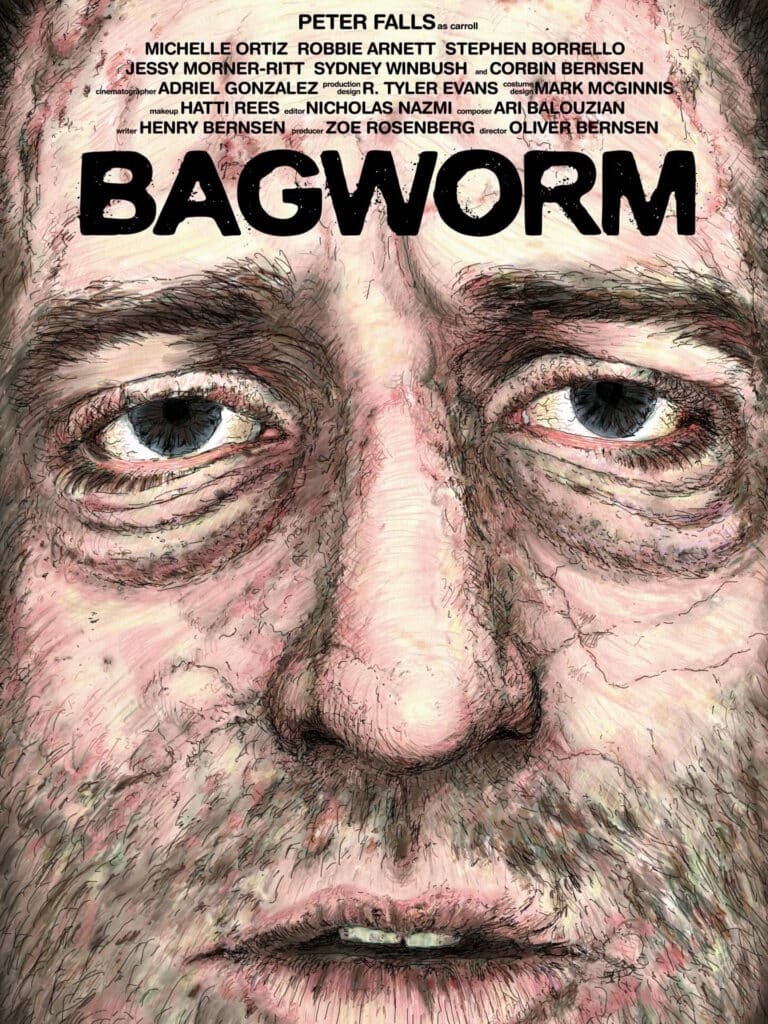
Since its premiere, BAGWORM has garnered significant attention within the independent film community. Reviewers have lauded its originality, its bold thematic explorations, and its standout performances. The film’s ability to generate laughter and unease in equal measure has been frequently cited as a key strength. The artistic choices, from the striking visual effects to the unsettling sound design, have been praised for their effectiveness in creating a unique and memorable cinematic experience.
The film’s unconventional approach has also sparked considerable discussion among audiences. Online forums and social media platforms have seen debates ranging from interpretations of Carroll’s motivations to the film’s commentary on societal issues. This level of engagement underscores BAGWORM‘s capacity to provoke thought and inspire dialogue, moving beyond simple entertainment to offer a more profound cinematic experience. The film’s distribution strategy, which has focused on festival screenings and limited theatrical releases, has allowed it to cultivate a dedicated following among cinephiles seeking out distinctive and challenging narratives.
Future Implications for the Bernsen Brothers
BAGWORM‘s successful debut positions the Bernsen brothers as emerging talents with a clear and compelling artistic voice. Their ability to execute a complex vision with such precision suggests a promising future in filmmaking. The film’s critical acclaim and the positive audience reception indicate a strong potential for their continued work in exploring nuanced and often uncomfortable aspects of the human condition. Industry observers anticipate that this first feature will open doors to larger projects and further opportunities for the Bernsen siblings to refine their unique brand of storytelling. Their commitment to character-driven narratives, coupled with a fearless approach to thematic exploration, suggests that their future contributions to cinema will be closely watched. The film stands as a testament to the power of independent filmmaking to deliver potent social commentary wrapped in an engaging and artistically significant package.