Marvel Age of Comics: Tom K. Mason talks Secret Wars About the epic 1984 crossover series that changed Marvel Comics for decades

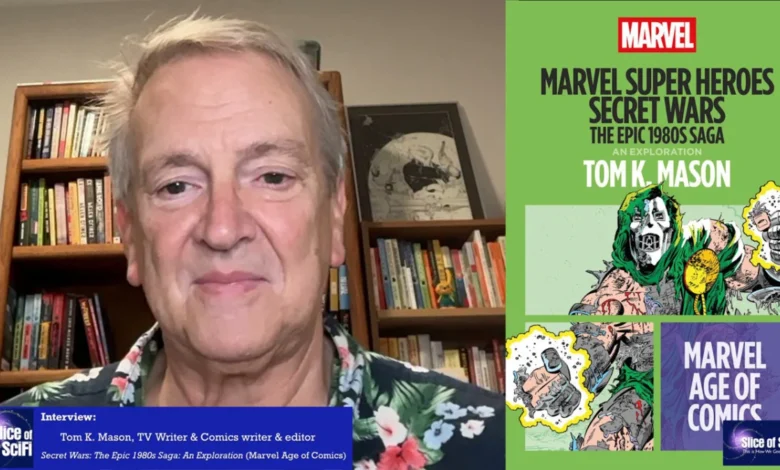
The landscape of modern comic book publishing was fundamentally altered in the mid-1980s through the introduction of the industry-wide crossover event. Recently, Emmy-winning television writer and veteran comics creator and editor Tom K. Mason appeared on a comprehensive retrospective podcast to dissect Marvel Comics’ monumental 1984 limited series, Marvel Super Heroes Secret Wars. The nearly hour-long discussion offered a deep dive into how a commercial mandate driven by the toy industry birthed a storytelling paradigm that continues to dictate how major comic publishers assemble, dismantle, and relaunch their universes today.
For decades, comic book storytelling was largely episodic and self-contained within individual character titles, with occasional, minor crossovers that rarely disrupted the overarching status quo. However, the release of the 12-issue Secret Wars series between May 1984 and April 1985 shattered that precedent. Written by then-Editor-in-Chief Jim Shooter and penciled by Mike Zeck and Bob Layton, the event gathered nearly all of Marvel’s premier heroes and villains onto a constructed planetary body known as Battleworld, courtesy of a cosmic entity called the Beyonder.
The Genesis and Commercial Imperatives Behind Battleworld
To understand the creation of Secret Wars, industry historians must look outside the traditional comic book bullpen and into the boardrooms of toy manufacturers. During the early 1980s, companies like Mego, Kenner, and Mattel were reaping massive profits from action figure lines tied to blockbuster cinematic properties like Star Wars. Mattel, having secured a lucrative licensing agreement with Marvel Comics, sought a massive, unifying concept that could successfully market an entire line of diverse action figures under a single cohesive banner.
Jim Shooter, who helmed Marvel during a critically and commercially successful era, recognized the immense financial potential of such a partnership. Rather than merely licensing individual characters, Shooter designed a publishing event that would serve as a massive commercial vehicle for Mattel’s upcoming toy line. However, Shooter maintained strict creative oversight. He ensured that the narrative ramifications of the crossover would be felt across the entire Marvel Universe, transforming a commercial cross-promotion into a defining narrative milestone.
During the podcast discussion, Mason highlighted the heavy influence that toy companies wielded over the medium during this transitional era. The mandate to feature specific characters, costumes, and specialized vehicles directly shaped the plotting of the series. Yet, despite these corporate constraints, Shooter engineered a sprawling cosmic opera that captured the imaginations of millions of young readers and permanently elevated the stakes of monthly comic book reading.
A Shift in Industry Chronology and the Lost Issue Mystery
The release of Secret Wars coincided with a period of intense competitive rivalry between Marvel Comics and its chief competitor, DC Comics. In 1985, just as Secret Wars was concluding its publication run, DC launched Crisis on Infinite Earths, a 12-issue maxiseries designed to streamline its decades-long continuity. Mason noted the profound ripple effects of these two simultaneous mega-events, arguing that the comic book industry was never the same after readers grew accustomed to universe-shaking stakes. Before 1984, status quos were largely protected; after 1984, change became the primary marketing tool for publishers.
One of the most intriguing historical anecdotes raised during the retrospective involves a piece of lost comic book lore. According to historical accounts and industry whispers, Jim Shooter completed an entire issue of Secret Wars—reportedly the first draft of an early chapter—before deciding to completely scrap the completed work. Dissatisfied with the direction, Shooter ordered a complete do-over, prompting the creative team to start from scratch. To this day, the whereabouts of this "lost" issue remain a mystery, fueling speculation among collectors and comic historians regarding what alternate narrative path the series might have initially taken.
Structural Analysis and Thematic Implications
The mechanics of Secret Wars established a blueprint that modern comic book publishers follow to this day. The narrative formula required a massive gathering of disparate heroes—including the Avengers, the X-Men, the Fantastic Four, and Spider-Man—transported far away from their standard urban environments to face an existential threat. This forced character interactions that would have otherwise taken years to organically develop in individual monthly titles.
Among the most significant and enduring consequences of the 1984 series was the introduction of Spider-Man’s symbiotic black costume, a design that later evolved into the iconic villain and anti-hero Venom. Furthermore, the event tested romantic tensions, explored ideological divides among heroes like Captain America and Wolverine, and established the concept of the event tie-in issue. Suddenly, readers of titles like The Amazing Spider-Man or Iron Man were required to purchase crossover chapters to understand why their favorite characters had returned from space with entirely new status quos, drastically boosting sales across the entire Marvel line.
Broader Industry Legacy and Ongoing Influence
The echoes of Jim Shooter’s editorial vision continue to reverberate through contemporary pop culture. The modern cinematic landscape, particularly the multi-billion-dollar Marvel Cinematic Universe (MCU), owes a massive debt of gratitude to the concept of the shared universe crossover. The narrative infrastructure required to build films like Avengers: Endgame or the upcoming, aptly titled Avengers: Secret Wars has its direct literary ancestors in the 12-issue 1984 limited series.
Tom K. Mason’s analysis on the podcast underscores the duality of commercialism and creativity in the comic book medium. While Secret Wars was born out of a corporate desire to sell plastic action figures to children, it ultimately galvanized a generation of writers and artists. It proved that comic books could successfully manage complex, multi-title narratives on an unprecedented scale, transforming the sequential art industry from a collection of isolated monthly adventures into an interconnected, ever-evolving mythology.
As fans continue to debate the most impactful outcome of the original event—ranging from Spider-Man’s alien costume to the psychological toll taken on characters like The Thing, who chose to remain on Battleworld because he could temporarily transform into human form at will—the legacy of 1984 remains indelible. Through insightful retrospectives like the one provided by Mason, the foundational history of the medium continues to be preserved, analyzed, and appreciated by new generations of comic book enthusiasts.