Godzilla Minus Zero Dominates North American Box Office with Historic Record-Breaking Opening

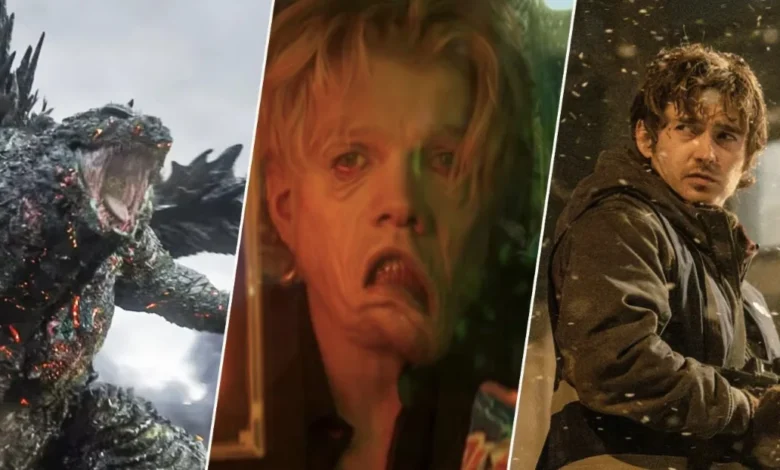
The cinematic landscape experienced a seismic shift this weekend as Godzilla Minus Zero, the latest installment in the long-running Toho franchise, secured the No. 1 spot at the North American box office. Director Takashi Yamazaki’s R-rated, Japanese-language sequel defied industry expectations, opening to an estimated $31.6 million in North America. This remarkable performance underscores a growing appetite for international genre cinema and signals a significant evolution in how foreign-language films are marketed and consumed by domestic audiences.
A Historic Achievement in Box Office Performance
The financial success of Godzilla Minus Zero is not merely a sign of franchise loyalty; it is a statistical anomaly that sets a new high-water mark for international cinema. The film’s $31.6 million opening debut makes it the most successful launch in the history of distributor GKIDS. A substantial portion of this revenue was driven by premium large-format screenings, with IMAX theaters alone contributing $12.7 million to the total.
To place this performance in context, one must compare it to its predecessor. Godzilla Minus One, which arrived in 2023 to critical acclaim and an eventual Academy Award for Best Visual Effects, earned $11.4 million during its entire North American opening weekend. Godzilla Minus Zero has effectively tripled that figure in its initial frame, suggesting that the brand equity built by the previous entry has successfully bridged the gap between niche enthusiast audiences and the broader mainstream movie-going public.
Furthermore, the film has shattered a long-standing record for non-English language cinema. For 22 years, the record for the biggest domestic opening for a live-action, non-English-language film produced outside the United States was held by Zhang Yimou’s epic Hero. Released in 2004, the Jet Li-led production debuted to $17.8 million. Godzilla Minus Zero has surpassed that milestone by nearly $14 million, signaling a shift in audience demographics and a newfound comfort with subtitled, high-budget spectacle in standard multiplex settings.
The Evolution of the Kaiju Genre
The success of the film is attributed by analysts to a synthesis of grounded, character-driven storytelling and high-fidelity technical production. By focusing on the emotional stakes of the Shikishima family, director Takashi Yamazaki has managed to ground the existential dread of the Godzilla mythos in human experience. This approach provides a narrative weight that contrasts sharply with the often-hollow spectacle found in contemporary blockbuster tentpoles.
The global trajectory of the film is equally impressive, with international markets contributing to a cumulative global gross of $63 million in its opening weekend. This rapid accumulation of revenue suggests that the "Godzilla" brand, under the careful stewardship of Toho, has regained its status as a premier global cinematic event. The industry is now closely watching whether this momentum can be sustained in the coming weeks, a feat that would solidify its place among the most profitable horror-adjacent properties in history.
Future Prospects and Creative Direction
Following the triumph of Godzilla Minus One at the Academy Awards, speculation regarding the future of the franchise has reached a fever pitch. The introduction of a new origin for King Ghidorah in the current film has sparked intense debate among the fanbase, while also opening the door for future narrative expansions.

Director Takashi Yamazaki has expressed a willingness to return to the franchise, should Toho request a third installment. "If Toho came to me with another offer to explore this world even further, I’d probably say yes," Yamazaki stated in a recent press engagement. Industry insiders suggest that a formal announcement regarding a sequel could occur as early as the first quarter of the coming year, provided the film maintains its current box-office velocity.
Performance of Concurrent Genre Releases
While Godzilla dominates the conversation, other genre films are demonstrating unexpected resilience in the current market. The body-horror film Clayface has reached the $100 million milestone globally, far exceeding initial domestic projections. After a $24 million opening, the film has demonstrated remarkable staying power, experiencing a decline of only 39% in its third weekend. With a $56 million domestic total, the film serves as a case study for the commercial viability of mid-budget horror projects that target specific, dedicated demographics. The success of Clayface has encouraged industry stakeholders to greenlight further projects in the DC horror sphere, including a Constantine adaptation currently in development under the direction of Francis Galluppi.
Simultaneously, the genre-heavy landscape of the current box office is rounded out by Zach Cregger’s Resident Evil. The film has now surpassed the $400 million mark worldwide, representing a massive turnaround for the franchise. In contrast to the performance of 2021’s Resident Evil: Welcome to Raccoon City, which concluded its theatrical run with approximately $42 million worldwide, Cregger’s iteration generated $60.2 million in North America during its opening weekend alone.
The success of Resident Evil highlights a crucial lesson for major studios regarding intellectual property adaptation. By stripping away the requirement for deep-seated lore knowledge, the film widened its appeal to casual viewers, allowing the narrative to stand on its own merits as a standalone horror experience. Producers such as Roy Lee, who is currently involved in a new Silent Hill adaptation, are expected to apply similar strategies to upcoming projects, prioritizing narrative accessibility alongside visual fidelity to source material.
Implications for the Film Industry
The current box office results suggest several critical shifts in consumer behavior. First, the success of non-English language films indicates that the "subtitles barrier" is becoming increasingly irrelevant to the modern domestic audience, provided the production value matches that of domestic blockbusters. Second, the performance of Resident Evil and Clayface proves that high-concept genre films can thrive when they prioritize clear, character-driven stakes over franchise connectivity.
As the industry looks toward the next fiscal quarter, the implications for major studios are clear: audiences are currently favoring distinct, director-led visions. Whether it is the grounded emotional drama of Yamazaki’s Godzilla or the visceral horror of Cregger’s Resident Evil, the current trend points away from bloated, interconnected cinematic universes and toward singular, high-impact stories.
Summary of Market Data
- Godzilla Minus Zero: $31.6M domestic opening; $63M worldwide total.
- Previous Record Holder: Hero (2004) at $17.8M.
- IMAX Contribution: $12.7M (representing a significant percentage of the domestic opening).
- Clayface: $56M domestic total; $100M+ worldwide; 39% drop in third weekend.
- Resident Evil: $400M+ worldwide total; surpassed the entire lifetime gross of Welcome to Raccoon City within its opening frame.
As Godzilla Minus Zero continues its theatrical run, it stands as a testament to the enduring power of the kaiju genre and the evolving preferences of the global audience. The industry will continue to monitor the film’s long-term legs, as well as the broader success of the current crop of genre films that are collectively redefining the mid-to-late year theatrical market. With the potential for a third film in the Yamazaki-helmed Godzilla series, the future of the franchise appears more robust than it has been in decades.
Related posts: