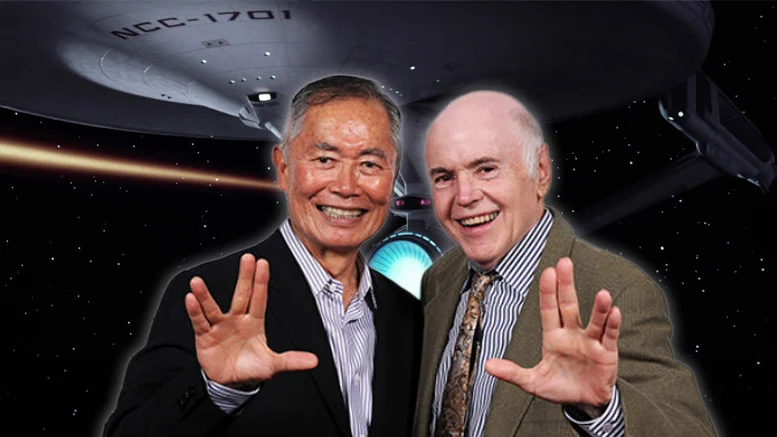
The global entertainment community is mourning the loss of Walter Koenig, the veteran character actor best known for his portrayal of the earnest, youthful navigator Ensign Pavel Chekov in the legendary science fiction series Star Trek. Koenig passed away yesterday at the age of 90, marking the end of an era for a generation of fans who grew up watching the bridge crew of the USS Enterprise navigate the stars. His death, confirmed by representatives, has triggered an outpouring of tributes from across the entertainment industry, reflecting not only his contributions to television history but the profound personal impact he had on his colleagues and the broader science fiction community.
Born in Chicago in 1936, Koenig’s career spanned over six decades, encompassing roles in theater, television, and film. However, it was his casting in the second season of Star Trek: The Original Series in 1967 that secured his place in pop culture history. Brought on to add a youthful presence to the bridge, his character, Pavel Chekov, became an essential component of the show’s enduring dynamic. Beyond the Enterprise, he garnered a massive cult following for his portrayal of the chilling telepath Alfred Bester in the science fiction epic Babylon 5, showcasing a range that allowed him to pivot seamlessly from a wide-eyed space explorer to a masterfully complex antagonist.
A Legacy Forged on the Bridge and Beyond
Koenig’s influence extended well beyond his acting credits. Throughout his life, he was an accomplished writer, director, and teacher. In the literary world, he authored several books, including his autobiographical works that provided candid insights into the realities of working in Hollywood. His transition from an actor struggling for recognition to an icon of the genre mirrors the evolution of the Star Trek franchise itself, which grew from a modest television production into a multi-billion-dollar global phenomenon.
The chronology of his career reflects a commitment to the craft of storytelling. After the cancellation of the original Star Trek series, Koenig remained a stalwart of the franchise, reprising his role in the subsequent motion pictures, including the critically acclaimed Star Trek II: The Wrath of Khan. In that film, his performance during the haunting Ceti eel sequence remains one of the most memorable and visceral moments in the series’ history. Later, his work on Babylon 5 allowed him to prove his versatility as a character actor, earning him critical acclaim for his portrayal of Bester, a role he inhabited with a menacing intensity that challenged the moral boundaries of the show’s universe.
Industry Tributes and Personal Reflections

The reaction to Koenig’s passing has been swift and deeply personal. George Takei, who served alongside Koenig on the Enterprise for nearly sixty years, shared a moving tribute that underscored the depth of their bond. The two maintained a lifelong friendship that transcended their work on set, with Koenig famously serving as the best man at Takei’s wedding in 2008. Takei’s words, characterizing Koenig as a "writer, a teacher, a thoughtful man, and a loyal friend," serve as a testament to the character of the man behind the screen.
The wider Star Trek family, spanning generations of actors from The Next Generation, Deep Space Nine, Voyager, and beyond, have similarly offered their condolences. Marina Sirtis, Denise Crosby, and Robert Picardo are among those who have highlighted his warmth and humility. For many younger actors who entered the Trek universe long after the original series concluded, Koenig acted as a bridge to the show’s foundational history. Sarah Falk, wife of Enterprise actor Dominic Keating, shared a poignant story of their long-standing friendship, noting that Koenig had served as a mentor and grandfatherly figure, even playing a pivotal role in her meeting her husband.
Professional organizations and industry veterans have also noted his contribution to the convention circuit. Creation Entertainment, which organized numerous events where Koenig appeared, emphasized his "boundless energy" and "scathing wit." Over a 47-year tenure on their stages, he was known for his self-effacing humor and his ability to engage audiences with candid, behind-the-scenes stories of the Golden Age of television.
Contextualizing the Impact of a Cultural Icon
The death of Walter Koenig represents a significant loss for the "original" generation of Star Trek actors, a group that has become increasingly smaller over the years. His passing prompts a broader reflection on the cultural footprint of the 1960s space race-era television. The show’s optimism, its commitment to diversity, and its portrayal of a collaborative future were all anchored by the performances of actors like Koenig.
From a statistical perspective, the enduring nature of the Star Trek franchise owes much to the personal investment of its original cast. Koenig’s participation in conventions, documentaries, and fan-led projects helped sustain interest in the property during the decades when it lacked active television production. This grassroots advocacy ensured that the franchise remained relevant, eventually paving the way for the modern era of Star Trek production overseen by figures like Alex Kurtzman and Terry Matalas.
Official Responses and Institutional Recognition

Major media outlets, including The New York Times, The Hollywood Reporter, and the Associated Press, have all dedicated coverage to Koenig’s passing, highlighting his status as a foundational figure in American television. These retrospectives have focused on his unique ability to imbue his characters with humanity, regardless of the science-fiction settings.
In a move to honor his memory, the Heroes & Icons (H&I) Network has announced a special programming block scheduled for November 1. Titled "H&I Remembers Walter Koenig," the network will broadcast a five-episode marathon of The Original Series, focusing on episodes that highlight his performance as Chekov. This programming decision reflects the industry’s recognition of his status as a permanent fixture in the television landscape.
Looking Forward: The Preservation of the Archive
As fans and colleagues continue to share memories, the focus will likely shift to the preservation of Koenig’s work and his personal archives. His contributions to the scriptwriting of various projects and his detailed accounts of the early days of television are expected to be the subject of future academic study. His life serves as a case study for the evolution of the professional actor in the 20th and 21st centuries—moving from the studio system to the advent of the modern celebrity convention circuit.
The implications of his passing extend to the ongoing legacy of the Star Trek franchise. As the "Big Three" and their immediate co-stars pass into history, the burden of maintaining the series’ core tenets—discovery, diplomacy, and the betterment of humanity—falls to new generations. However, the foundation laid by Koenig and his peers remains the touchstone against which all new iterations are measured.
Conclusion
Walter Koenig’s death is not merely the loss of a famous face; it is the closing of a chapter in the history of science fiction television. Whether remembered as the eager Ensign Chekov or the calculating Alfred Bester, his work provided a template for how to play characters that feel real, relatable, and human in the face of the extraordinary. As the tributes continue to pour in from across the globe, the consensus is clear: while the stars may seem a little darker today, the light of his performances will continue to shine through the archives of television history. He navigated a steady course, and his legacy is firmly secured in the annals of entertainment.