I Love Paris Brings a Fresh Found-Footage Bite to the Vampire Genre with Indie Spirit and Musical Edge

The independent film landscape has long served as a fertile testing ground for innovative takes on classic cinematic monsters, and the vampire subgenre is no exception. In the contemporary feature I Love Paris, directed by Nicky Murphy and co-written by its breakout multi-hyphenate star Aminata Thiboult, the traditional bloodsucker narrative receives a modern, millennial-skewed overhaul. Blending the aesthetic of the found-footage mockumentary with the atmospheric coolness of modern Euro-arthouse cinema, the film positions itself at the intersection of music-industry satire and supernatural comedy. As micro-budget productions continue to leverage digital tools to democratize filmmaking, I Love Paris emerges as a notable case study in resourceful direction, DIY craftsmanship, and genre hybridity.
Main Facts and Production Overview
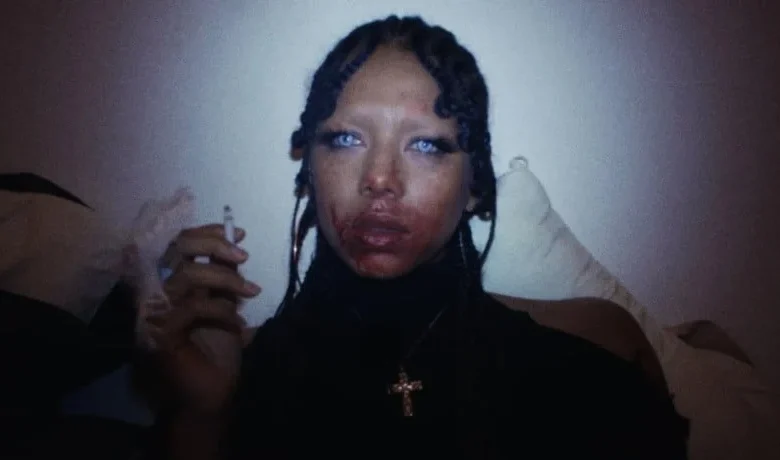
At its core, I Love Paris follows the titular Paris, played with relentless charisma by Thiboult, an aspiring singer navigating the hyper-competitive underbelly of France’s contemporary nightlife scene. When a local music festival rejects her performance application due to a perceived lack of social media influence, Paris embarks on a desperate campaign to manufacture viral content via TikTok. Her trajectory shifts permanently when an encounter with a seasoned nocturnal predator, Lutèce (played by Leonor Oberson), leaves her bitten, transformed, and thrust into an immortal existence. Rather than descending into existential despair, Paris embraces her new reality, utilizing her supernatural attributes to carve a literal and figurative path through the entertainment industry.
The production of the film is as remarkable for its behind-the-scenes logistics as it is for its narrative. Operating with an extraordinarily lean crew, director Nicky Murphy and star Aminata Thiboult reportedly handled approximately 80 percent of the production responsibilities themselves. Murphy took charge of the direction, sound design, and cinematography, capturing the nocturnal expanses of urban France—ranging from cramped, subterranean apartments to the glowing architecture of the Eiffel Tower—with a compositional discipline rarely seen in traditional found-footage cinema. Meanwhile, Thiboult extended her creative footprint beyond lead performance and co-writing, taking direct control of original musical compositions, special effects makeup, prop curation, and costume design.
Chronology and Narrative Arc
The progression of I Love Paris unfolds across a roughly 110-minute runtime, chronicling Paris’s rapid transition from a frustrated unknown artist to an uninhibited undead icon. The narrative trajectory can be segmented into distinct phases that mirror both traditional coming-of-age structures and classic monster-movie evolution:
- The Rejection and Desperation Phase: Paris faces institutional barriers within the Parisian music festival circuit, highlighting the modern artist’s reliance on digital metrics over raw talent. Her initial attempts to capture clout through smartphone video recording serve as the foundational found-footage device of the film.
- The Turning and Mentorship: Following her fateful nocturnal encounter with Lutèce, Paris is introduced to the foundational rules of vampirism. Oberson’s Lutèce functions as a mentor-figure, guiding Paris through the orthodox mechanics of the undead lifestyle—such as the hazards of sunlight and the necessity of sustaining oneself on crimson sustenance—while forming a tight, collaborative bond.
- Industry Subversion and Ascension: Equipped with supernatural endurance and an unapologetic attitude, Paris and Lutèce begin leveraging their unique status against industry gatekeepers. This includes tense, darkly comedic interactions with festival organizers, such as a petrified programming official named Paul (portrayed by Antoine Dumortier), and alliances with hidden nocturnal peers like the wildcard pop personality Mimi (Louiza Aura).
- The Climax and Resolution: As Paris grows increasingly intoxicated by both literal blood and the metaphorical glow of the limelight, the narrative reaches a chaotic crescendo. The film concludes with a sequence of musical showcases and comedic sketches that solidify the protagonist’s dual identity as a musical artist and an apex predator.
Background Context and Genre Influences
The release of I Love Paris arrives during a period of creative revitalization for the vampire film, a cinematic lineage that traces back over a century to silent-era adaptations of Bram Stoker’s Dracula. In recent decades, filmmakers have increasingly sought to deconstruct the archetype, shifting away from Gothic melodrama toward naturalistic, satirical, or melancholic character studies.
Critical observers have noted distinct stylistic and thematic parallels between Murphy’s film and several prominent predecessors. The melancholic, nocturnal moodiness echoes Jim Jarmusch’s Only Lovers Left Alive, while the deadpan domesticity and mundane normalization of the supernatural recall Taika Waititi and Jemaine Clement’s What We Do in the Shadows. Furthermore, the atmospheric texture and rhythmic pacing draw comparisons to the stylized vampire rock-musical Suck and the modern, sensory-driven filmmaking associated with directors like Luca Guadagnino.
By framing vampirism as an exaggerated metaphor for the modern obsession with digital fame, I Love Paris taps into contemporary anxieties surrounding the attention economy. The film posits that the ruthless, consumption-driven nature of the contemporary music industry requires a predator’s mindset, thereby drawing a direct parallel between the pop star chasing virality and the creature of the night hunting for sustenance.
Critical Analysis and Pacing Considerations
Despite its abundant creative energy, I Love Paris has drawn mixed observations from critics regarding its structural execution, particularly its near two-hour runtime. Found-footage and mockumentary films historically rely on brisk pacing and tight narrative momentum to maintain the illusion of real-time documentation. At roughly 110 minutes, the film occasionally asks the audience to absorb a dense volume of conversational dialogue and extended comedic banter.
Industry analysts and film reviewers suggest that a more rigorous editorial cut could have streamlined the narrative, allowing the comedic and horrific beats to land with greater conciseness. Certain scenes linger past their immediate dramatic utility, causing temporary lulls in momentum. However, critics widely agree that these pacing hurdles are largely mitigated by the magnetic screen presence of Aminata Thiboult. Whenever the conversational momentum dips, Thiboult’s musical interludes, deadpan comedic delivery, and committed physical performance successfully re-engage the viewer.
Broader Impact and Implications for Indie Cinema
The commercial and critical trajectory of I Love Paris underscores the shifting paradigms of independent filmmaking in the digital age. By demonstrating that compelling genre cinema can be executed with a minimal crew, DIY special effects, and smartphone-adjacent framing, Murphy and Thiboult provide a blueprint for aspiring filmmakers operating outside major studio ecosystems.
Furthermore, the film highlights the viability of fusing micro-genre tropes—such as the found-footage horror mockumentary—with contemporary cultural commentary. As audiences increasingly seek authentic, hyper-localized perspectives in cinema, projects that spotlight underground artistic communities, regional subcultures, and diverse artistic voices are finding receptive audiences on the festival circuit and digital streaming platforms alike.
Ultimately, I Love Paris succeeds not merely as a novelty vampire comedy, but as a testament to resourcefulness and creative autonomy. By maintaining strict control over nearly every facet of production—from the lyrical content of the soundtrack to the synthetic blood smeared across its protagonist’s lips—the creative team delivers a distinct cinematic voice that resonates beyond its budgetary limitations.