Epic Games Mandates AI-First Pipeline for Delayed Star Wars and Marvel Crossover Shooter Following Internal Shakeup

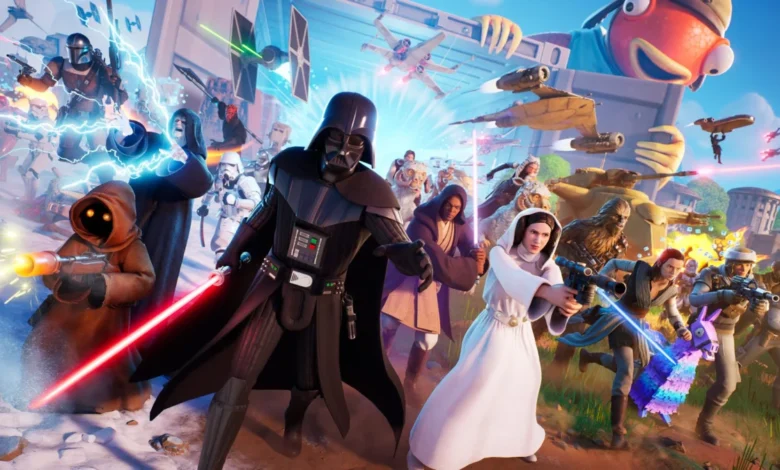
Epic Games has mandated a strict generative artificial intelligence workflow for the remainder of its production cycle on an unannounced crossover shooter that combines properties from Disney’s Star Wars and Marvel universes. The project, which has faced significant internal delays, represents a massive operational shift for the Fortnite developer, leading to widespread concern and debate within the industry regarding the future of game design and labor practices.
According to reports originating from investigative journalism by Bloomberg, the highly anticipated multi-franchise collaboration hit unforeseen speed bumps during development, prompting leadership to implement an "AI-first" production pipeline. Rather than relying on traditional human-led programming and artistic pipelines, the studio has reportedly instructed developers to leverage advanced AI models—such as Anthropic’s Claude—to cross the finish line.
The mandate has sent shockwaves through the developer community, particularly due to the absolute nature of the directive communicated through internal channels.
An Inside Look at the "AI-First" Mandate
Leaked internal communications reviewed by industry journalists reveal a dramatic restructuring of everyday development tasks. In a message directed to engineering and design teams, an unnamed game director stated that the project would transition entirely away from traditional methods, declaring that there would be "no more hand-written code." Furthermore, creative teams were instructed that visual assets must be "generated with full AI workflows."
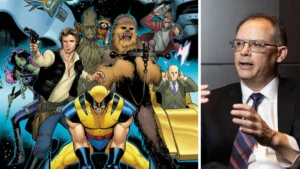
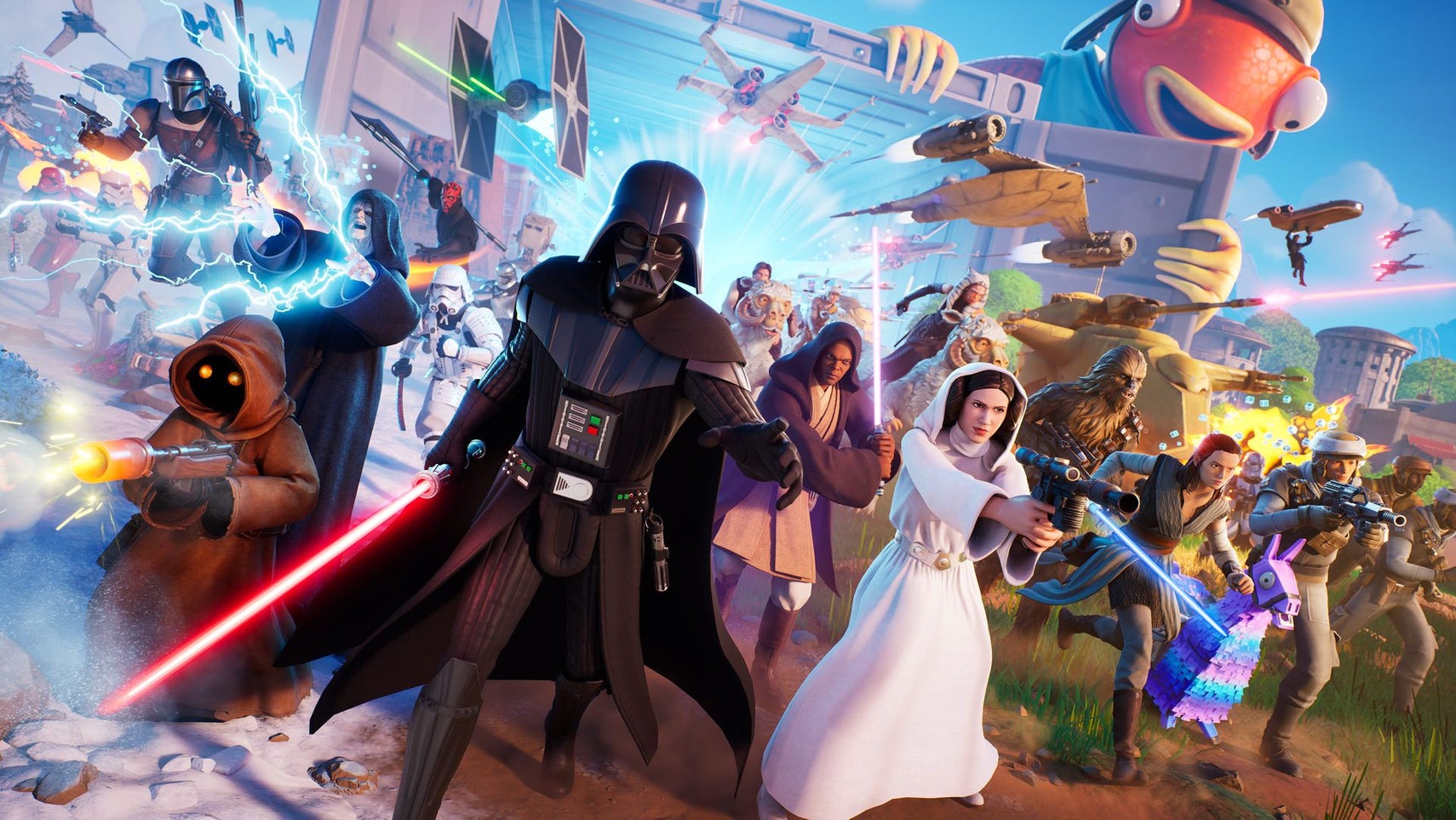
The abrupt pivot caught many employees off guard, sparking internal friction and intensifying existing anxieties surrounding the rapid displacement of human creative labor by automated tools. The game, which features an ensemble cast of iconic heroes and villains from both the Star Wars galaxy and the Marvel Cinematic Universe—led ostensibly by figures such as Darth Vader—was originally slated for a commercial release in March 2027.
However, with the project slipping past its initial internal milestones, leadership chose to double down on emerging technologies rather than expand human headcount or extend traditional development timelines.
Official Statements and Corporate Vision
Responding to public inquiries and media reports, Epic Games defended the decision, framing the pivot not as a cost-cutting measure, but as an aggressive embrace of technological advancement meant to empower creators.
"We’re embracing AI-accelerated development, led by Epic developers who are the visionaries and creative drivers for everything we do," said Jake Jones, Epic Games’ communications director, in an official statement.
Chief Executive Officer Tim Sweeney further elaborated on the company’s broader strategic vision via social media. Sweeney addressed the structural overhaul, emphasizing that the deployment of generative AI across internal pipelines is designed to scale output rather than downsize the workforce directly.
"We have a huge pivot underway here at Epic, moving developers around to retool for maximum AI acceleration," Sweeney posted. "The aim isn’t to do the same stuff with fewer people, but to enable everyone here to build MORE and BETTER stuff, and to bring the benefits to all teams using Unreal."
Despite executive assurances, the move has drawn intense scrutiny, particularly when viewed within the context of Epic’s recent corporate history. Less than a year prior to the announcement of the AI mandate, Epic Games executed a sweeping round of layoffs, cutting over 1,000 jobs. At that time, Sweeney transparently cited severe financial strains, noting that the company was "spending significantly more than we’re making" and required aggressive cuts to maintain financial solvency.
The Disney Partnership and Strategic Evolution
The genesis of this ambitious crossover project lies in a deepening corporate and creative partnership between Epic Games and The Walt Disney Company. In early 2024, The Walt Disney Company made a massive $1.5 billion equity investment in Epic Games, solidifying a long-term alliance aimed at constructing a persistent "games and entertainment universe" tethered to the cultural phenomenon of Fortnite.
At the time of the investment, details regarding the joint venture were sparse. Executives from both companies promised a sprawling ecosystem where players could engage with diverse intellectual properties, craft their own stories, express their fandom in novel ways, and interact within a shared digital space. The initiative represents one of Disney’s most significant investments in interactive entertainment, signaling a strategic shift away from traditional licensing models toward deeply integrated, cross-platform virtual worlds.
In the time since the initial partnership announcement, rumors have continuously circulated within the games industry regarding the trajectory of the relationship. Reports have even suggested that senior Disney executives explored the feasibility of acquiring Epic Games outright, though no such transaction has materialized. The Star Wars and Marvel crossover shooter currently in development serves as one of the premier flagships for this multi-billion-dollar collaboration, placing immense pressure on Epic Games to deliver a commercially viable and technologically impressive product.
A Chronology of Transformation
To understand Epic Games’ current reliance on generative artificial intelligence, it is necessary to examine the timeline of events that have shaped the company over the past several years:
- Late 2023 to 2024: Facing economic headwinds following rapid pandemic-era expansion, Epic Games slashes over 1,000 jobs, restructuring internal operations to curtail spending.
- Early 2024: The Walt Disney Company invests $1.5 billion into Epic Games, initiating a partnership to build a vast entertainment and gaming universe integrated with Fortnite.
- Mid 2025 to 2026: Development on the unannounced Star Wars and Marvel crossover shooter encounters internal delays, missing key production benchmarks.
- October 2026: Reports surface that Epic Games has mandated an "AI-first" workflow, directing developers to use models like Claude for coding and asset generation to meet the revised timeline.
- March 2027 (Projected): The original internal release target for the Disney crossover project, which is now facing structural delays due to the development pipeline overhaul.
Broader Industry Implications and Analysis
Epic Games’ aggressive integration of generative AI into a tentpole, multi-million-dollar video game production marks a watershed moment for the interactive entertainment sector. For years, the debate surrounding artificial intelligence in game development has centered on its use as a supportive tool for concept art, rapid prototyping, or basic code completion. By mandating full AI workflows and eliminating hand-written code for a major commercial release, Epic Games is testing the boundaries of what automated systems can achieve in a live-production environment.
Industry analysts note that this strategy carries both high potential rewards and substantial risks. On one hand, leveraging AI-accelerated development pipelines could drastically reduce production costs, compress development cycles, and allow teams to iterate on massive virtual worlds at an unprecedented scale. If successful, Epic’s approach could redefine how AAA games are made, serving as a blueprint for other major publishers grappling with spiraling development budgets and ballooning team sizes.
On the other hand, the strategy risks alienating both players and creators. The complete removal of human programmers and traditional artists from core development phases raises critical questions regarding software stability, creative originality, intellectual property rights, and the ethical implications of displacing human talent. Furthermore, relying entirely on AI-generated code and assets could introduce complex technical debt, security vulnerabilities, and quality control challenges that automated systems may struggle to resolve without human intervention.
As the industry watches closely, the success or failure of Epic Games’ AI-driven Star Wars and Marvel crossover will likely serve as a bellwether for the entire video game landscape. Whether this bold experiment ushers in a new era of creative abundance or highlights the irreplaceable value of human artistry remains to be seen as development continues under its radically altered paradigm.