Comic books occupy a singular space in modern literature and visual art, functioning as a synchronized medium where scriptwriting and illustration hold equal weight. While the general public often associates the medium with explosive action sequences and cinematic paneling, literary scholars and long-term fans recognize that the emotional resonance of a character is primarily forged through dialogue. Within the publishing ecosystem of DC Comics, character-driven narratives have historically served as the foundation for the publisher’s commercial and cultural longevity. A close examination of the transcripts, editorial histories, and narrative arcs behind five of DC’s most prominent heroes reveals how specific literary moments transformed from simple comic book script lines into foundational pop-culture mantras.
The Evolution of Oliver Queen: Green Arrow and Social Realism
Ranked fifth among DC’s most enduring literary contributions, Green Arrow occupies a distinct niche as a politically charged urban vigilante. Created originally in the Golden Age as a clear pastiche of Batman framed within an archer motif, the character underwent a radical metamorphosis during the late 1960s and 1970s under writer Denny O’Neil and artist Neal Adams. This creative shift introduced contemporary social issues, economic inequality, and political corruption into mainstream superhero fiction.
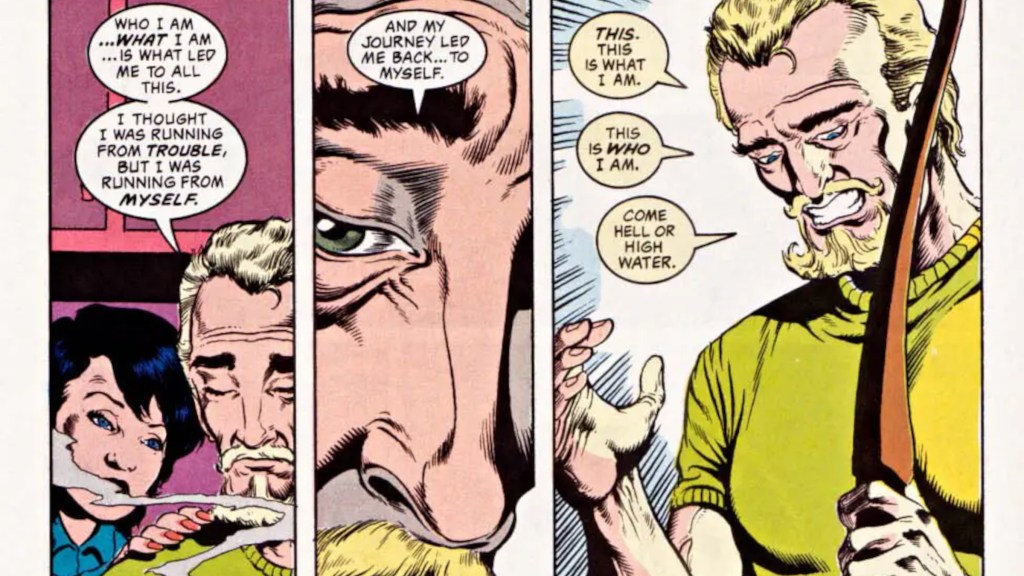
The defining literary articulation of this character ethos appears in Green Arrow (Vol. 2) #51, published in 1988 and written by Mike Grell. Following a year-long narrative arc in which Oliver Queen attempted to process his complex personal failures and the violence inherent to his crusade, the protagonist returns to the urban center to confront a terrorist threat. The resulting quote encapsulates his internal dichotomy: “This. This is what I am. This is who I am. Come hell or high water. If I deny it, I deny everything I’ve ever done… Everything I’ve ever fought for.”
From an analytical perspective, this declaration highlights the narrative strategy of grounding superheroes in profound human fallibility. Unlike contemporaries who operate from moral absolutism, Queen’s characterization relies on contradiction: a wealthy industrialist railing against systemic capitalism, a vocal advocate for social reform who struggles with personal relationships, and a vigilante defined by self-doubt. The long-term implication of this quote within the comic book industry is its establishment of the modern "street-level" hero archetype—characters whose greatest conflicts stem not from cosmic entities, but from their own psychological limitations and ethical compromises.
The Scarlet Speedster Legacy: The Flash and the Mantra of Velocity
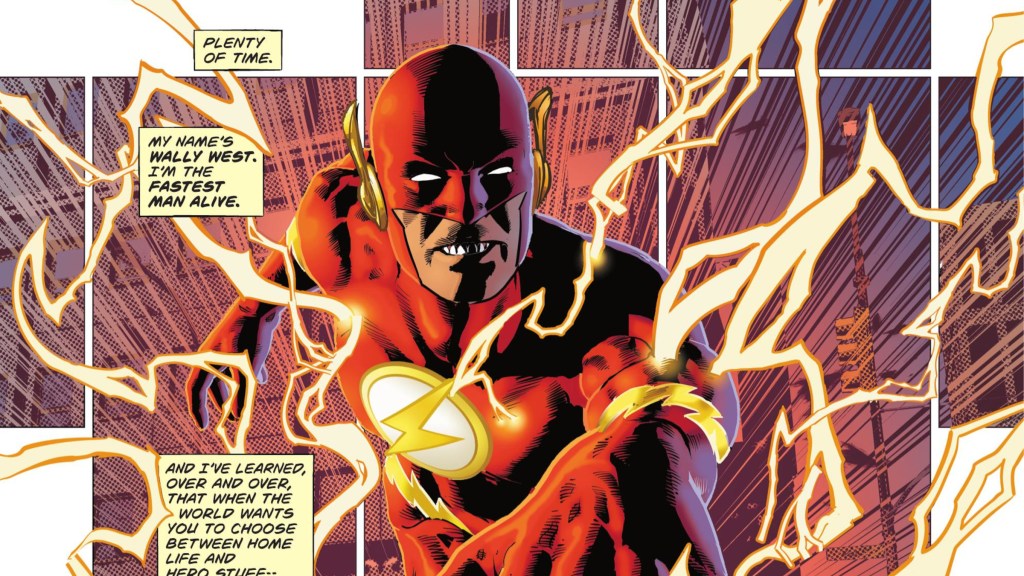
At the fourth position lies the mantle of the Flash, a superhero identity unique for its generational transmission across multiple individuals, most notably Barry Allen and Wally West. The phrase “My name is the Flash. I’m the fastest man alive,” functions less as a traditional catchphrase and more as an operational mission statement.
First formalized during writer Mark Waid’s critically acclaimed run on The Flash (Vol. 2) #67 in 1992—specifically during Wally West’s tenure—the sentence subsequently permeated successive publishing eras, including the 2011 "New 52" editorial reboot and multi-season television adaptations. The linguistic construction is intentionally minimalist, utilizing declarative syntax to establish immediate narrative stakes.
Chronologically, the Flash mythos underwent a significant transformation following the 1985 maxiseries Crisis on Infinite Earths, which established legacy as the central theme of the franchise. By having different individuals inherit the exact same introductory phrase, DC Comics established a unique narrative device: the costume and the accompanying title are external manifestations of an internal calling rather than inherited property or military rank. This approach demonstrated to writers and editors that continuity could be leveraged to foster deep emotional investments from readers, proving that legacy characters could resonate as strongly as their Golden Age predecessors.
Superman and the Ideological Defense of Hope in Action Comics #775
Occupying the third position is the archetype of the superhero genre: Superman. Created by Jerry Siegel and Joe Shuster in 1938, the character established the foundational tropes of the entire industry. However, the most potent modern articulation of his philosophical stance arrived during a period of industrial cynicism within the comic book market.
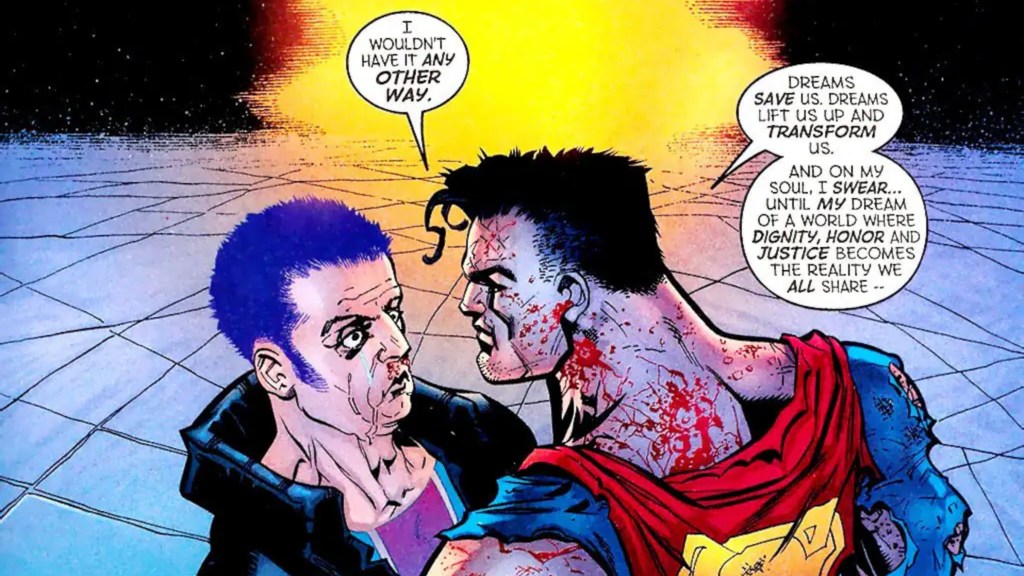
Published in March 2001, Action Comics #775, titled “What’s So Funny About Truth, Justice & the American Way?” and written by Joe Kelly, confronted the growing industry trend of violent, hyper-lethal anti-heroes. In the issue, Superman debates Manchester Black, the leader of a brutal metahuman team known as the Elite, who argue that Superman’s moral code is obsolete. Superman’s concluding ideological stance offers the thesis statement for the character’s modern iterations: “Dreams save us. Dreams lift us up and transform us. And on my soul, I swear… until my dream of a world where dignity, honor and justice becomes the reality we all share, I’ll never stop fighting. Ever.”
The historical context of this issue cannot be understated. At the turn of the 21st century, comic book sales frequently rewarded cynical, destructive protagonists who operated outside the law with lethal force. Action Comics #775 served as an editorial and narrative defense of traditional superhero morality. By framing Superman not as an outdated relic, but as an active champion of idealistic progress, the creative team solidified his role as a psychological anchor for the entire DC Universe. The broader implication is that optimism, when written with genuine narrative stakes, remains a sustainable and powerful driver for long-form serialized fiction.
The Green Lantern Corps: Cosmic Willpower and the Institutional Oath
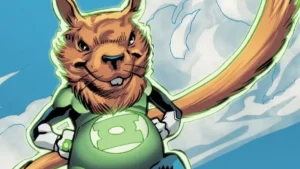
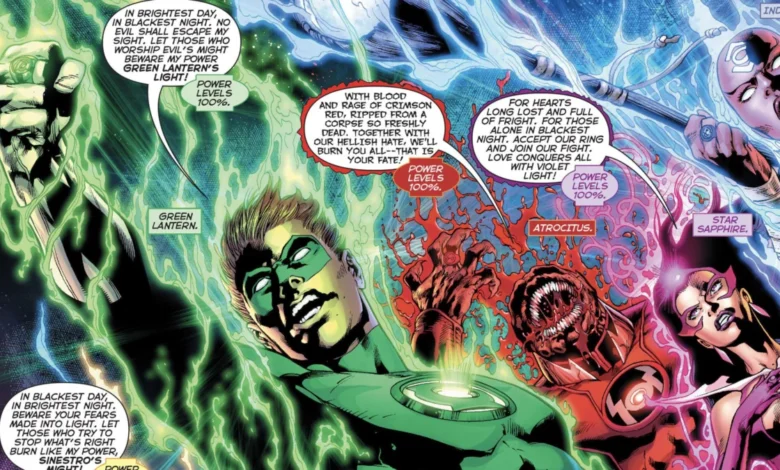
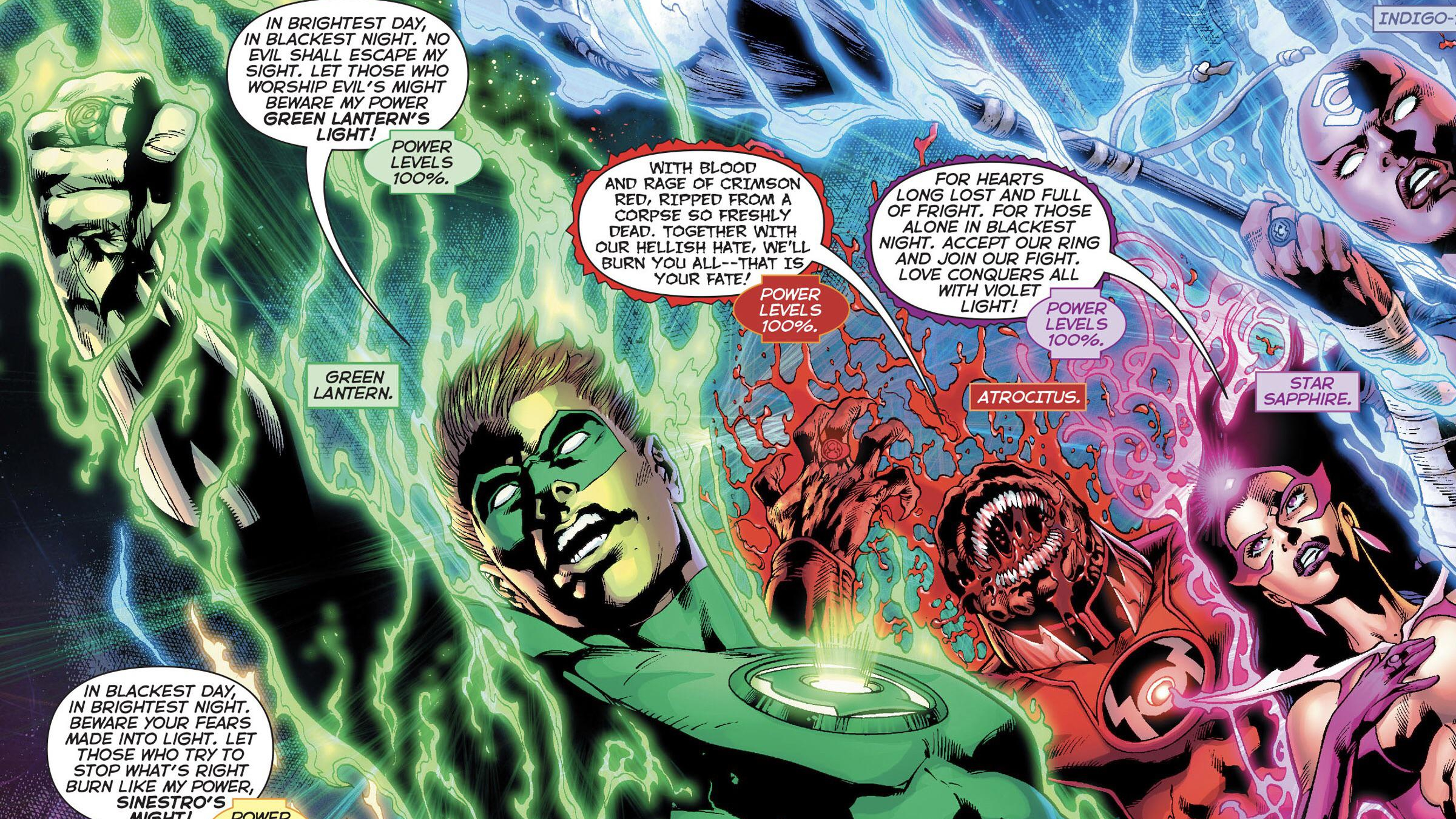
At number two, the Green Lantern franchise expands the scope of individual heroics into an intergalactic peacekeeping institution. Co-created by John Broome and Gil Kane in 1959, the modern incarnation of Green Lantern relies on a standardized incantation that unifies thousands of alien beings across the universe: “In brightest day, in blackest night, no evil shall escape my sight. Let those who worship evil’s might beware my power… Green Lantern’s light!”
The chronology of the oath’s cultural impact spans decades, evolving from a simple incantation used to charge a ring into the narrative foundation of massive publishing crossovers, most notably the 2009–2010 event Blackest Night written by Geoff Johns. Furthermore, the structural success of the Green Lantern oath directly inspired the creation of the emotional spectrum across the DC Universe, introducing rival corps powered by fear, rage, hope, and compassion.
From a structural standpoint, the oath functions as an institutional touchstone. It standardizes the psychological requirement for holding a power ring: unyielding willpower in the face of insurmountable fear. By translating abstract cosmic concepts into a rhythmic, easily memorable stanza, the creators provided fans with an interactive element that bridges the barrier between reader and text, cementing its status as one of the most recognizable pieces of dialogue in modern media.
The Birth of the Dark Knight: Batman #404 and the Mythological Origin
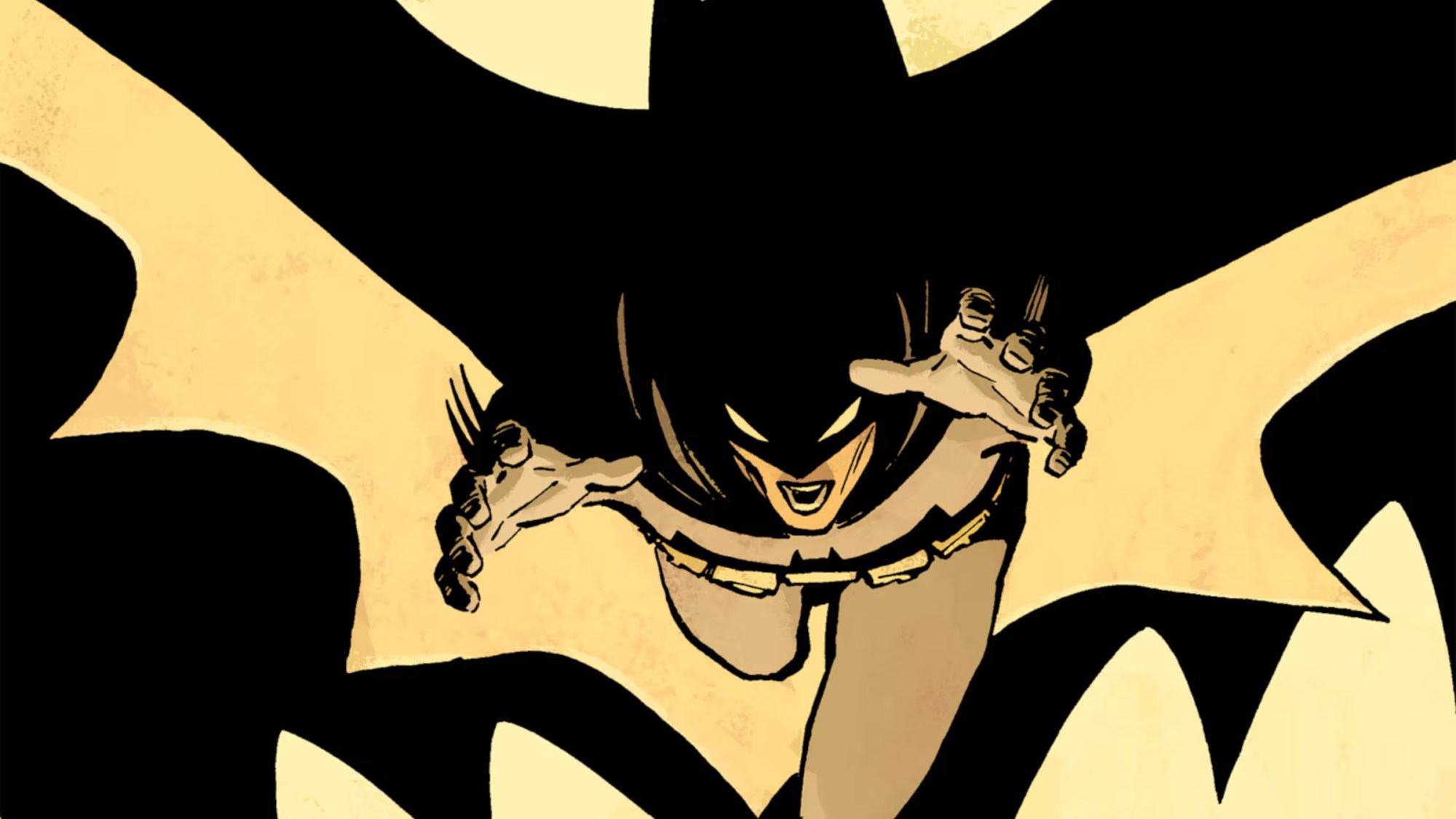
Securing the top position in DC’s literary hierarchy is the definitive psychological origin of Batman, established in Batman #404 (1987) during the opening chapter of Frank Miller and David Mazzucchelli’s seminal storyline, Batman: Year One. The passage reads: “Without warning it comes… crashing through the window of your study… and mine… I have seen it before… somewhere… it frightened me… as a boy… frightened me… Yes, Father. I shall become a bat.”
This specific script moment fundamentally restructured the character’s mythology. Prior to Year One, the encounter with the bat was often depicted as a clever tactical choice or a symbolic coincidence. Miller’s script transformed the event into a moment of profound psychological trauma and spiritual epiphany. As Bruce Wayne sits bleeding in Wayne Manor, contemplating his impending failure as a vigilante, the sudden shattering of the window invokes both his childhood fear and a desperate plea for guidance to his deceased father.
The historical impact of this single panel on the comic book industry is immense. It marked the transition of mainstream comic book writing into a mature, literary form capable of handling complex psychological themes such as survivor’s guilt, self-flagellation, and the weaponization of personal trauma. The phrasing established the Dark Knight not merely as a man wearing a costume, but as a living manifestation of fear itself—channeled outward to protect an indifferent city.
Conclusion
The enduring nature of these five quotes illustrates that the literary strength of DC Comics relies on the careful synthesis of character psychology and thematic clarity. Whether through the socio-political defiance of Green Arrow, the generational perseverance of the Flash, the unyielding optimism of Superman, the cosmic discipline of the Green Lantern Corps, or the psychological rebirth of Batman, these lines have transcended their original pamphlet origins to become permanent fixtures of contemporary mythology.