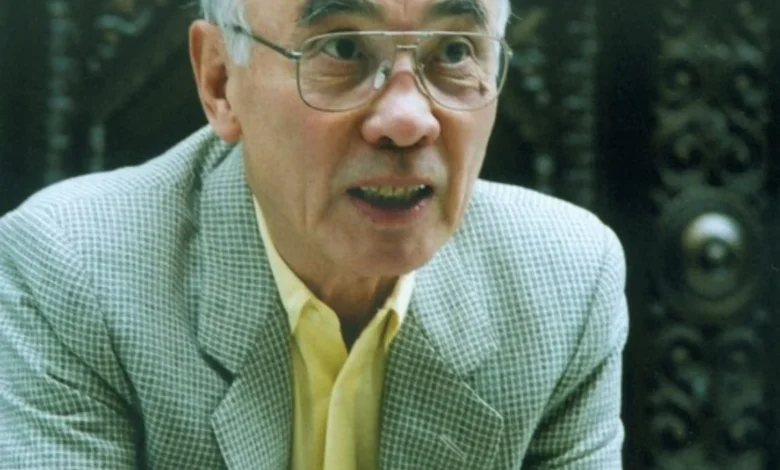
Toshio Masuda, a towering figure in Japanese cinematic and animation history best known for his seminal work on the iconic Space Battleship Yamato franchise, passed away on August 26 at a hospital in Tokyo. He was 98 years old. According to an official announcement by the Directors Guild of Japan on Thursday, the veteran director died of natural causes. In accordance with the family’s wishes, a private funeral service has already been conducted by his close relatives, sparing public mourning from commercial disruption while allowing a quiet farewell for those closest to him.
The loss of Masuda marks the fading of a vital bridge generation in Japanese entertainment. His career spanned nearly seven decades, witnessing the dramatic evolution of post-war Japanese cinema from its studio-system golden age to the global ascendance of contemporary anime. As a director, screenwriter, and supervisor, Masuda left an indelible mark on both live-action cinema and legendary science fiction animation, helping to shape the artistic sensitivities of generations of viewers worldwide.
Early Life and the Path to Filmmaking
Born in Kobe in 1927, Masuda’s early life was deeply disrupted by the turbulent geopolitical climate of mid-20th-century Japan. In July 1945, just months before the conclusion of World War II, he was expelled from his technical training school. The separation arose from a fundamental ideological mismatch with the institution’s strict military indoctrination at the time—an early indicator of an independent spirit that would later permeate his artistic endeavors.
Following the end of the war, Masuda pursued higher education at the Osaka University of Foreign Studies, now known simply as Osaka University. There, he immersed himself in Russian literature, developing a profound appreciation for narrative depth and dramatic tragedy. However, his career aspirations shifted dramatically after he became enamored with French cinema. Driven by a desire to escape the conventional, predictable trajectory of becoming a traditional corporate salaryman—a ubiquitous path for young men in post-war Japan—Masuda set his sights on the creative arts.
Upon graduating in 1949, he relocated to Tokyo to immerse himself in the theoretical and practical aspects of storytelling, enrolling in the Scenario Academy at Shintoho Studio to study screenwriting. This foundational move set the stage for his entry into the professional entertainment industry during an era of intense creative rebuilding in Japan.
Entering the Golden Age of Japanese Cinema
In 1950, Shintoho Studio hired Masuda, integrating him into the traditional studio system as both a screenwriter and an assistant director. This role placed him in direct collaboration with some of the most prominent cinematic masters of the era, serving under esteemed directors such as Umetsugu Inoue, Nobuo Nakagawa, and Mikio Naruse.
Working as the second assistant director on Naruse’s acclaimed dramas Ginza Cosmetics (1951) and Mother (1952), Masuda gained invaluable technical and narrative insights into human psychology and the pacing of dramatic scenes. Meanwhile, his relationship with Umetsugu Inoue blossomed into a critical mentorship. Under Inoue’s guidance, Masuda collaborated on various scripts, often drafting initial storylines and foundational scripts for Inoue’s dynamic motion picture projects.
By 1958, Masuda made his official directorial debut at Nikkatsu, a studio renowned for its gritty action films, youth-oriented dramas, and stylish thrillers. Throughout the 1960s, he directed numerous live-action movies, cementing his reputation as a versatile and reliable craftsman capable of managing complex action sequences and intense character dynamics within strict studio schedules.
His live-action career reached a historic milestone in 1970 when he was selected to co-direct the Japanese segments of the monumental Hollywood-Japanese co-production Tora! Tora! Tora! Alongside celebrated director Kinji Fukasaku, Masuda managed the colossal logistical and artistic challenges of depicting the meticulous Japanese planning and execution of the attack on Pearl Harbor, bringing a nuanced historical perspective to a major international blockbuster.
Transitioning to Anime and Defining Space Battleship Yamato
In 1974, Masuda made a pivotal transition that would define his legacy for international audiences, entering the burgeoning anime industry. He took on the vital roles of supervisor and original planning lead for the television anime series Uchuu Senkan Yamato (Space Battleship Yamato), created by legendary manga artist Leiji Matsumoto and producer Yoshinobu Nishizaki.
The original television series, though initially struggling with viewership ratings, sparked a massive cultural phenomenon upon its theatrical compilation release in 1977, which Masuda directed. This success catalyzed the modern anime fandom movement in Japan. Masuda’s stewardship transformed Space Battleship Yamato from a standard sci-fi cartoon into an epic theatrical saga characterized by themes of duty, sacrifice, and the enduring resilience of humanity against overwhelming interstellar threats.
Within the expansive Yamato franchise, Masuda’s creative fingerprints became ubiquitous. He directed and wrote the screenscripts for the watershed 1978 theatrical release Saraba Uchuu Senkan Yamato: Ai no Senshi-tachi (Farewell to Space Battleship Yamato: Warriors of Love) and Yamato yo Towa ni (Be Forever Yamato) in 1980. Furthermore, he handled scriptwriting and chief supervision duties for Uchuu Senkan Yamato: Kanketsu-hen (Space Battleship Yamato: The Final Chapter) in 1983.
His supervisory contributions extended to other chapters and spin-offs within the continuity, including Uchuu Senkan Yamato: Aratanaru Tabidachi (The New Voyage), Yamato 2520, and Uchuu Senkan Yamato: Fukkatsu-hen (Resurrection). Through these projects, Masuda established narrative templates, tonal consistency, and cinematic pacing that elevated anime storytelling from children’s entertainment to a sophisticated medium capable of appealing to young adults and older demographics alike.
Expanding Horizons in Animation
While Space Battleship Yamato remained the cornerstone of his animation career, Masuda’s portfolio extended into other major anime productions throughout the late 20th century. Outside the Yamato universe, he directed Toei Animation’s ambitious dystopian feature Future War 198X-nen (1982). He also co-directed and co-wrote Odin: Koushi Hansen Starlight, an ambitious space opera released in 1985 featuring music by the rock band Loudness.
His extensive credits further encompass supervisory roles on the compilation movie of Osamu Tezuka’s Umi no Triton (Triton of the Sea), as well as the critically acclaimed historical anime film trilogy Sangokushi (Romance of the Three Kingdoms), which was released in three parts between 1992 and 1994. Across these varied projects, Masuda demonstrated an innate ability to translate complex literary works, sprawling historical epics, and high-concept science fiction into visually compelling animated narratives.
Honors, Accolades, and Cultural Legacy
In recognition of his decades-long contributions to the arts and entertainment landscape of Japan, the Japanese government and cultural institutions honored Masuda with several prestigious awards. In 1993, he was awarded the Medal with Purple Ribbon, an accolade bestowed by the government of Japan to individuals who have made significant contributions to academic and artistic developments, improvements, and accomplishments.
Six years later, in 1999, Masuda received the Order of the Rising Sun, Gold Rays with Rosette, further cementing his status as a national treasure of the cinematic community. These honors reflected not only his box-office successes and creative output but also his role in elevating the prestige of Japanese media on the global stage.
Broader Impact and Industry Implications
The passing of Toshio Masuda closes a chapter on an era when Japanese filmmakers moved fluidly between live-action studio productions and the emerging medium of animation. Unlike contemporary directors who typically specialize exclusively in one medium, Masuda’s career mirrored the structural shifts of Japan’s post-war entertainment industry. He brought the sophisticated grammar of classical live-action cinema—characterized by meticulous framing, dramatic tension, and serious thematic explorations—into the world of commercial animation.
Industry analysts and historians note that Masuda’s work on Space Battleship Yamato and subsequent science fiction projects established the financial and narrative framework for the late-1970s and 1980s anime boom. By treating animated features with the same gravity, orchestral grandeur, and narrative complexity as traditional Hollywood epics or prestige Japanese dramas, directors like Masuda proved that animation could engage deeply with mature audiences.
As tributes pour in from colleagues, industry guilds, and lifelong fans across the globe, Masuda’s legacy endures through the countless creators he mentored and the timeless works he left behind. His journey from an expelled technical student fleeing military indoctrination to a celebrated master of cinema and anime stands as a testament to the transformative power of art, imagination, and unwavering creative independence.