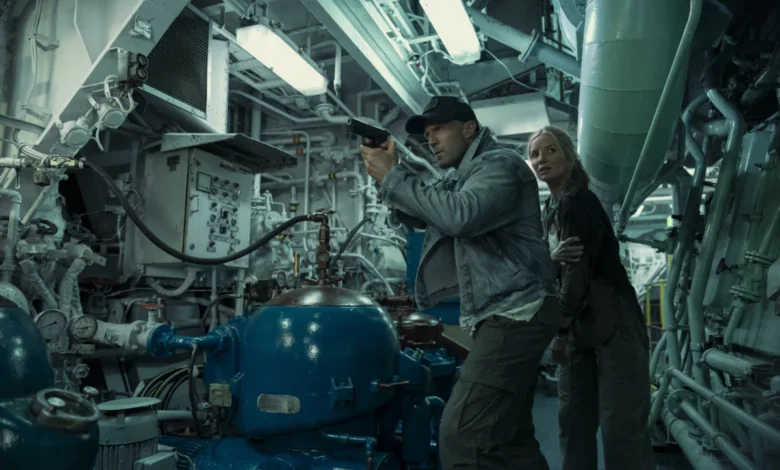
The release of the high-octane action-thriller Mutiny marks another prominent entry into the modern cinematic landscape, specifically within the gritty, high-stakes sub-genre anchored by martial arts and tactical combat star Jason Statham. Directed by acclaimed French filmmaker Jean-François Richet—known for his work on such propulsive features as Plane (2023) and Blood Father (2016)—the film delivers a tightly wound narrative that spans 95 minutes. Written by screenwriters Lindsay Michel and J.P. Davis, Mutiny pairs Statham with a diverse international cast including Annabelle Wallis, Roland Møller, Ramon Tikaram, Chaneil Kular, Simon Kluth, and Adrian Lester. By capitalizing on a confined, claustrophobic setting aboard a commercial cargo vessel adrift on the Andaman Sea, the production trades expansive world-building for acute tension, rapid pacing, and relentless kinetic choreography.
Plot Chronology and Narrative Progression
The narrative of Mutiny unfolds in a series of escalating operational tiers, beginning with an abrupt vehicular collision in an unidentified urban locale that sets an ominous tone before shifting immediately to the core protective detail. Cole Reed, portrayed by Jason Statham, is introduced as a seasoned security professional tasked with safeguarding billionaire shipping magnate Tibu Campallo (Ramon Tikaram) and his hesitant son, Kameron (Chaneil Kular). The family has recently concluded the multi-million-dollar sale of their global shipping empire, a transaction that establishes the underlying corporate and financial stakes of the story.
Following a celebratory evening at the Campallo residence in Bangkok—during which Tibu symbolically presents Cole with a timepiece and integrates him into the family fold—shadowy antagonist Jaran Daniles (Simon Kluth) mobilizes an external conspiracy aimed at sabotaging the shipping company acquisition.
The timeline shifts violently when Kameron departs via a separate vehicle, leaving Cole and Tibu to navigate a heavily guarded roadblock. The pair is ambushed by heavily armed assailants wielding automatic weapons, resulting in Tibu’s immediate assassination. Amidst the chaos, Cole recovers a critical piece of physical evidence: an identification badge linking one of the slain mercenaries to the commercial cargo ship Artemis. Utilizing this intelligence, Daniles leverages systemic corruption to issue an all-points bulletin (APB), framing Cole as the prime suspect in Tibu’s murder.
Concurrently, in a Bangkok hotel room, Angie Ellis (Annabelle Wallis)—a third mate seeking to return home to Los Angeles to fulfill court-mandated custody time with her daughter—receives an abrupt directive. Under threat of contract termination, she is coerced into accepting an emergency assignment aboard the very same vessel, the Artemis.
Industrial Espionage and Maritime Infiltration
Utilizing tactical stealth and a covert disguise, Cole infiltrates the Artemis as it prepares to cast off. His investigation leads him deep into the vessel’s cargo hold, where he breaks the lock on a secured shipping container, exposing a human trafficking operation involving victimized civilians held against their will.
Angie Ellis soon descends into the hold to conduct routine inspections, discovering the smuggling operation independently. Shocked by the humanitarian violation, she immediately reports the breach to the ship’s captain, Marko Madsen (Roland Moller). Unbeknownst to Angie, however, Captain Madsen and the entire shipboard command structure are active participants in the criminal conspiracy.
When Madsen lures Angie to his cabin under the pretense of contacting international authorities, she uncovers their complicity and flees. Navigating the labyrinthine corridors of the Artemis, Angie reaches the ship’s bridge and successfully broadcasts an emergency distress call. The transmission is intercepted by a U.S. Navy vessel operating in the vicinity, commanded by a seasoned naval officer played by Adrian Lester.
Madsen rapidly subdues Angie, overriding the emergency frequency and fabricating an excuse for the transmission—claiming a crew member inadvertently triggered the beacon while sighting a local fishing boat. Recognizing the statistical improbability of a civilian vessel in the remote Andaman Sea, the U.S. Navy captain orders an intelligence-led investigation, introducing a parallel military procedural element to the narrative.
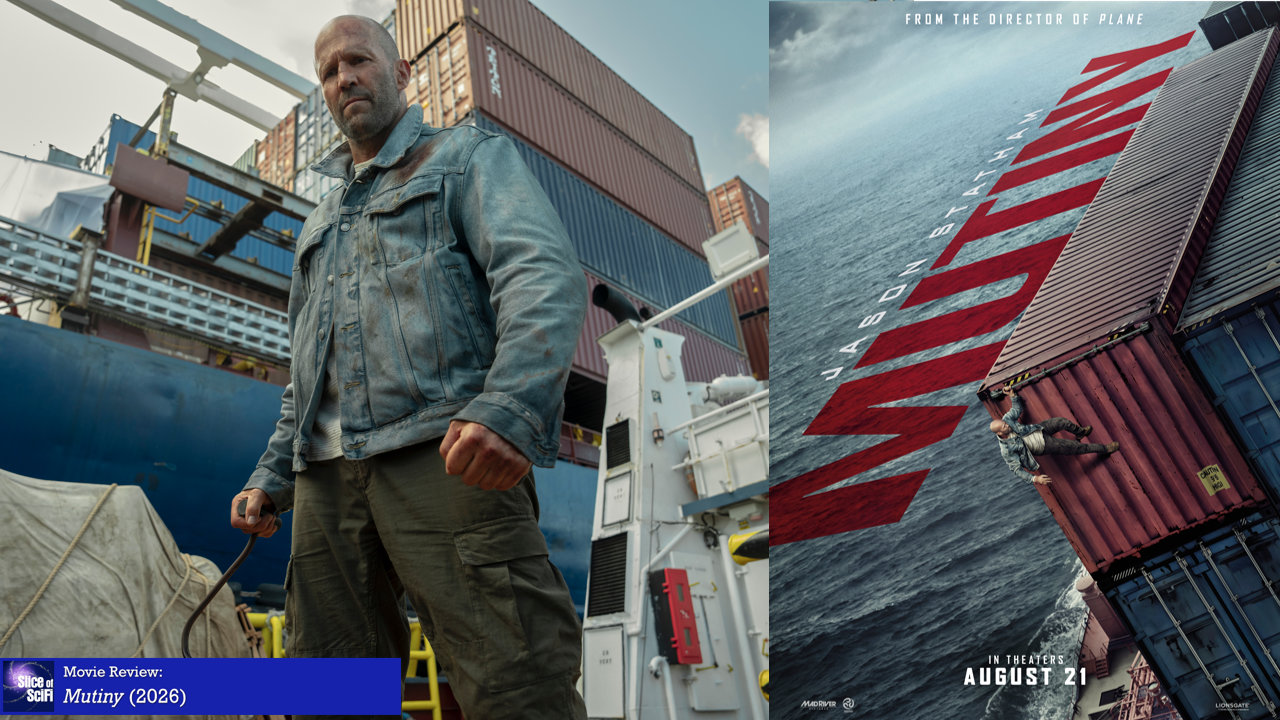
Cinematographic Style and Production Design
Mutiny relies heavily on its physical environment to generate suspense. Shot predominantly on the interior decks, stairwells, and cargo holds of a working ship, the cinematography employs tight framing and stark, industrial lighting to emphasize isolation and impending danger. Reviewers and technical analysts have highlighted the effectiveness of these restricted spatial dynamics, which contrast sharply with expansive aerial views of the Andaman Sea.
Stunt coordinator and movement direction teams utilized the vessel’s external architecture for non-traditional pursuit sequences, incorporating rigging, cranes, and open-ocean drops. The combat choreography integrates traditional firearms with improvised maritime weaponry, including harpoons and specialized deck tools, distinguishing the action set-pieces from standard Hollywood shootouts.
Character Dynamics and Performances
Jason Statham delivers a performance that tempers his customary invulnerability with emotional pragmatism. Unlike purely reactionary action heroes, Cole Reed exhibits palpable grief regarding his past and genuine loyalty to the family he failed to protect. His pursuit of justice is framed less as a frenzied rampage and more as a methodical dismantling of an organized criminal syndicate.
Annabelle Wallis portrays Angie Ellis as an operationally competent professional from her introduction, eschewing tropes of the helpless bystander or the sudden transformation into an action heroine. Her performance anchors the film’s moral core, balancing her urgent maternal drive to reach her daughter in Los Angeles with acute empathy for the captive trafficking victims.
Roland Møller provides a formidable antagonist as Captain Madsen, embodying corporate greed and maritime corruption. Meanwhile, Adrian Lester injects procedural gravitas into the narrative through his portrayal of the U.S. Navy captain, offering a stabilizing institutional counterweight to the lawless violence aboard the Artemis.
Broader Impact and Critical Reception
With a runtime of 95 minutes, Mutiny exemplifies a modern trend toward lean, highly concentrated action cinema that eschews bloated subplots in favor of uninterrupted narrative momentum. Industry analysts note that compact runtimes often correlate with higher audience retention rates and stronger box-office performance within the mid-budget action genre.
The film’s exploration of human trafficking and corporate corruption, though fictionalized for cinematic impact, reflects ongoing international concerns regarding illicit maritime trade routes and lax regulatory oversight within global commercial shipping lanes. By integrating modern naval intelligence operations with a classic revenge narrative, the screenplay bridges localized personal vendettas with broader geopolitical crime syndicates.
Ultimately, Mutiny succeeds through disciplined execution, technical competence, and committed lead performances. While unlikely to pursue traditional Academy Award recognition, the film fulfills its genre obligations with precision, establishing itself as a notable contribution to contemporary action-thriller cinema.