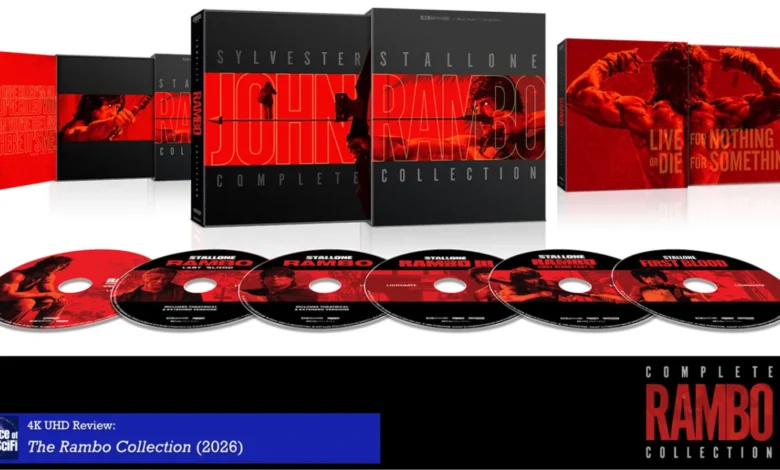
Lionsgate’s release of The Rambo Collection on 4K Ultra High Definition delivers a comprehensive retrospective of one of the most commercially successful and culturally enduring action movie franchises in cinema history. Spanning nearly four decades, the five-film set traces the cinematic evolution of John Rambo, an ex-Green Beret and traumatized Vietnam War veteran originally created by author David Morrell in his 1972 novel. The box set arrives as physical media manufacturers increasingly cater to dedicated collectors by curating exhaustive packages that bundle pristine audio-visual transfers with both legacy archival material and newly produced retrospective content. For franchise enthusiasts and home theater enthusiasts alike, the collection represents a definitive technical and archival milestone for the property.
Audio-Visual Specifications and Technical Enhancements
At the core of the release is a robust technical overhaul. First Blood (1982), Rambo: First Blood Part II (1985), and Rambo III (1988) have been struck in native 2160p Ultra High Definition with Dolby Vision HDR. Furthermore, they feature newly minted, exclusive Dolby Atmos soundtracks alongside legacy audio options including Dolby TrueHD 5.1 and PCM Theatrical Stereo. Including enhanced PCM audio tracks sourced from vintage laserdisc releases demonstrates an unusual level of archival dedication by the studio.
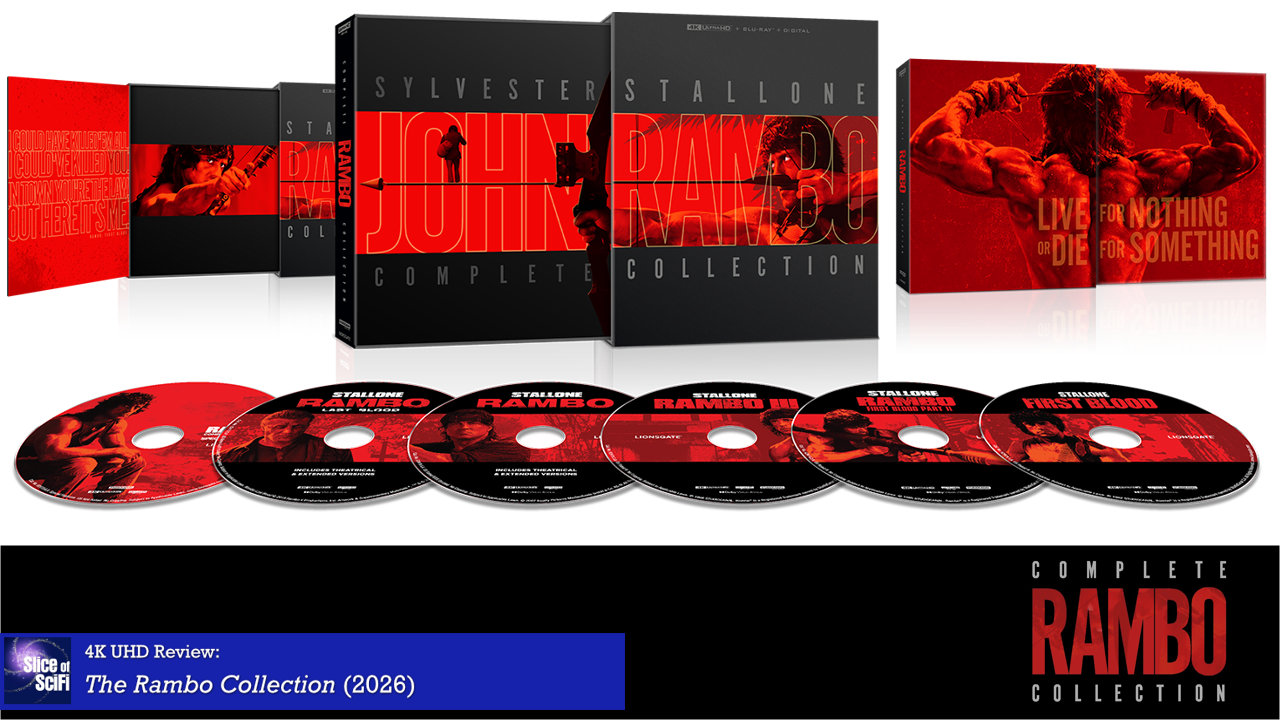
The later installments, Rambo (2008) and Rambo: Last Blood (2019), are presented with Dolby Vision HDR and Dolby Atmos audio. Across the franchise, multiple iterations of the films are included. The collection contains both theatrical and extended cuts for Rambo and Rambo: Last Blood, ensuring that viewers have access to the definitive director’s cuts alongside the versions that originally played in theaters. The inclusion of new Dolby Atmos mixes specifically tailored for the first three films and the extended cut of Last Blood addresses long-standing fan desires for modern multi-channel spatial audio separation in classic catalog titles.
Franchise Chronology and Narrative Evolution
The narrative arc encompassed within the five discs reflects shifting geopolitical anxieties and action cinema trends from the 1980s through the late 2010s.
- 1982 — First Blood: Directed by Ted Kotcheff, the film introduces Rambo as a drifting, destitute veteran targeted by a small-town Oregon sheriff, evolving into a critique of domestic mistreatment of returning Vietnam veterans.
- 1985 — Rambo: First Blood Part II: Directed by George P. Cosmatos, the sequel pivots into a high-octane political action vehicle, sending Rambo back into the jungles of Vietnam on a government-sanctioned mission to rescue forgotten American prisoners of war.
- 1988 — Rambo III: Directed by Peter MacDonald, the film aligns Rambo with Afghan mujahideen fighters battling the Soviet military occupation, mirroring late-Cold War foreign policy narratives.
- 2008 — Rambo: Directed by and starring Sylvester Stallone, this fourth installment brings a darker, more visceral tone as Rambo is enlisted by Christian missionaries to rescue aid workers captured in war-torn Burma.
- 2019 — Rambo: Last Blood: Directed by Adrian Grunberg, the final chapter acts as a localized, neo-Western revenge thriller where Rambo confronts a Mexican cartel that has kidnapped the granddaughter of an old friend.
Comprehensive Archival Special Features
The physical set allocates a dedicated 4K disc to bonus content, mirrored identically in its digital release counterpart, presenting an extraordinary breadth of supplementary material. The archival supplements are meticulously categorized by film, preserving decades-old promotional featurettes, making-of documentaries, deleted scenes, alternate endings, and interviews with Sylvester Stallone and late co-star Richard Crenna.
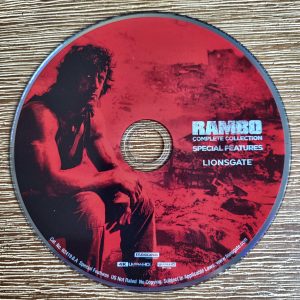
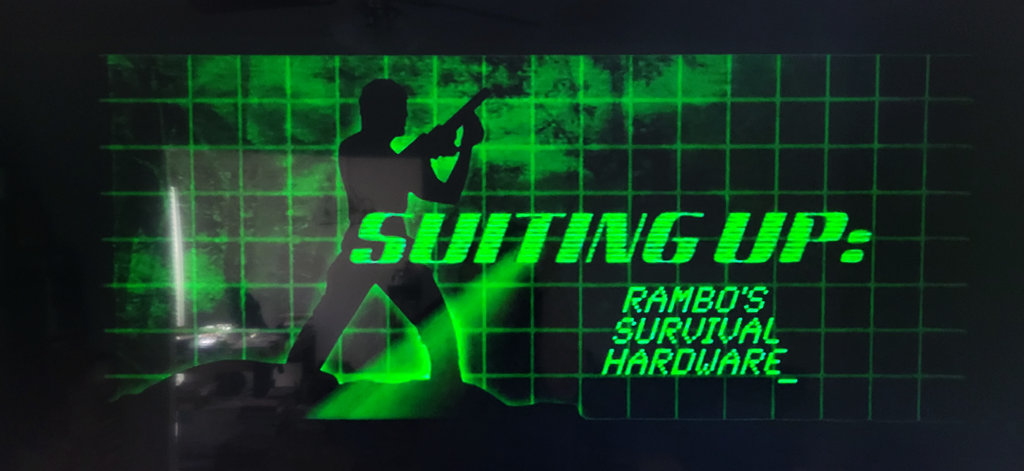
For First Blood, legacy items such as "An American Hero’s Journey," "Drawing First Blood: 20 Years Later," and "The Real Nam" are accompanied by modern reflections. Rambo: First Blood Part II features historical context pieces like "We Get to Win This Time: The Rambo Phenomenon" and "The Last American P.O.W." Rambo III breaks down the production via "Afghanistan: Land in Crisis" and "Suiting Up: Rambo’s Survival Hardware." The 2008 Rambo includes the extensive production diary documentary "To Hell and Back," while Rambo: Last Blood offers multi-part production diaries detailing its principal photography.
Collection-Exclusive Material and Media Analysis
Beyond legacy ports, Lionsgate commissioned several exclusive pieces for this release. Notable collection exclusives include brand-new reflections on First Blood with director Ted Kotcheff, a storyboard analysis interview with artist William Stout, and deep dives into the iconic illustrative poster art of Drew Struzan and Renato Casaro. A retrospective examining items from the 2015 public auction of Sylvester Stallone’s personal collection further grounds the set in physical film history.
The franchise’s cultural footprint extends beyond theatrical features. In late 1986, Ruby-Spears Enterprises produced an animated television series titled Rambo: The Force of Freedom. Running for 65 syndicated episodes, the cartoon mirrored the team-based action tropes popularized by concurrent toy-etic properties such as Hasbro’s G.I. Joe. The animated series yielded a sought-after line of action figures that remains actively traded among vintage toy collectors, demonstrating how deeply the character permeated pop culture demographics during the mid-1980s.
Broader Market Implications for Physical Media
The release of The Rambo Collection arrives at a time when major studios are increasingly reevaluating their physical media strategies. While subscription streaming services dominate initial window distribution, boutique labels and major studios alike find sustained profitability in targeting dedicated enthusiasts with premium box sets. By bundling high-bitrate video encodes, bespoke spatial audio remixes, and exhaustive legacy and newly commissioned bonus materials, packages of this scale provide a tangible value proposition that digital-only storefronts struggle to replicate.
Industry analysts note that comprehensive catalog sets catering to nostalgia-driven demographics perform reliably well among collectors who prioritize archival completeness and superior technical presentation over compressed streaming alternatives. Lionsgate’s treatment of the Rambo intellectual property establishes a benchmark for how long-running action franchises can be successfully curated for contemporary home video formats, ensuring that the legacy of Sylvester Stallone’s defining character remains preserved for future generations of cinephiles.