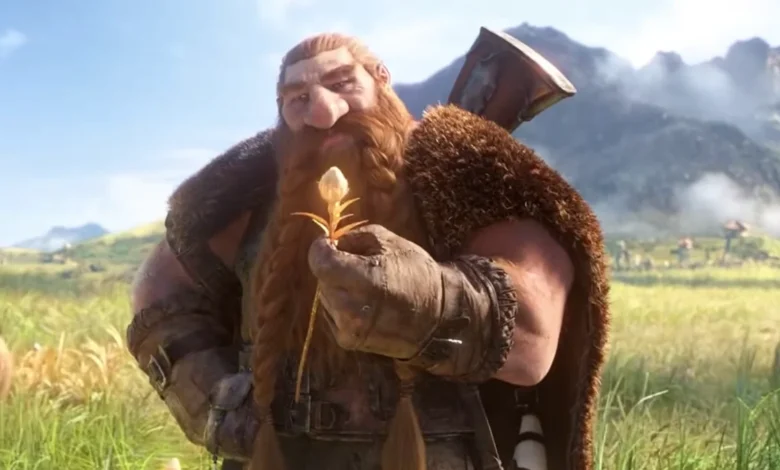
Blizzard Entertainment’s recent presentations at BlizzCon have signaled a striking shift in corporate transparency, offering long-term roadmaps for core franchises that extend well into the next decade. Among the announcements were far-off projected release windows for major titles, including Diablo 5 slated for 2029 and an unannounced open-world StarCraft shooter projected for 2030. Yet, despite the buzz surrounding these distant future projects, the most monumental announcements focused on the enduring legacy of World of Warcraft, a pillar of the massively multiplayer online (MMO) genre approaching its 22nd anniversary since its landmark 2004 launch.
The center of this revelation was the official unveiling of World of Warcraft: Forever, colloquially and eagerly anticipated by the community as "Classic Plus." Rather than serving as a standard expansion or a traditional sequel, WoW: Forever presents an alternate-reality reimagining of the original vanilla era of the game. It is designed to offer a deeply familiar yet radically different experience, blending nostalgia with modernized design philosophies. This development marks a significant turning point in the history of the franchise, directly addressing a segment of the player base that has long clamored for official, divergent development on the foundational framework of early Azeroth.
Reimagining Vanilla Azeroth: Features of World of Warcraft: Forever
World of Warcraft: Forever goes far beyond a simple graphical update or a re-run of historical patches. The project re-envisions the original vanilla experience by introducing an extensive suite of new content. Players will encounter entirely new zones, significantly expanded original territories, brand-new dungeons, challenging raids, and reworked skill and talent trees. Furthermore, the game introduces fresh race and class combinations, an entirely new playable race known as the Skyborne, a brand-new battleground, and approximately 100 new quests designed to seamlessly integrate into the early-game progression curve.
To support this expanded scope, Blizzard is implementing a wealth of new items, rewards, profession recipes, reputation factions, and account-wide progression perks. Visually, the game receives a dramatic overhaul, highlighted by a seamless SD/HD character toggle. This feature allows players to instantly switch between the legacy aesthetic of 2004 and the newly rendered, high-definition models and lighting systems on the fly, catering to both purists and modern gamers alike.
Crucially, WoW: Forever will not be tethered to the historical trajectory of expansions such as The Burning Crusade or Wrath of the Lich King. Speaking on stage at BlizzCon, WoW Executive Producer Holly Longdale emphasized the narrative freedom of the project. "The future is untold," Longdale stated. "We may see stories that could have happened, and some that didn’t happen at all." This freedom separates Forever from previous "Classic" iterations, which strictly followed the chronological milestones of the game’s historical updates.
The Logic Behind Rejecting World of Warcraft 2
Despite the monumental scope of World of Warcraft: Forever, it is fundamentally a comprehensive remaster and branching alternate timeline, not a sequel. As speculation regarding a potential "World of Warcraft 2" invariably resurfaces with every major milestone, Blizzard executives have firmly pushed back against the notion of building a brand-new successor from scratch.
In a subsequent interview with industry media, WoW: Forever Principal Designer Kris Zierhut articulated the technical and economic impracticalities of abandoning the existing infrastructure. "One of the things that’s singularly great about WoW is we have this game and this world and this design that has been continuously developed for the last 25 years," Zierhut explained. He highlighted the continuous refinement of the game’s underlying technology, noting improvements in graphics rendering, lighting engine efficiency, server-side player handling, and combat responsiveness.
"We have this incredible engine and server infrastructure driving the game that is second to none," Zierhut continued. "Why would you throw that away and start over?"
From a narrative perspective, Blizzard sees no existential crisis in the current timeline that necessitates a total narrative wipe. Modern World of Warcraft is currently navigating the ambitious Worldsoul Saga, a trilogy of expansions that continues to push the boundaries of the game’s expansive lore, capped by major cinematic confrontations teased at BlizzCon. Zierhut noted that the narrative foundation remains robust and beloved by the community. "It’s not like there’s something wrong with the story. We love the story. So going back to the beginning [with World of Warcraft: Forever], there’s a chance to explore that story in new and different ways. So it’s really hard to say, ‘Well, what would a WoW 2 give you that World of Warcraft: Forever isn’t already giving you?’"
Historical Context and Industry Realities
The decision to invest heavily in refining the existing engine rather than developing a standalone sequel is supported by decades of software development history and cautionary tales within the gaming industry. Developing a true successor to a game as massive as World of Warcraft would require unprecedented financial investments and years of development time. Building an MMO of modern AAA scale from the ground up routinely costs hundreds of millions of dollars and carries immense risk.
Blizzard’s own corporate history underscores the perils of major structural transitions. The rocky migration from Overwatch 1 to Overwatch 2 served as a stark lesson in how fracturing a dedicated player base can alienate long-term supporters. Furthermore, Blizzard has historically struggled to capture lightning in a bottle twice with unreleased massive multiplayer projects. Most notably, the studio spent years developing "Project Titan," an ambitious sci-fi MMO that was ultimately canceled before its assets and concepts were salvaged to create the hero shooter Overwatch.
Attempting to launch a theoretical World of Warcraft 2 would also place an unsustainable burden on Blizzard’s current operational bandwidth. The studio is already managing active live-service juggernauts including modern World of Warcraft, Overwatch, and HearthStone, alongside major upcoming releases like Diablo 5 and the new StarCraft open-source shooter project.
These development realities are further compounded by broader economic pressures within the games industry. Parent company Microsoft and Xbox divisions have faced rigorous cost-cutting measures, including widespread workforce reductions totaling thousands of roles across various internal studios as corporate leadership seeks sustainable financial models. In such an austere corporate climate, greenlighting a multi-year, multi-hundred-million-dollar sequel to a game that already boasts a state-of-the-art, continuously upgraded engine is economically unviable.
Broader Implications and Strategic Analysis
The introduction of World of Warcraft: Forever represents a masterclass in risk mitigation and player retention. By choosing to expand horizontally through an alternate-timeline classic experience rather than vertically or sequentially with a new client, Blizzard can satisfy multiple demographic segments within its player base simultaneously.
For veterans fatigued by decades of power creep or those who prefer the slower, more methodical pacing of early-era gameplay, Forever offers a fresh sandbox without invalidating their historical investment in the franchise. Simultaneously, it relieves the development team from the nearly impossible task of designing a successor that could measure up to the sheer volume of content accumulated in Azeroth over the past quarter-century.
Ultimately, World of Warcraft: Forever demonstrates that Blizzard recognizes the ultimate value of its legacy infrastructure. By treating its 25-year-old engine and server architecture as a living foundation rather than an obsolete relic, the studio is charting a sustainable path forward—one that honors the past while innovating safely within the boundaries of what makes Azeroth enduringly popular.