Elizabeth Olsen’s Silence on Avengers: Doomsday Fuels Speculation Amidst Scarlet Witch’s Enduring Legacy.

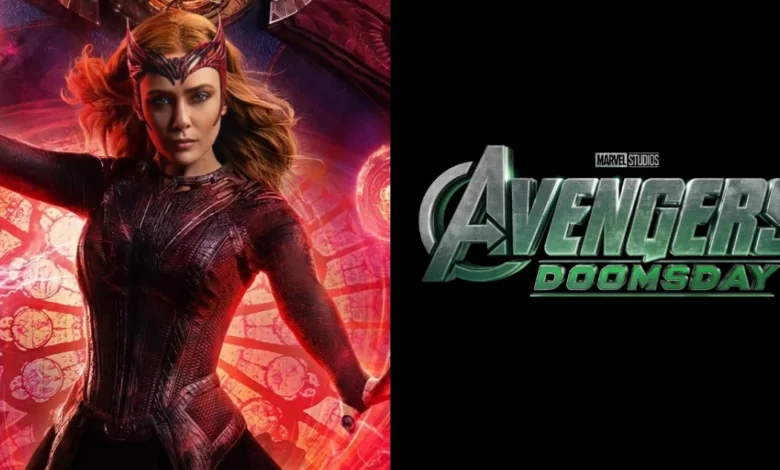
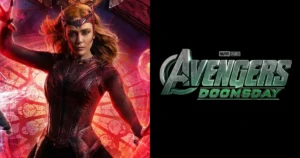
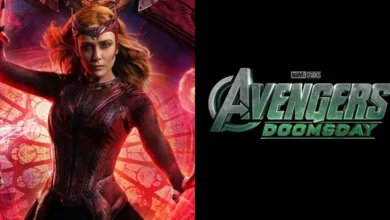
Actress Elizabeth Olsen, widely recognized for her portrayal of Wanda Maximoff, the Scarlet Witch, in the Marvel Cinematic Universe (MCU), recently addressed persistent inquiries regarding her potential involvement in the highly anticipated film Avengers: Doomsday. Her statements, made during an appearance at the Chicago Comics and Entertainment Expo (C2E2), have done little to quell the fervent speculation surrounding her character’s future, particularly given the ambiguous nature of Wanda’s fate in her last major appearance. Olsen’s characteristic denial of any knowledge about the upcoming film, coupled with a slight confusion regarding the titles of the culminating Avengers installments, aligns with a long-standing tradition among MCU actors to maintain secrecy around major plot developments.
The Enigmatic Silence of Elizabeth Olsen
At the heart of the current discourse is Elizabeth Olsen’s recent public commentary. When directly questioned about Avengers: Doomsday, the actress offered a seemingly straightforward, yet ultimately cryptic, response. "I know nothing," Olsen stated, before adding, "I know about VisionQuest, because I’ve seen Paul [Bettany] in the last six months. I know nothing about any of it. Is [Secret Wars] what happens after? I’m not kidding. Why did I think there were two Secret Wars? Are there not?" This playful confusion, particularly regarding the sequence of Avengers: Doomsday and Avengers: Secret Wars, could be interpreted in multiple ways. It might be a genuine reflection of an actor whose character’s immediate future is genuinely unknown to them, or it could be a carefully crafted deflection designed to protect crucial plot details under strict non-disclosure agreements. Given the MCU’s historical penchant for secrecy, the latter is often considered the more probable scenario by industry observers and fans alike.
Olsen’s acknowledgment of VisionQuest, the upcoming Disney+ series centered on Paul Bettany’s Vision, provides a tangible link to her character’s past and potentially her future. The series is expected to explore the white Vision introduced in WandaVision and the lingering impact of Wanda’s actions. While Olsen herself is not confirmed for VisionQuest, the narrative threads are undeniably intertwined, reinforcing the idea that Wanda Maximoff’s influence continues to permeate the MCU even in her ostensible absence.
The Scarlet Witch: A Central Figure in the Multiverse Saga
Over the past decade, Wanda Maximoff has arguably emerged as one of the most pivotal and complex characters within the sprawling narrative of the MCU. Her journey began in Avengers: Age of Ultron (2015) as a Sokovian experiment of HYDRA, showcasing burgeoning psionic and telekinetic abilities. She quickly evolved, joining the Avengers and grappling with her immense powers and the profound grief of losing her brother, Pietro. Her relationship with Vision introduced a deeply emotional core, which was brutally severed by Thanos in Avengers: Infinity War (2018).
The series WandaVision (2021) marked a significant turning point, not only for Wanda’s character development but for the MCU as a whole. It delved into her psychological trauma, demonstrating her unparalleled magical capabilities as she inadvertently created an alternate reality, the Hex, to cope with her grief. This series officially cemented her identity as the Scarlet Witch, a mythical being capable of wielding Chaos Magic, a force described as being capable of spontaneous creation and destruction, with the potential to rewrite reality itself. This elevation established her as one of the most powerful entities in the entire cinematic universe, setting the stage for her subsequent, more villainous, turn.
Her narrative arc reached a devastating climax in Doctor Strange in the Multiverse of Madness (2022). Corrupted by the Darkhold, an ancient book of dark magic, Wanda embarked on a multiversal rampage, seeking to reunite with her children from the Hex reality. Her actions, driven by maternal grief and the corrupting influence of the Darkhold, caused widespread destruction across multiple realities and brought her into direct conflict with Doctor Strange. This film showcased the terrifying potential of her powers when unchecked, highlighting her capacity to pose an existential threat to the multiverse itself. Her character, once a hero, transformed into an antagonist, driven by profound personal anguish, marking one of the MCU’s most compelling and tragic character transformations.
The Ambiguity of Wanda Maximoff’s Fate
The conclusion of Doctor Strange in the Multiverse of Madness left Wanda Maximoff’s fate deliberately ambiguous. After recognizing the horror of her actions and the pain she had caused, particularly to alternative versions of her children, Wanda seemingly sacrificed herself to destroy all copies of the Darkhold across the multiverse. She brought down Mount Wundagore, the source of the Darkhold’s power, burying herself beneath the rubble. However, the nature of her "death" was never definitively shown on screen, a common trope in superhero narratives that often signals a character’s eventual return.
Fans and theorists have latched onto several elements to support the idea of her survival. Firstly, her powers as the Scarlet Witch are inherently tied to Chaos Magic, a force that defies conventional understanding of life and death. As a Nexus Being, a rare individual who anchors their reality and possesses unique connections to the multiverse, Wanda’s existence might transcend typical mortal limitations. Secondly, the lack of a clear, unyielding corpse or explicit confirmation from other characters leaves the door wide open. In the world of comic books, "death" is often a temporary state, particularly for magically inclined characters. The lingering impact of her actions and her immense power level make her too significant a figure to be permanently written out without a more conclusive resolution.
Wanda Maximoff and the Impending Mutant Saga
One of the most compelling arguments for Wanda Maximoff’s return is her deep comic book history intertwined with mutantkind, a narrative element that the MCU is demonstrably beginning to introduce. In the comics, Wanda and her brother Pietro are originally depicted as mutants, the children of Magneto, one of the most iconic mutant leaders. While the MCU initially sidestepped this origin due to rights issues, the acquisition of 20th Century Fox by Disney has opened the door for mutants to be fully integrated into the MCU.

Recent MCU projects have already started laying the groundwork for the "Mutant Saga." The post-credit scene of The Marvels (2023) featured the surprise appearance of Kelsey Grammer’s Beast from the Fox X-Men films, directly confirming the existence of mutants in some capacity within the broader multiversal framework. Furthermore, Kamala Khan, Ms. Marvel, was revealed to be a mutant in her Disney+ series (2022), signaling a slow but deliberate introduction of the concept.
Should the MCU lean into Wanda’s comic book mutant heritage, her return could be monumental. It could offer a chance to retcon her origins, aligning her more closely with the emerging mutant narrative. Such a revelation could provide a redemption arc, perhaps as a character who, despite her past transgressions, becomes crucial in a conflict involving mutants, or even serves as a bridge between the Avengers and the burgeoning mutant community. The "Mutant Saga" offers a perfect narrative opportunity to explore Wanda’s identity beyond just her magical powers, delving into her potential as a mutant and the societal implications that come with it. Her famous comic book declaration, "No more mutants," which dramatically reshaped the Marvel Comics universe, highlights her profound, albeit complex, connection to mutantkind and suggests the kind of impactful role she could play.
Doctor Doom’s Shadow Over the MCU
The title Avengers: Doomsday itself strongly hints at the involvement of one of Marvel’s most iconic and formidable villains: Doctor Doom. Victor Von Doom, the brilliant and ruthless ruler of Latveria, is a character of immense intellect, magical prowess, and technological genius in the comics. He is often depicted as a primary antagonist in major Marvel crossovers, including several iterations of Secret Wars. The image accompanying the original article, featuring Elizabeth Olsen with Doctor Doom’s helmet, further amplifies these inferences, suggesting a direct connection between the Scarlet Witch and this looming threat.
Doctor Doom’s comic book history is replete with multiversal ambitions and god-like power, often achieved through a combination of science and sorcery. His presence in Avengers: Doomsday would set a truly formidable challenge for the remaining heroes. Wanda Maximoff, with her unparalleled command of Chaos Magic, represents one of the few individuals in the MCU who could potentially contend with Doom’s vast powers. In various comic storylines, Doom has either sought to control Wanda’s abilities or found himself directly opposed by them. Her unique magical signature and her capacity for reality manipulation would be an invaluable asset – or a catastrophic liability – in a confrontation with a villain of Doom’s caliber. The very premise of "Doomsday" implies an apocalyptic threat, and few characters embody that level of menace and strategic brilliance as Doctor Doom.
The Strategic Silence of Marvel Actors
The phenomenon of Marvel actors denying their involvement in upcoming projects is a well-established facet of the MCU’s marketing strategy. From Mark Ruffalo’s feigned ignorance about Hulk’s future to Andrew Garfield’s elaborate denials regarding his role in Spider-Man: No Way Home, actors are consistently tasked with maintaining absolute secrecy to preserve the surprise and impact of major reveals. Elizabeth Olsen herself has been a master of this art, expertly navigating questions about Wanda’s true power and future plot points throughout her tenure.
This strategic silence serves multiple purposes. It prevents leaks that could spoil intricate storylines, builds anticipation among the fanbase, and allows Marvel Studios to control the narrative surrounding its releases. Therefore, Olsen’s declaration of "knowing nothing" should be viewed through this lens. While it is possible she genuinely has not been informed of specific plans, it is equally, if not more, likely that she is adhering to a strict confidentiality agreement, a standard practice for actors involved in highly anticipated, interconnected cinematic universes. The level of detail and interconnectedness in the Multiverse Saga requires a coordinated effort to keep major plot points under wraps until the opportune moment.
The Road to Avengers: Doomsday and Secret Wars
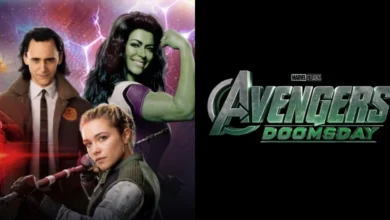
Avengers: Doomsday, initially titled Avengers: The Kang Dynasty, is slated for release in December 2026, followed by Avengers: Secret Wars in May 2027. These two films are set to culminate the Multiverse Saga, following in the footsteps of Avengers: Infinity War and Avengers: Endgame which concluded the Infinity Saga. The shift in title from The Kang Dynasty to Doomsday is significant, indicating a potential change in primary antagonist or a broadening of the threat beyond just Kang the Conqueror, whose future in the MCU has become uncertain due to recent developments.
The production of Avengers: Doomsday is still in its relatively early stages. While a director and writer were initially attached to The Kang Dynasty, the current status for Doomsday indicates ongoing development, including the search for a new creative team. This fluidity in pre-production could genuinely mean that specific casting decisions and detailed plot outlines are still being finalized, even for core characters. However, the strategic importance of Wanda Maximoff to the overarching themes of magic, the multiverse, and potentially mutantkind, makes her inclusion a high probability for a film of this magnitude, regardless of her current knowledge. Her powers would be instrumental in confronting a multiversal threat like Doctor Doom or any other villain capable of challenging the fabric of reality.
Looking Ahead: The Enduring Legacy of Wanda Maximoff
The enduring speculation surrounding Elizabeth Olsen’s return as the Scarlet Witch underscores the profound impact the character has had on the MCU and its global fanbase. Wanda Maximoff’s complex arc, her journey from a Sokovian experiment to a reality-bending sorceress, and her tragic struggles with grief and power, resonate deeply with audiences. Her potential involvement in Avengers: Doomsday is not merely a question of a character’s return; it represents a crucial narrative opportunity to address unresolved plotlines, further explore the nascent Mutant Saga, and bring one of the MCU’s most powerful figures back into the fold for what promises to be an epic conclusion to the Multiverse Saga.
Whether Elizabeth Olsen truly knows nothing, or is simply an expert at playing coy, the anticipation for the Scarlet Witch’s potential resurgence remains palpable. Her presence would undoubtedly elevate the stakes of Avengers: Doomsday, offering both a powerful ally and a character whose internal struggles could provide rich dramatic fodder as the MCU hurtles towards its next major multiversal confrontation. Fans will continue to parse every hint and denial, eagerly awaiting the day Wanda Maximoff’s fate is unequivocally revealed.
Related posts: