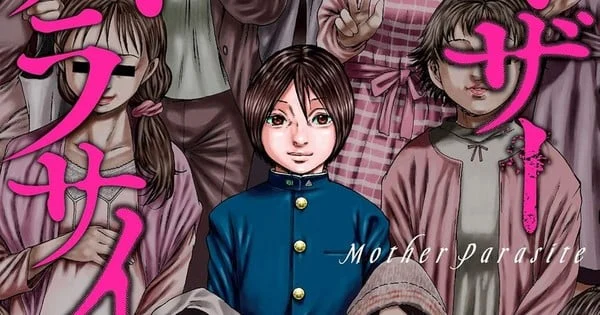
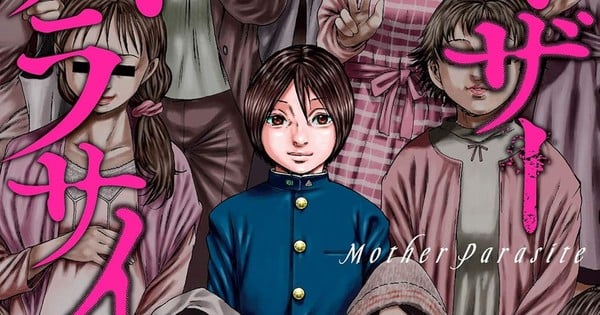
The 17th volume, published by Coamix, confirms that the next installment, slated for release in September 2026, will officially transition the story into its final narrative arc. This development follows six years of serialized tension that has explored the boundaries of maternal obsession, manipulation, and the psychological fragility of the modern family unit.
The Narrative Core: A Study in Psychological Manipulation
Mother Parasite centers on Ryota Miki, a middle school student who, on the surface, appears to be the ideal, polite, and dutiful adoptive son. However, the manga quickly establishes a chilling reality: Ryota is a highly calculating individual who systematically monitors and documents his mother’s every failure. His goal is not merely rebellion, but the pursuit of a "perfect mother," a quest that drives him to manipulate those around him with surgical precision.
The story’s tension is amplified by the introduction of Kaoru Kasai, a classmate of Ryota. Unlike Ryota’s controlled environment, Kaoru is smothered by a "helicopter mother" whose overprotectiveness has made him a target for school bullies. When Ryota intervenes to save Kaoru from his tormentors, the two boys form a bond that is as much a strategic alliance as it is a friendship. This relationship serves as the catalyst for a series of events that peel back the layers of their respective domestic lives, revealing the rot beneath the suburban facade.
The title "Mother Parasite" itself serves as a dual metaphor. It questions who the parasite truly is: the child who feeds off the mother’s emotional instability, or the mother whose identity is entirely consumed by an unhealthy attachment to her offspring. This ambiguity has been a hallmark of Satō’s writing, keeping readers in a state of perpetual unease.
Chronology and Publication History
The journey of Mother Parasite began in June 2020, when Hirohisa Satō launched the series on Coamix’s Comic Zenon website. At the time, the manga industry was seeing a significant shift toward digital-first serialization, and Mother Parasite benefited from the accessibility of the Comic Zenon platform.
By early 2022, the series had gained enough traction to warrant international attention. In March 2022, Coamix partnered with Imagineer’s MangaHot service to bring the title to English-speaking audiences. This was followed by a more extensive distribution agreement in January 2023, when the digital platform Comikey added Mother Parasite to its catalog, alongside other Coamix titles.
The timeline of the manga’s publication reflects a steady growth in popularity:
- June 2020: Serialization begins on Comic Zenon.
- March 2022: English digital publication begins via MangaHot.
- January 2023: Comikey secures English publishing rights, expanding the global reach.
- 2023–2025: The series consistently ranks among the top psychological thrillers on digital platforms, noted for its visceral art style and unsettling themes.
- May 21, 2026: Release of Volume 17 and the announcement of the final arc.
- September 2026: Scheduled release of Volume 18 and the start of the series’ conclusion.
The Artistic Vision of Hirohisa Satō
Hirohisa Satō has established a reputation for crafting narratives that dwell in the macabre and the psychologically deviant. Before Mother Parasite, Satō was recognized for Shigahime, a dark fantasy horror manga that showcased his ability to render gore and supernatural terror with haunting detail. Shigahime also found a home in the English market through Comikey and MangaHot, cementing Satō’s status as a creator whose work resonates across cultural boundaries.
Another notable work in Satō’s bibliography is Suzuki Just Wants a Quiet Life (Suzuki-san wa Tada Shizuka ni Kurashitai), which is published in English by Omoi (formerly known as Azuki). These works share a common thread: characters who strive for a semblance of normalcy while being embroiled in extraordinary or horrific circumstances. In Mother Parasite, Satō trades the supernatural elements of Shigahime for a more grounded, yet no less terrifying, exploration of human psychology. His art style, characterized by sharp lines and expressive, often distorted facial features, perfectly captures the internal rot of his characters.
Digital Distribution and Global Impact
The success of Mother Parasite is inextricably linked to the evolution of the digital manga ecosystem. The involvement of platforms like Comikey, MangaHot, and Omoi highlights the changing landscape of manga consumption. By moving away from traditional print-only models, publishers have been able to reach niche audiences who crave "seinen" (young adult male) content that deals with mature and complex themes.
In the mid-2020s, the digital manga market has seen a surge in "psycho-suspense" titles. This subgenre, which focuses on mental health, domestic abuse, and social isolation, has found a dedicated following. Industry data suggests that titles like Mother Parasite perform exceptionally well in the "binge-reading" format offered by digital apps, where the cliffhangers at the end of each chapter drive high engagement.
The rebranding of Azuki to Omoi in late 2025 further signaled a consolidation and maturation of the digital manga market. These services have become essential for the survival of mid-range manga series that might not have the massive marketing budgets of Shonen Jump hits but possess a loyal and vocal fanbase.
Thematic Analysis: Motherhood as a Site of Horror
Mother Parasite joins a growing body of Japanese media that deconstructs the idealized image of the "sacrificial mother." In Japanese culture, the concept of the "Good Wife, Wise Mother" (ryōsai kenbo) has historically been a societal pillar. Satō’s work subverts this by presenting motherhood as a source of trauma and a tool for control.
The "helicopter mom" trope seen in Kaoru’s mother and the "adoptive savior" trope in Ryota’s mother are both interrogated. The manga suggests that the pressures placed on mothers to be perfect, and the subsequent pressures they place on their children, create a feedback loop of dysfunction. Ryota’s quest for the "perfect mother" is, in essence, a quest for an impossibility, making his journey both tragic and monstrous.
By focusing on a middle school protagonist, Satō also explores the loss of innocence. Ryota is not a victim of his circumstances in the traditional sense; he is a product of them who has learned to weaponize his environment. This role reversal—where the child becomes the predator and the parent the prey—is what gives the series its distinctive edge.
Industry Implications and Future Outlook
The conclusion of Mother Parasite in late 2026 will leave a significant gap in Comic Zenon’s lineup. As one of the magazine’s most consistent performers in the psychological genre, its ending may prompt the editorial team to look for new voices that can replicate Satō’s success.
Furthermore, the completion of the manga often serves as a precursor to discussions regarding anime or live-action adaptations. Given the cinematic nature of Satō’s storytelling and the current global demand for psychological thrillers (exemplified by the success of live-action dramas on platforms like Netflix), Mother Parasite is a strong candidate for a screen adaptation. A live-action series, in particular, would be well-suited to the manga’s grounded, character-driven horror.
For English-speaking fans, the final arc will be accessible through Comikey and MangaHot, ensuring that the global community can experience the conclusion alongside Japanese readers. The synchronized nature of digital publishing has eliminated the years-long wait times that once plagued the industry, allowing for a unified global discourse.
As the series approaches its final chapters, the central question remains: what will happen to Ryota Miki? Will he finally find the "perfect mother," or will his parasitic nature eventually lead to his own destruction? Whatever the outcome, Hirohisa Satō has ensured that Mother Parasite will be remembered as a provocative and uncompromising look at the darkest corners of the human heart. The upcoming 18th volume will not just be the end of a story, but the final word on a psychological experiment that has challenged readers’ perceptions of family, love, and survival.