The 16-Year Odyssey of Faraway: How Steph Thirion and Annapurna Interactive Finally Brought a Cosmic Vision to Life

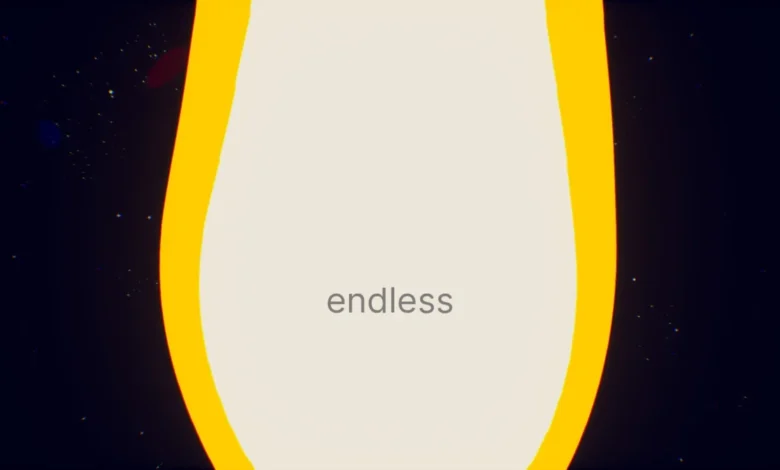
The release of indie developer Steph Thirion’s long-awaited title, Faraway, marks the conclusion of a remarkable 16-year development cycle. Published by Annapurna Interactive, the single-button cosmic exploration game has finally reached digital storefronts, transforming a fleeting 30-second teaser from the dawn of the modern smartphone era into a tangible interactive reality. The game’s journey from a conceptual spark in the French countryside to a fully realized audiovisual experience highlights both the volatile nature of independent game development and the enduring appeal of minimalist design philosophies.

The Genesis of a Cosmic Vision
The origins of Faraway trace back to 2010, following the breakout success of Thirion’s earlier touchscreen hit, Eliss. Designed during a period when the mobile application market lacked established monetization frameworks or standardized design paradigms, Eliss established Thirion as a distinct voice in procedural interaction design. The title relied entirely on fluid, multi-touch mechanics that prioritized tactile sensation over explicit narrative instruction.
Buoyed by the momentum of the early mobile gaming boom, Thirion conceived Faraway during a late-night stargazing excursion in rural France. The initial premise was remarkably straightforward: a 2D firmament where players could navigate the night sky. In March 2010, the project received its first functional form when Thirion developed a rudimentary physics-based prototype for a single-button game competition at the Game Developers Conference (GDC). Using a mechanic centered on utilizing stellar gravity to swing a celestial body through space, the prototype was constructed in a matter of weeks, leading to initial expectations of a rapid commercial release.

A Chronology of Delay: From Prototype to Production
What was initially projected to be a short-term development project evolved into a multi-decade endeavor. The timeline of Faraway highlights the complex variables that frequently disrupt independent game production:
- 2010: The initial prototype is developed for the GDC single-button competition, establishing the core mechanics of gravitational swinging.
- 2011–2017: Development stalls as Thirion steps away from the project, navigating personal and professional transitions while the broader gaming industry undergoes significant structural transformations.
- Circa 2018: Annapurna Interactive intervenes, offering financial backing, production support, and strategic resources to help revive the dormant project.
- 2019–2025: Thirion undertakes a comprehensive technical and artistic overhaul, transitioning the game from low-resolution pixel art to an infinite-resolution vector aesthetic, necessitating a complete engine rewrite.
- Late 2024–2026: Final trailers confirm a definitive launch window, culminating in the official release published by Annapurna Interactive.
Technical and Aesthetic Overhaul
The primary driver of Faraway’s prolonged development cycle was Thirion’s decision to elevate the project’s technical scope. While the foundational physics model remained true to the 2010 GDC prototype, the visual and architectural framework underwent a radical transformation.

Initially designed with a low-resolution pixel-art style reminiscent of Eliss, Thirion ultimately pursued a procedural, infinite-resolution aesthetic. Achieving this smooth, vector-like visual fidelity required rewriting the entire codebase within a new game engine—a technology stack with which Thirion had no prior experience. This technical pivot demanded extensive optimization to ensure consistent performance across modern hardware platforms, turning what was once a lightweight mobile app into a demanding audiovisual installation.
Behind these technical hurdles lay a philosophical pursuit reminiscent of classic puzzle design. Thirion frequently cited Tetris as a primary benchmark, analyzing how a minimal rule set could maintain player engagement across thousands of hours of interaction. The challenge, therefore, was not merely adding features to expand the game, but rather refining the core mechanic to ensure deep, emergent gameplay without compromising its initial simplicity.

Industry Implications and the Indie Landscape
The release of Faraway serves as a case study in the evolution of the independent games sector over the last two decades. When Thirion first entered the market, the mobile app ecosystem was characterized by an exploratory "Cambrian explosion" of novel concepts, minimal corporate oversight, and direct consumer engagement through social channels. Over the subsequent sixteen years, that landscape matured into a heavily capitalized industry dominated by established publishing partners, standardized development tools, and rigorous market positioning strategies.
The involvement of Annapurna Interactive reflects a broader industry trend wherein specialized publishers act as stewards for prolonged, art-house development projects. By stepping in to bridge the gap between initial artistic vision and final commercial viability, such partnerships have increasingly become the primary vehicle for high-concept, auteur-driven indie titles that might otherwise succumb to development hell.

Gameplay Mechanics and Reception
Upon its release, Faraway revealed a minimalist yet demanding core loop. Players control a comet traversing the cosmos through a single-input interface. By pressing and holding a button, the player binds the comet to the gravitational pull of nearby stars, allowing them to manipulate trajectory, velocity, and momentum. Releasing the input propels the celestial body forward into uncharted space.
Reviewers and early players have noted that the game operates on an abstract emotional register, combining elements of spatial puzzles, rhythmic timing, and high-stakes survival. Rather than relying on explicit exposition, Faraway uses its physics engine and atmospheric presentation to evoke broader existential themes—a reflection of Thirion’s own philosophical inquiries regarding scale, cosmic isolation, and the inherent beauty of the physical universe.

Ultimately, Faraway stands as a monument to stubborn creative persistence. By bridging the gap between the nascent mobile market of 2010 and the contemporary indie landscape, Thirion and Annapurna Interactive have delivered a title that transcends its turbulent production history, offering players a rare exercise in cosmic minimalism.