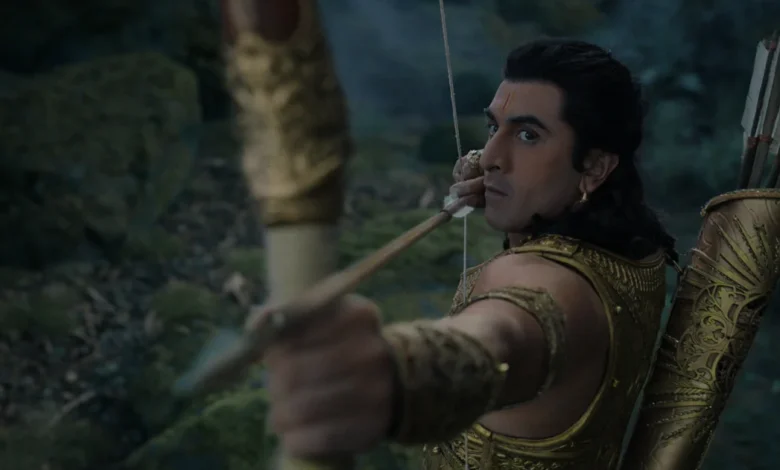
The global cinematic landscape has witnessed few undertakings as ambitious as Namit Malhotra’s Ramayana: Rise of a Legend, a sweeping, multi-part film adaptation of the foundational Hindu epic poem. Directed by Nitesh Tiwari from a screenplay by Shridhar Raghavan, the high-budget production marries ancient mythology with cutting-edge visual effects, boasting a stellar ensemble cast led by Ranbir Kapoor as Rama, Yash as Ravana, and Sai Pallavi as Sita. Released strategically during the festive window of Diwali—a holiday deeply intertwined with the mythological return of Rama to Ayodhya—the film has generated immense international interest. Backed by a high-profile musical score composed collaboratively by Academy Award winners Hans Zimmer and A.R. Rahman, the first installment establishes a monumental baseline for modern fantasy-epic filmmaking, setting the stage for a continuation slated for Diwali 2028.
Mythological Foundation and Narrative Scope
Rooted in the ancient Sanskrit epic traditionally attributed to the sage Valmiki, the Ramayana is one of the most revered and culturally pervasive texts in South Asian history, influencing literature, art, and philosophy for millennia. The cinematic narrative of Ramayana: Rise of a Legend begins by establishing the cosmic framework of Hindu theology, introducing the Trimurti: Brahma the creator, Shiva the destroyer and renewer, and Vishnu the protector.
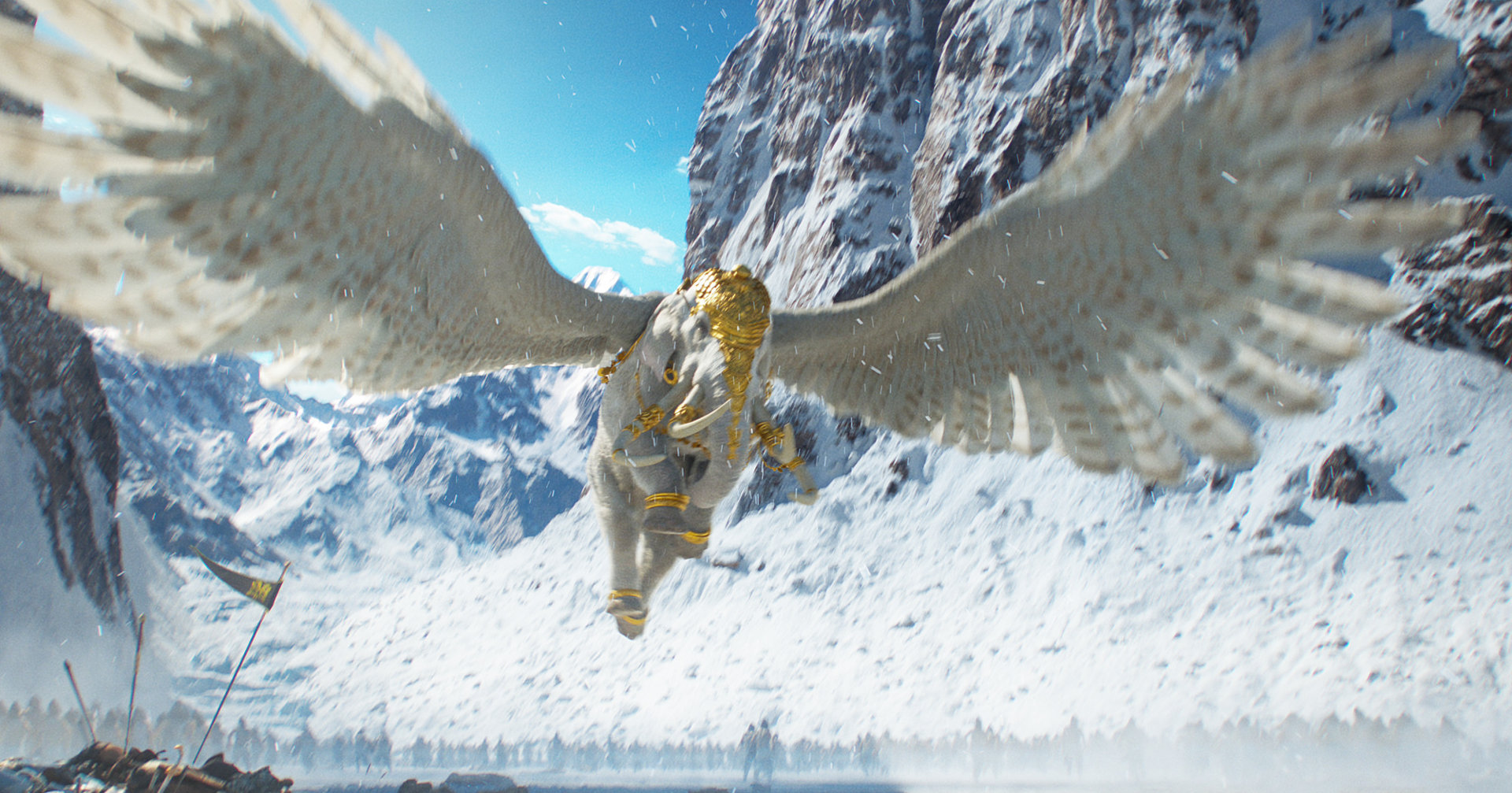
The story initially frames a primordial conflict between the forces of order, represented by the Devas, and the forces of chaos, represented by the Asuras. During a pivotal battle where the Asuras threaten to overwhelm the Devas, Lord Indra, portrayed by Kunal Kapoor, arrives mounted on a winged white elephant, Airavat, channeling the divine energy of Vishnu to reverse the tide of battle. Following their defeat, the Asuras are banished to a subterranean netherworld, living in harsh, subhuman conditions.
This sets in motion the ambitions of Dashanan, later known as Ravana, whose mother, Kaikashi (played by Shobana), urges him to abandon his scholarly pursuits and scriptures to elevate his people. Through an arduous ascetic journey to a mountaintop, Dashanan undertakes severe penance, generating seismic energy that alerts Brahma. Though denied absolute immortality, Dashanan is granted invulnerability against gods and celestial beings—leaving him vulnerable only to humans—and adopts the moniker Ravana before seizing control of the golden city of Lanka.
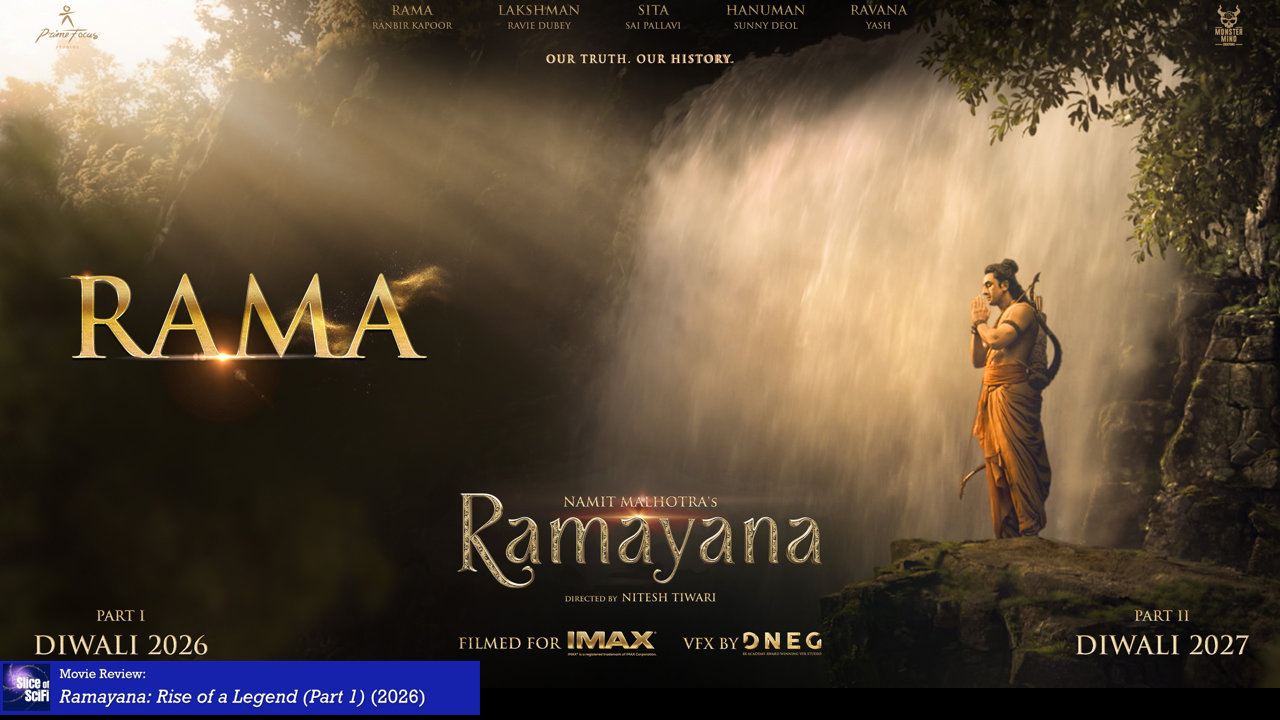
Parallel to Ravana’s rise, the narrative unfolds in the prosperous kingdom of Ayodhya. King Dasharatha (Arun Govil), possessing three wives, fathers four sons, among whom Rama (Ranbir Kapoor) emerges as a paragon of martial prowess, virtue, and leadership. At the behest of a sage, Rama and his loyal brother Lakshmana (Ravi Dubey) venture into perilous forests to eradicate demonic forces. Their successful campaign leads them to the kingdom of Mithila. There, King Janaka (Rajiv Kumar) challenges suitors to string Pinaka, a legendary divine bow gifted by Shiva. When Rama effortlessly handles the weapon—ultimately breaking it—he wins the hand of Princess Sita (Sai Pallavi), a skilled practitioner of both martial arts and sacred texts.
The return journey to Ayodhya introduces Parashurama, the sixth avatar of Vishnu, also played by Ranbir Kapoor. After testing Rama’s worthiness, Parashurama recognizes him as the rightful successor and the seventh avatar of Vishnu, dissolving his own divine mandate. However, domestic intrigue disrupts the impending coronation. Prompted by an ancient vow made by King Dasharatha to the mother of prince Bharata (Adinath Kothare), Bharata is crowned instead, and Rama, accompanied by Sita and Lakshmana, embarks on a mandatory 14-year exile into the wilderness.
Production Scale, Design, and Cinematography
The cinematic execution of Ramayana: Rise of a Legend is characterized by high production values, meticulous art direction, and advanced visual effects that blur the line between practical filmmaking and computer-generated imagery. The film’s aesthetic design distinguishes between the stark, oppressive architecture of the Asura netherworld and the radiant, opulent courts of Ayodhya and Lanka. Costume design plays a vital role in world-building, contrasting the tattered garments of the marginalized Asuras with the intricate silks, armor, and royal finery of the nobility.
Cinematography serves as a core strength of the production, utilizing expansive aerial perspectives—captured from the viewpoints of Ravana’s flying apparatus and the semi-divine vulture Jataya—to emphasize the geographic and cosmic scale of the narrative. The action choreography integrates visceral physical stunts with mythological elements, balancing supernatural weaponry and divine interventions to maintain stakes in large-scale combat sequences.
The production has drawn international comparisons to contemporary mythological adaptations, sharing thematic touchstones with classic oral traditions centered on the hero’s journey, predestination, and the perpetual struggle between cosmic order and disorder.
Cast and Creative Ensemble
The film features a diverse and high-profile ensemble cast designed to appeal to pan-Indian and international audiences.
- Ranbir Kapoor as Rama, portraying a multifaceted prince navigating the heavy burdens of destiny, duty, and exile.
- Yash as Ravana, bringing depth and nuance to an antagonist driven by ambition, vengeance, and a desire for ancestral redemption.
- Sai Pallavi as Sita, depicted as a warrior-scholar possessing martial competence alongside spiritual grounding.
- Ravi Dubey as Lakshmana, the steadfast brother sharing the hardships of the forest exile.
- Sunny Deol in a yet-to-be-fully-unveiled strategic supporting capacity.
- Arun Govil as King Dasharatha, lending veteran gravitas to the monarch of Ayodhya.
- Shobana as Kaikashi, anchoring the early motivations of the Asura lineage.
- Adinath Kothare as Bharata, caught in the web of palace succession.
Behind the camera, director Nitesh Tiwari, screenwriter Shridhar Raghavan, and producer Namit Malhotra have structured the project as a multi-part cinematic saga. The decision to split the massive source material into installments mirrors modern franchise strategies, culminating in a dramatic cliffhanger that sets up the narrative trajectory for the subsequent chapter.
Release Schedule and Future Outlook
Originally slated for a different timeline, the release strategy for Ramayana: Rise of a Legend has evolved to align with high-profile holiday windows. The first chapter arrives in theaters worldwide during Diwali, capitalizing on the cultural resonance of the festival.
Industry analysts note that adapting a text of this magnitude carries both immense commercial potential and cultural responsibility. The filmmakers have navigated these expectations by employing international technical talent, including Academy Award-winning sound and score designers, to ensure global competitiveness.
With the first film concluding on an unresolved note, attention turns immediately to the sequel. Production updates confirm that the next installment is scheduled for release on Diwali 2028, having been adjusted from an initially projected 2027 window to accommodate rigorous post-production and visual effects refinement. As the cinematic universe expands, Ramayana: Rise of a Legend stands as a benchmark for how traditional epics can be translated into contemporary, high-fidelity visual spectacles for global audiences.
Related posts: