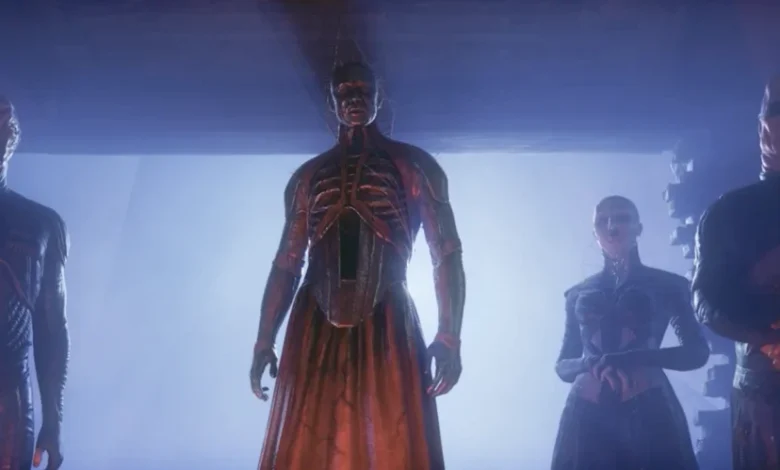
The 2026 Horror Game Awards concluded with a significant milestone for the genre, as Clive Barker’s Hellraiser: Revival secured the prestigious Game of the Year title. In an industry-defining upset, the title surpassed several high-profile contenders, including the highly anticipated Resident Evil: Requiem. The win represents a critical and commercial validation of the franchise’s return to its roots, blending visceral, atmospheric storytelling with a return to the classic survival-horror mechanics that defined the series’ early legacy.
In addition to the top honor, the production achieved individual recognition as actor Doug Bradley received the Best Performance award for his reprisal of Pinhead. This dual victory highlights the project’s success in balancing modern technical execution with the authentic, haunting character work that has been central to the Hellraiser mythos for nearly four decades.
A Competitive Landscape of Horror
The 2026 Horror Game Awards featured a robust field of 16 nominees for the Game of the Year category, reflecting a banner year for the horror medium. The selection process involved a panel of industry experts and a public voting component, which underscored the intense competition within the genre. Among the notable nominees were REANIMAL, Silent Hill: Townfall, ROUTINE, Silver Pines, Directive 8020, and the long-awaited remake of Fatal Frame II: Crimson Butterfly.
The victory of Hellraiser: Revival is particularly notable given the pedigree of its competitors. Resident Evil: Requiem entered the awards cycle with massive marketing backing and a significant existing player base. That Hellraiser managed to navigate this field speaks to the resonance of its "old-school" design philosophy, which prioritized environmental tension and psychological horror over the high-octane action sequences prevalent in other AAA titles released this year.
The Return of an Icon: Doug Bradley’s Contribution
The award for Best Performance granted to Doug Bradley was not merely a sentimental acknowledgment of a legacy actor. Developers confirmed that Bradley’s involvement was instrumental to the game’s production phase. Beyond his voice acting, Bradley served as a consultant on the project, specifically tasked with recreating the sonic signature of Pinhead.

By drawing on his historical records and personal recollection of how the original voice effects were manipulated in the late 1980s, Bradley ensured that the digital iteration of the character possessed the same ethereal, authoritative, and terrifying quality as the cinematic original. This collaborative process served as a cornerstone for the game’s development, bridging the gap between legacy media and interactive entertainment.
The Creative Influence of Clive Barker
Clive Barker, the architect of the Hellraiser universe, has maintained an active role in the oversight of the franchise’s expansion into the gaming space. His involvement has been cited by the development team as the primary factor in maintaining the series’ thematic integrity.
In recent commentary, Barker expressed strong support for the direction of the project, framing the game as a vital development for the future of the brand. He has characterized the success of the game as a "wake-up call" for the film and television industry, suggesting that the complexity of the Hellraiser mythology is better suited for the interactive depth allowed by video games than the truncated runtime of feature-length films. Barker has hinted that he has significant narrative ideas remaining that he wishes to explore, provided the industry support remains consistent.
Chronology of Development and Critical Reception
The path to the 2026 Horror Game Awards began with the project’s announcement, which was met with cautious optimism from long-time fans of the series. The development timeline was characterized by a focus on "authentic dread," a design choice that reviewers noted as a departure from the action-heavy entries of the early 2000s.
- Development Phase (2024–2025): The team prioritized the reconstruction of the Cenobite lore, emphasizing the aesthetic and psychological horror established by the original 1987 film.
- Release Window (Mid-2026): Upon launch, the title received critical acclaim for its atmosphere and level design. It was widely compared to Hellraiser: Bloodline, which many fans consider the high-water mark of the franchise’s cinematic history.
- Awards Cycle (Late 2026): Following a successful summer sales period, the game was nominated across multiple categories, eventually leading to its sweep at the Horror Game Awards.
Critical reception, such as the 4/5 rating issued by industry outlets, consistently pointed toward the game’s success in capturing the "Hellraiser spirit." The consensus among reviewers was that the game succeeded because it did not attempt to modernize the franchise into a different genre, but rather deepened the existing lore with mechanics that favored survival over combat.
Economic and Industry Implications
The success of Hellraiser: Revival has broader implications for the horror genre within the video game industry. With the rise of independent and mid-tier horror titles, the victory of an established intellectual property (IP) like Hellraiser—managed with such granular attention to detail—suggests a shift in player preference. Audiences are increasingly rewarding titles that honor the source material while utilizing modern rendering and physics engines to enhance, rather than replace, the core experience.

From a business perspective, the win is expected to catalyze further investment in the Hellraiser franchise. Media analysts note that the synergy between a successful game release and the potential for a new film or television project is a powerful model for modern entertainment conglomerates. By re-establishing the IP as a viable, high-quality contender in the gaming market, the developers have effectively expanded the "brand equity" of the Hellraiser name, making future adaptations more likely to receive green-light funding.
Future Outlook
As the dust settles from the awards ceremony, speculation regarding the future of the series has reached a peak. The demand for a sequel is already high, with fans and critics alike calling for a continuation of the narrative threads introduced in Revival. Whether the next iteration will be a direct sequel, a prequel, or a new anthology-style entry remains to be seen.
Furthermore, the involvement of Clive Barker in future projects appears to be a prerequisite for any further success in the eyes of the fanbase. The "wake-up call" Barker alluded to implies that the creative direction of the franchise is shifting back toward the author’s original vision. For now, the industry is closely monitoring the developers to see if the momentum generated by this win will result in a definitive roadmap for the franchise’s next decade.
The 2026 Horror Game Awards have not only honored a singular piece of software but have also signaled a potential renaissance for the Hellraiser franchise. By grounding the experience in the voice and philosophy of its creator, the developers have successfully navigated the challenges of revitalizing a legacy brand, proving that there is still a significant appetite for the unique, existential terror that defines the Cenobites. As stakeholders look toward the future, the industry will undoubtedly keep a watchful eye on how the success of this project influences the landscape of interactive horror in the coming years.
Related posts: