Link’s Reborn Adventure Becomes Nintendo’s Fastest-Selling Nintendo Switch 2 Game in the U.S. and Around the World

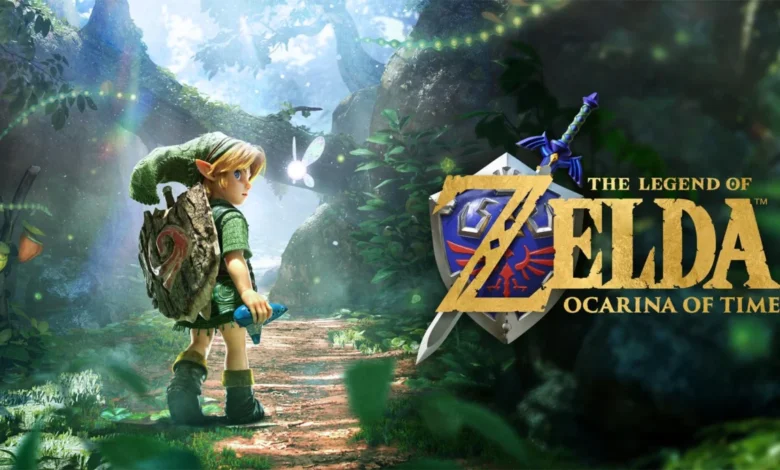
REDMOND, Wash. — Nintendo’s latest flagship release has shattered regional and global sales benchmarks, cementing a historic launch period for the company’s next-generation hardware. In the first four days following its worldwide release on November 5, The Legend of Zelda: Ocarina of Time for the Nintendo Switch 2 surpassed 5.2 million units sold globally. This remarkable milestone makes the title the fastest-selling Nintendo-published game in the history of the Nintendo Switch 2 platform, achieving record-breaking velocity across the United States, Canada, Latin America, and international markets.
The unprecedented demand for the reimagined 1998 classic highlights both the enduring cultural footprint of the franchise and the robust consumer adoption of Nintendo’s newer hardware ecosystem. Industry analysts note that achieving a 5.2-million-unit sell-through in under 100 hours places the title in an elite tier of historical video game launches, rivaling the debut figures of critically acclaimed blockbusters from previous hardware generations.
Rebuilding a Masterpiece for a New Era
Developed as a comprehensive, ground-up remake of the seminal Nintendo 64 masterpiece, the Nintendo Switch 2 version of The Legend of Zelda: Ocarina of Time transports players back to the kingdom of Hyrule. The narrative follows the hero Link as he embarks on an epic quest spanning two distinct chronological eras, battling dark forces to alter the fate of the realm.
While preserving the core level design and narrative beats that defined the 1998 original, the modern iteration introduces a sweeping array of contemporary technical and design enhancements. Players are greeted with completely reimagined, high-definition visuals that take full advantage of the Nintendo Switch 2’s graphical capabilities. The auditory experience has similarly been elevated via a fully orchestrated musical score, complemented by professional voice acting for key characters and expanded cinematic cutscenes that deepen the emotional resonance of the story. Furthermore, the development team modernized the gameplay loop by implementing reworked camera and movement controls, lowering the barrier to entry for modern gamers while retaining the depth expected by longtime series veterans.
Nintendo executives anticipated strong interest from both nostalgic older demographics and younger players experiencing the title for the first time. By smoothing out legacy control schemes and injecting modern presentation values, the publisher successfully positioned the release as an optimal entry point into the broader, decades-long franchise.
A Cornerstone of the 40th Anniversary Celebration
The stellar commercial performance of the Ocarina of Time remake arrives during a monumental milestone period for the company. The launch serves as a core pillar of The Legend of Zelda 40th Anniversary celebration, commemorating four decades since the debut of the original franchise installment in Japan in 1986.
The year-long anniversary initiative is designed to honor the historical impact of the intellectual property through a multifaceted rollout of media, merchandise, and live experiences. Alongside the software launch, Nintendo has outlined an expansive roadmap for the brand. This includes a major worldwide concert tour beginning in 2027, dedicated entirely to celebrating the iconic musical compositions of the series. Additionally, the cross-media expansion of the franchise will reach new heights with the release of The Legend of Zelda live-action feature film, scheduled to premiere in theaters on April 30, 2027. Fans seeking comprehensive updates regarding the ongoing anniversary festivities can access dedicated portals via the official Zelda 40th Anniversary website.
Historical Chronology and Context
To understand the magnitude of the current sales record, industry historians point to the evolution of the franchise and its hardware homes over the past forty years.
- 1986: The original The Legend of Zelda debuts in Japan on the Family Computer Disk System, establishing the top-down action-adventure template that would influence the industry for decades.
- 1998: The Legend of Zelda: Ocarina of Time launches on the Nintendo 64, revolutionizing 3D game design, pioneering the Z-targeting combat system, and securing widespread acclaim as one of the greatest video games ever made.
- 2011–2023: The series undergoes various iterations, remasters, and open-world reinventions, culminating in massive critical and commercial successes like Breath of the Wild and Tears of the Kingdom.
- November 5, 2026: The full remake of Ocarina of Time launches globally for the Nintendo Switch 2.
- November 9, 2026: Nintendo officially confirms that worldwide sales have exceeded 5.2 million units in the first four days, breaking platform records.
- 2027 and Beyond: The franchise prepares for the launch of its global symphonic concert tour and the theatrical debut of its live-action motion picture.
Corporate Statements and Strategic Implications
While direct public commentary regarding specific sales figures remains measured in corporate press releases, Nintendo representatives have frequently emphasized their ongoing mission to deliver unique, family-friendly entertainment experiences. Founded in Kyoto, Japan, in 1889—initially as a manufacturer of Hanafuda playing cards—Nintendo has grown into a global entertainment titan. Over its corporate history, the company has introduced iconic franchises including Mario, Donkey Kong, Pokémon, Metroid, Kirby, Animal Crossing, Pikmin, and Splatoon, accumulating more than 6.2 billion software sales and over 870 million hardware units sold globally.
The regional headquarters for the Americas, Nintendo of America Inc., located in Redmond, Washington, oversaw the rollout of the recent launch. Market observers suggest that the staggering early adoption of the Ocarina of Time remake validates Nintendo’s hardware strategy for the Switch 2. By leveraging deeply trusted intellectual properties equipped with modern technological upgrades, the publisher has successfully driven early hardware adoption rates and reinforced consumer confidence in the ecosystem.
Furthermore, industry analysts highlight the broader implications of this commercial success for the video game sector at large. In an era where development costs and timelines for AAA titles have ballooned significantly, the ability to thoughtfully revitalize foundational classics—while expanding them to meet contemporary standards—presents a highly lucrative and critically viable roadmap for publishers. For Nintendo, the triumph of Link’s latest journey proves that timeless game design, paired with respectful modernization, remains a potent formula for historic market success.
Related posts: