5 Masters of the Universe Characters Who Never Made It to the Classic Cartoon (& How Much Their Figures Are Worth)

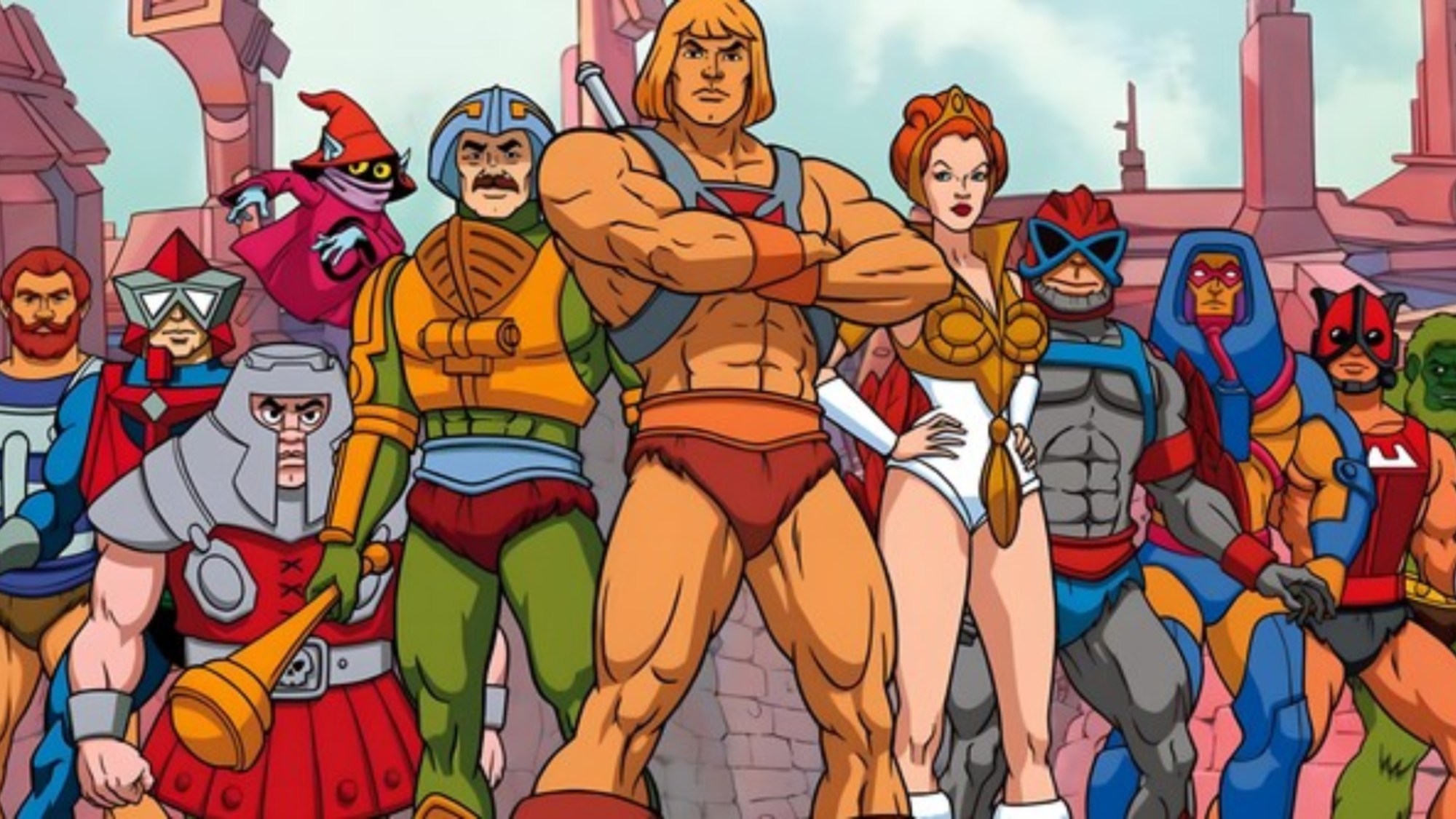
The imminent release of the new Masters of the Universe film has galvanized fan excitement, largely due to early indications that the production faithfully embraces the iconic visual aesthetic of the original franchise. Behind-the-scenes glimpses from events like CinemaCon have showcased a commitment to the classic designs of both heroes and villains, signaling a nostalgic yet fresh interpretation of Eternia. This renewed focus on the franchise’s foundational elements has naturally drawn attention back to its rich history, particularly the seminal 1980s toy line and its accompanying animated series. While the original Filmation cartoon introduced a beloved pantheon of characters that became household names, a fascinating subset of the Masters of the Universe universe existed solely within the realm of action figures and supplementary minicomics, never making the leap to the small screen. These characters represent a unique chapter in MOTU lore, and their vintage action figures are now experiencing a surge in collector interest and market value, driven by both nostalgia and the franchise’s contemporary revival. This article delves into five such figures, exploring their origins, their enduring appeal, and their current standing in the competitive world of vintage toy collecting.
The Genesis of Eternia: Toys First, Then Animation
To understand the unique status of these toy-only characters, it is crucial to recall the origins of the Masters of the Universe phenomenon. Launched by Mattel in 1982, the MOTU line was conceived primarily as a toy property, a strategic response to the absence of a strong boys’ action figure line in Mattel’s portfolio after failing to secure the rights to Star Wars figures. The initial concept was rooted in a blend of fantasy, sci-fi, and barbarian aesthetics, creating a world where advanced technology coexisted with ancient magic. He-Man, Skeletor, and a core cast of characters were developed with detailed action figures first, each accompanied by a mini-comic that provided rudimentary backstory and character motivations.
The success of the toy line quickly led to the creation of Filmation’s He-Man and the Masters of the Universe animated series, which debuted in 1983. The cartoon served as a powerful marketing tool, imbuing the figures with personalities, adventures, and a cohesive narrative that captivated millions of children worldwide. However, the relationship between the toy line and the cartoon was not always perfectly synchronized. Filmation, operating under budget constraints and specific broadcast standards (e.g., limits on violence, promoting positive messages), often adapted or omitted characters and storylines from the toy line. Moreover, the toy line continued to evolve and release new characters throughout the 1980s, long after the Filmation series concluded its initial run in 1985. This chronological disparity, coupled with creative divergences, meant that a significant number of later-wave figures, or those deemed less central to Filmation’s narrative, never received animated counterparts. These figures now hold a special place for collectors, representing the deeper cuts of the MOTU canon.
The Enduring Allure of Vintage Collectibles
The market for vintage action figures, particularly those from culturally significant franchises like Masters of the Universe, is a vibrant ecosystem driven by nostalgia, rarity, and condition. For many adult collectors, these figures are tangible links to their childhoods, embodying a simpler time and cherished memories. The renewed interest spurred by new cinematic and television adaptations often acts as a catalyst, drawing in new collectors and re-engaging lapsed enthusiasts, thereby driving up demand and prices.
Factors determining a figure’s value include:
- Condition: Mint in Box (MIB) or Mint on Card (MOC) figures command the highest prices, especially if the packaging is pristine. Loose figures are valued based on their condition (paint wear, joint tightness) and completeness (all original accessories present).
- Rarity: Figures from later waves, those with limited production runs, or regional exclusives tend to be rarer and thus more valuable.
- Character Popularity: While our focus here is on lesser-known characters, even within this niche, certain designs or backstories resonate more with collectors.
- Provenance: Figures with documented histories or from reputable sellers can sometimes fetch higher prices.
The five characters discussed below exemplify this phenomenon, showcasing how their absence from the original cartoon has, paradoxically, enhanced their mystique and desirability among dedicated collectors.
5. Stinkor: The Odorous Adversary
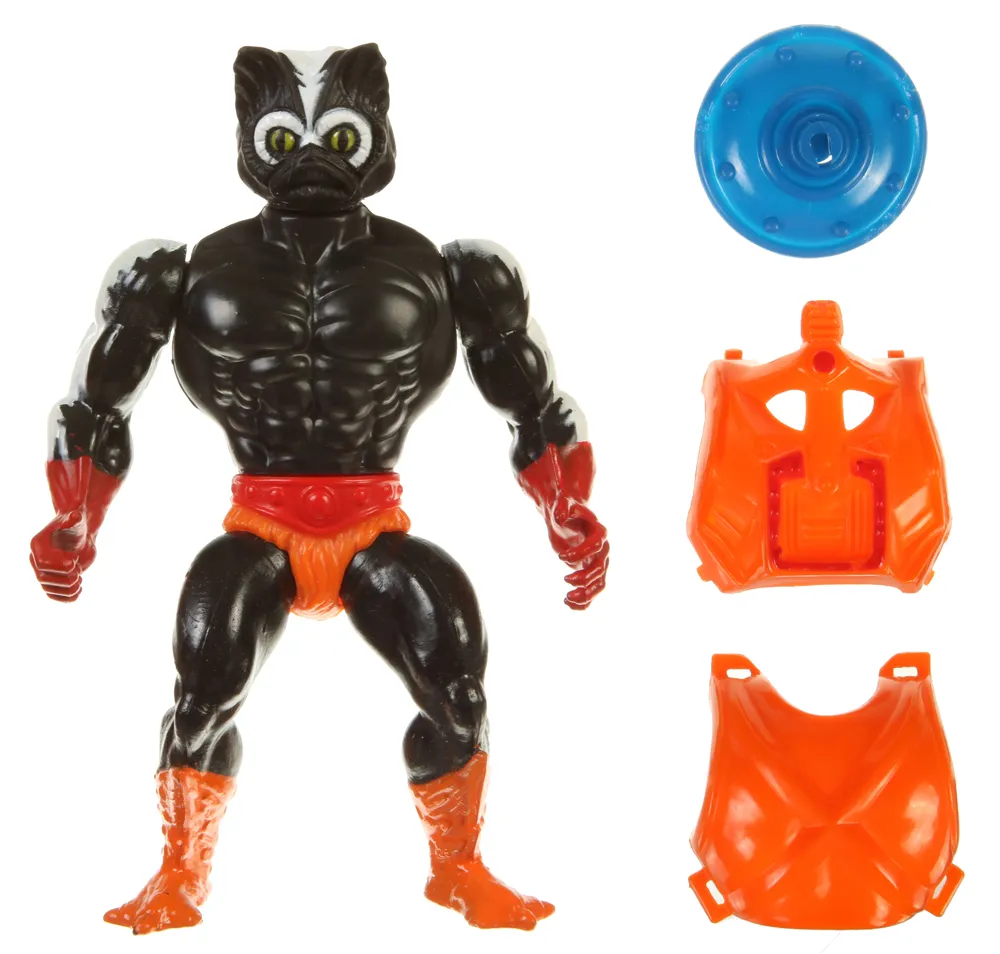
Stinkor, a fan-favorite villain, stands out not only for his distinctive appearance but also for his unforgettable, if not entirely pleasant, action feature. Hailing from the race of skunk humanoids known as Peleezeans, Stinkor is an evil warrior who possesses the formidable power to emit a paralyzing, toxic odor. He serves as a villainous counterpart to the heroic Moss Man, embodying the destructive forces of decay and pollution against Moss Man’s connection to nature.
Character Background and Figure Details:
Stinkor was released in the 1985 wave of the Masters of the Universe toy line. His action figure was revolutionary for its time, as Mattel ingeniously infused the cobalt blue plastic with patchouli oil, giving the figure a semi-foul scent that mirrored his in-universe ability. This unique tactile and olfactory experience made Stinkor instantly memorable. Despite his compelling concept and distinctive figure, Stinkor never appeared in the original Filmation cartoon. This omission is often attributed to his later release date within the toy line’s production cycle, occurring after the main Filmation series had largely defined its core cast and narrative arcs. Additionally, Filmation’s preference for less overtly "gross" or potentially controversial characters might have played a role. His backstory was primarily developed through his accompanying minicomic, detailing his origins and allegiance to Skeletor.
Current Market Value:
Vintage sealed Stinkor figures from 1984 (often listed as ’84 due to copyright date on card) are highly sought after by collectors. On platforms like eBay, a Mint on Card (MOC) Stinkor can typically be acquired for approximately $200. However, prices can fluctuate significantly based on the card’s condition, the integrity of the bubble, and crucially, the persistence of the figure’s original scent. Collectors often prioritize figures where the scent, though aged, is still detectable. Higher-end listings for exceptionally pristine, untouched examples can reach upwards of $300-$400, especially if professionally graded. Loose, complete figures with all accessories (shield and gas mask) generally range from $50 to $100, depending on paint condition and joint stability. The value reflects his iconic status and the novelty of his unique feature.
4. Ninjor: The Shadow Assassin
Remaining within the villainous ranks, Ninjor represents one of the most intriguing later additions to the Masters of the Universe rogue’s gallery. As his name suggests, Ninjor is an evil ninja warrior, embodying stealth, lethal martial arts prowess, and an enigmatic aura. He stands out with his striking all-black and red design, a stark contrast to many of the more brightly colored characters in the MOTU universe.
Character Background and Figure Details:
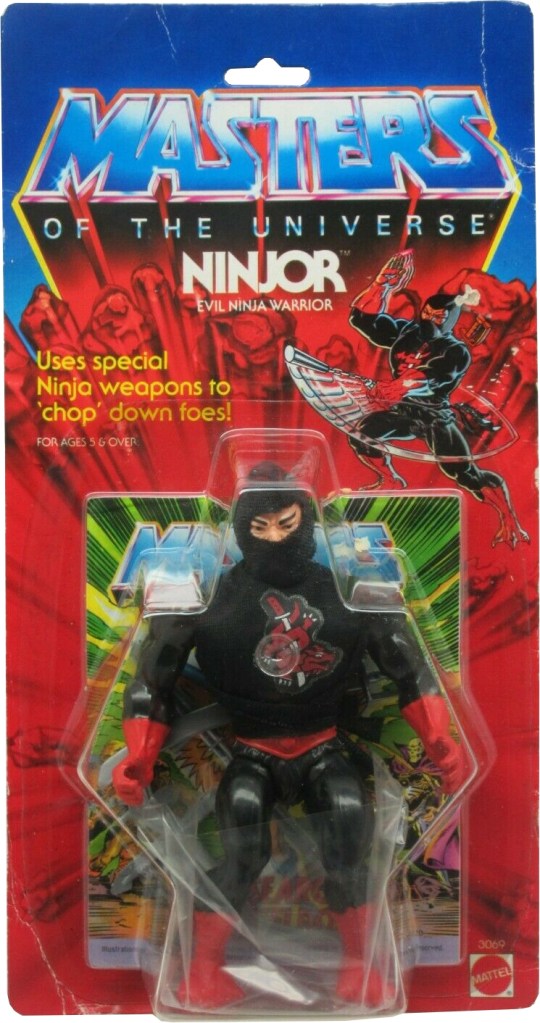
Ninjor was among the final figures released in the original Masters of the Universe toy line in 1987, a period when the franchise was already well past its Filmation cartoon heyday. His lore was established through minicomics, notably The Search for Keldor, which dramatically described him as "one of the most evil beings across time and space." This grand pronouncement, coupled with his visually arresting design and unique skillset (equipping a katana, nunchaku, and a bow), made him a compelling character despite his absence from animation. The decision not to feature Ninjor in the cartoon was a direct consequence of his late introduction into the toy line, long after the Filmation series had ceased production. Had he been introduced earlier, his ninja archetype could have provided dynamic new challenges for He-Man and the Heroic Warriors.
Current Market Value:
Ninjor is a highly coveted figure among collectors due to his late release and distinctive design. Sealed, Mint on Card (MOC) versions of Ninjor command substantial prices. Listings on eBay frequently show MOC Ninjor figures selling for upwards of $400, with particularly pristine examples, especially those from US-based sellers or graded by reputable services, fetching as much as $700 or more. The completeness of his original weapons (katana, nunchaku, and bow) is crucial for loose figures, which typically range from $80 to $150 depending on condition. The intricate detailing and the enduring appeal of the ninja archetype contribute significantly to his high market value.
3. Clamp Champ: The Royal Enforcer
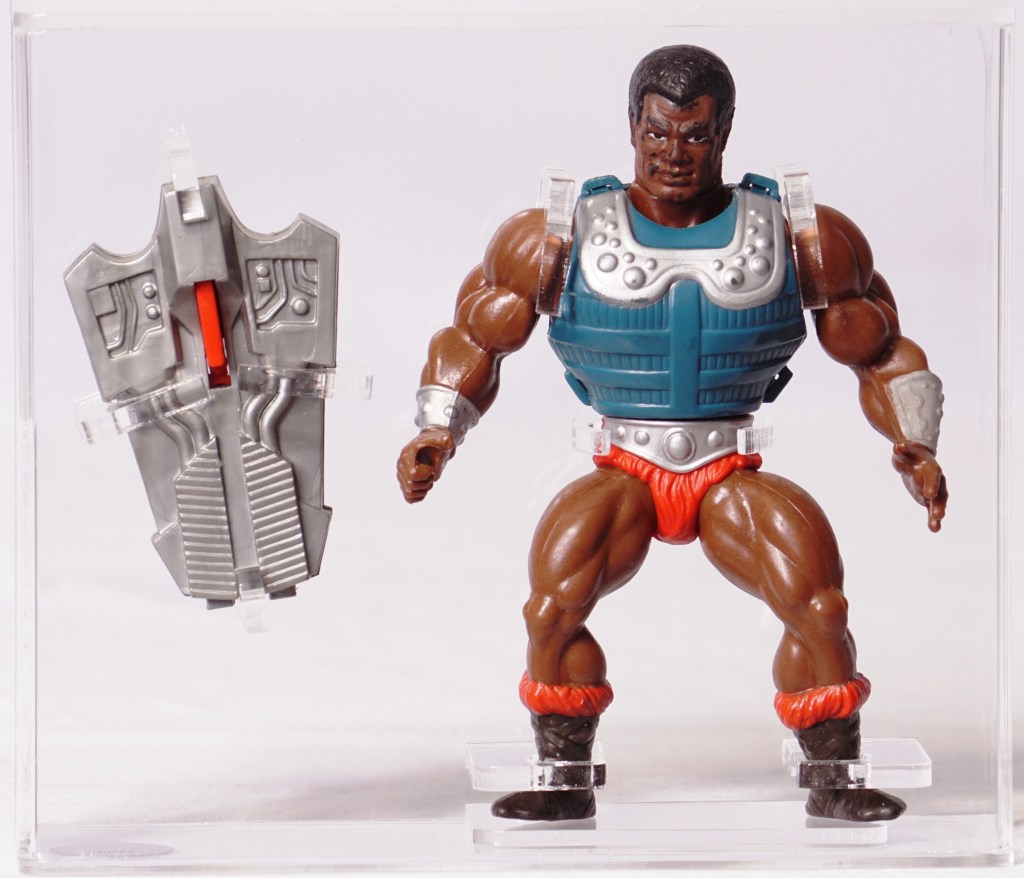
Shifting focus to the heroic side of Eternia, Clamp Champ emerges as a powerful and loyal defender of the Royal Family. With an imposing physique and an undeniably awesome name, Clamp Champ serves as a trusted guardsman at the Royal Palace, acting as a personal bodyguard for King Randor and Queen Marlena. His signature weapon, a colossal clamping device, not only gives him his name but also serves as a formidable tool against Skeletor’s forces.
Character Background and Figure Details:
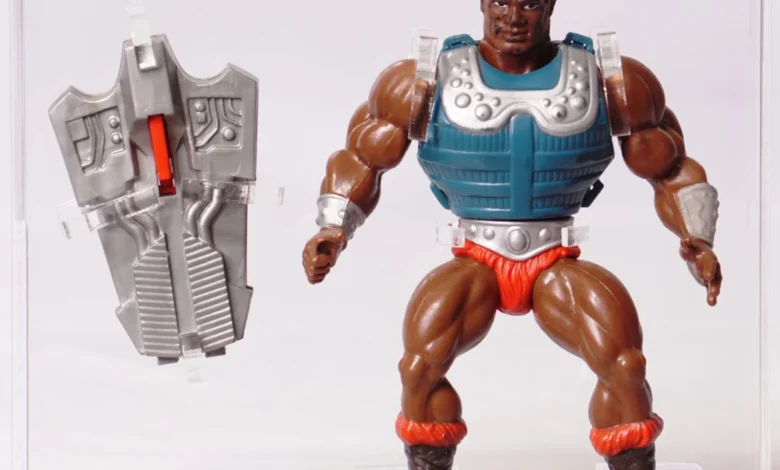
Like Ninjor, Clamp Champ was one of the later additions to the Masters of the Universe toy line, released in 1987. His backstory, also detailed in minicomics such as The Search for Keldor, positioned him as a vital, if unheralded, protector of Eternia’s monarchy. His robust design, featuring heavy armor and the distinct clamp weapon, made him a visually impressive figure. The primary reason for his exclusion from the original Filmation cartoon is his late release date, well after the animated series had concluded its run. Had he been introduced earlier, Clamp Champ’s unique abilities and role as a royal bodyguard could have added an interesting dynamic to the heroic ensemble.
Current Market Value:
Clamp Champ figures are a strong draw for collectors, especially those seeking to complete their heroic lineup. Loose, complete Clamp Champ figures, typically including his clamping weapon and shield, often sell for $100 to $180 on eBay, reflecting his relative rarity and desirability. The functionality of the clamping mechanism is a key factor in valuing loose figures. For sealed, Mint on Card (MOC) versions, the prices escalate significantly. Listings regularly show MOC Clamp Champs in the $400 to $500 range. Figures with an intact, unpunched card and a clear bubble are particularly prized. The robust demand for this character underscores the collector community’s appreciation for these later-wave, cartoon-absent figures.
2. Rotar: The Spinning Sentinel
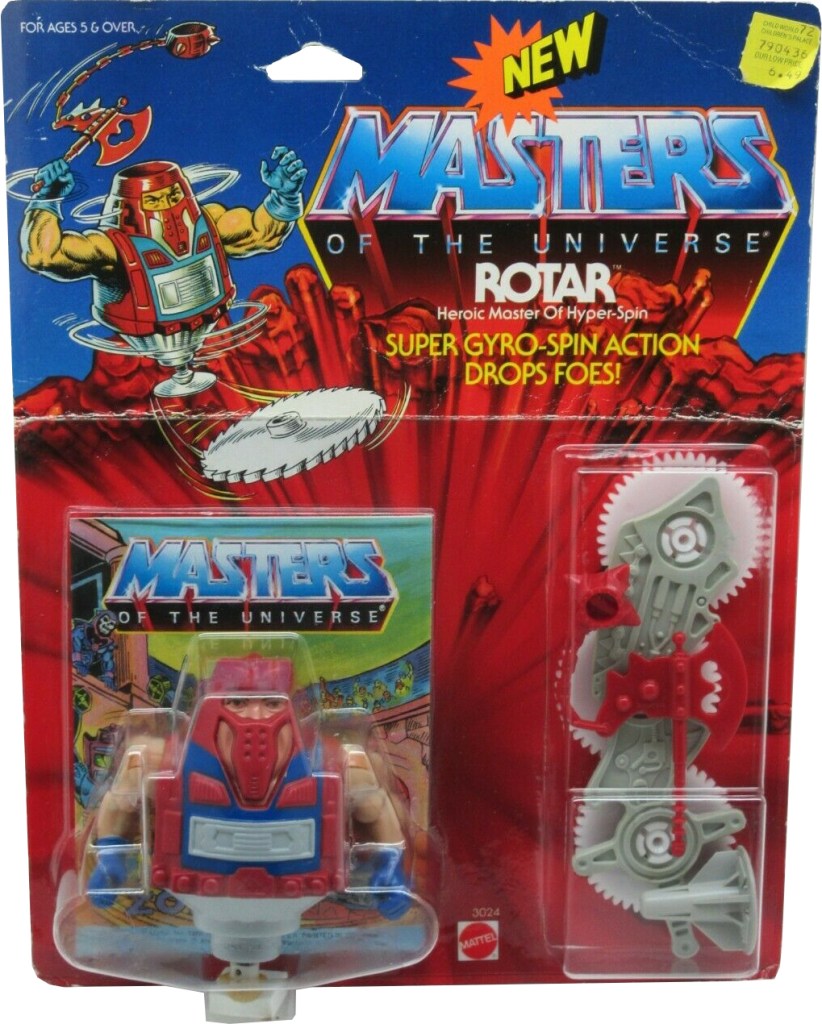
Rotar stands out as one of the most uniquely designed and functionally innovative characters in the entire Masters of the Universe franchise. This heroic warrior possesses an extraordinary modification: instead of legs, he has a powerful spinning top mechanism that allows him to move at incredible speeds, making him exceptionally agile and adept at dodging enemy attacks on the battlefield.
Character Background and Figure Details:
Rotar was part of the "Powers of Grayskull" sub-line, introduced in 1987, which sought to expand the MOTU universe with new concepts and mechanical features. His origin story, detailed in the Energy Zoids minicomic, is particularly compelling: after sustaining critical injuries in battle, Rotar’s life is saved by Man-At-Arms, who ingeniously transforms him into an "energy zoid," granting him his signature spinning ability. This narrative highlights the blend of magic and technology that defines Eternia. His absence from the Filmation cartoon is primarily due to his late introduction within a specialized sub-line, long after the series had ended. Furthermore, the complexity of consistently animating his spinning mechanism might have posed challenges for Filmation’s production capabilities.
Current Market Value:
Adding Rotar to a collection is generally a significant investment. Even loose, complete figures (with his spinning top base, chest armor, and weapon) regularly command prices upwards of $300 on eBay. The integrity and functionality of the spinning mechanism are paramount for loose figures, as damage to this feature can significantly reduce value. Sealed, Mint on Card (MOC) Rotar figures are considerably rarer and thus more expensive. Prices for MOC Rotar figures can range from $700 to nearly $900, positioning him as one of the more valuable figures from the later waves. His distinct design and the mechanical play feature contribute heavily to his desirability among collectors.
1. Twistoid: The Malevolent Counterpart
It is impossible to discuss Rotar without acknowledging his evil counterpart, Twistoid. This villainous character serves as Skeletor’s twisted answer to Rotar, effectively being a redone version of the heroic spinning warrior with a distinctly malevolent aesthetic.
Character Background and Figure Details:
Twistoid’s origin directly intertwines with Rotar’s. According to the minicomics, after Man-At-Arms successfully uses a specialized machine to transform and save Rotar, Skeletor steals or replicates this technology to create his own spinning warrior. Twistoid is the result: a chaotic and destructive force mirroring Rotar’s agile movements. Visually, Twistoid is a striking figure, boasting a wild and vibrant paint job featuring a seemingly incongruous mix of bright pink, blue, green, and orange. Like Rotar, he possesses the same spinning top lower body, enabling high-speed maneuvers and aggressive attacks. Twistoid also belongs to the 1987 "Powers of Grayskull" sub-line, explaining his absence from the original Filmation cartoon for the same reasons as Rotar – his late release and specialized nature.
Current Market Value:
Twistoid is generally considered one of the harder figures from the later waves to track down in pristine condition, particularly sealed. At the time of this writing, sealed Mint on Card (MOC) versions of Twistoid are rarely seen on prominent online marketplaces like eBay, suggesting either extreme rarity or that collectors are less willing to part with them. This scarcity drives up the value of available examples. Loose, mostly complete versions of Twistoid, often including his spinning base and chest armor, typically sell within the range of $225 to $375. As with Rotar, the functionality of his spinning mechanism and the condition of his vibrant paint applications are critical factors for determining the value of loose figures. His unique and memorable, albeit chaotic, design, coupled with his narrative connection to Rotar, makes him a prized acquisition for dedicated MOTU collectors.
Broader Implications and the Future of Eternia
The resurgence of Masters of the Universe in contemporary media, from Netflix animated series to the upcoming live-action film, has profound implications for the collector’s market. These new adaptations often introduce classic characters to a new generation, while simultaneously reigniting the passion of long-time fans. The meticulous attention to original designs in the new film has further validated the aesthetic choices of the original toy line, enhancing the appeal of its vintage figures.
The increased visibility of the franchise ensures that interest in its deeper lore, including characters who only existed as toys, will continue to grow. It is not inconceivable that future animated series or films might delve into these untapped corners of the MOTU universe, finally bringing characters like Stinkor, Ninjor, Clamp Champ, Rotar, and Twistoid to the screen. Such an event would undoubtedly send their vintage figure values soaring even higher, as demand from both nostalgic collectors and new fans alike would intensify.
Ultimately, these five figures represent more than just plastic toys; they are artifacts of a unique moment in pop culture history, embodying the creative synergy between toy design and storytelling that defined an era. Their enduring value is a testament to the lasting power of the Masters of the Universe franchise and the dedicated community of collectors who continue to preserve its legacy. As Eternia prepares for its next cinematic chapter, these unsung heroes and villains from the original toy line stand ready, their stories waiting to be fully told, and their figures continuing to appreciate in the hands of devoted enthusiasts.

