Rick Berman Reflects on His Stewardship of the Star Trek Franchise and the Legacy of the Berman Era

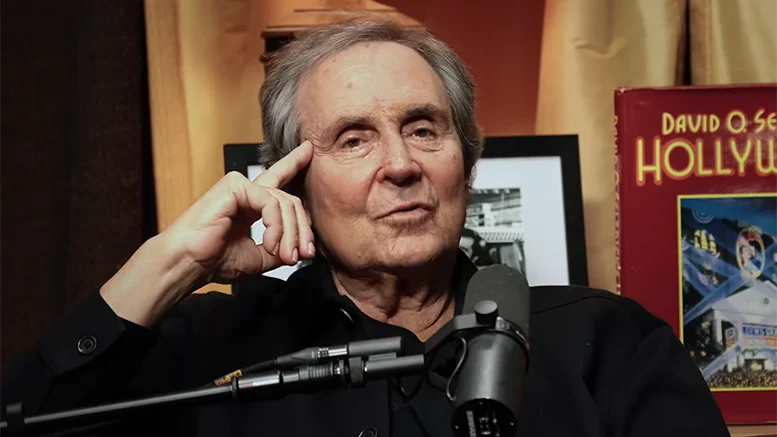
For nearly two decades, Rick Berman served as the primary architect of the Star Trek television universe. Assuming control following the death of series creator Gene Roddenberry in 1991, Berman presided over a prolific, if often contentious, era of science fiction television. His tenure encompassed the entirety of Star Trek: The Next Generation (post-first season), Star Trek: Deep Space Nine, Star Trek: Voyager, and Star Trek: Enterprise. As the franchise faced an uncertain future following the cancellation of Enterprise in 2005 and the critical disappointment of the film Star Trek: Nemesis, Berman became the focal point for fan dissatisfaction. However, in a recent appearance on the podcast Dropping Names with former Next Generation stars Jonathan Frakes and Brent Spiner, Berman offered a candid, reflective assessment of his controversial leadership and his current perspective on the shifting tides of the franchise’s legacy.
The Architect of the Berman Era
To understand the weight of Berman’s tenure, one must look at the immense output produced under his supervision. Between 1987 and 2005, Berman oversaw the production of over 600 episodes of television. His approach was defined by a strict adherence to the vision of Gene Roddenberry, particularly regarding the "no-conflict" rule among Starfleet crew members—a philosophy that often placed him at odds with his own writing staff.
During the podcast, Frakes and Spiner noted a distinct shift in fan sentiment. Once criticized for being overly formulaic or resistant to modernization, the "Berman era" is now frequently cited by modern viewers as a gold standard for the franchise. Frakes remarked, "Now they cherish them and say, ‘We’ve got to get back to the Berman era,’" a sentiment echoed by Spiner, who noted that fans often turn their ire toward whoever currently holds the reins of the franchise, whether it be J.J. Abrams or Alex Kurtzman. When asked about this historical revisionism, Berman was characteristically blunt: "I got over that a long time ago."
The Creative Conflict: Roddenberry’s Shadow
A significant portion of the interview focused on the creative friction that defined the 1990s and early 2000s. Writers and producers frequently clashed with Berman over his insistence that scripts remain within the rigid parameters of the "Roddenberry box."
Brent Spiner recounted instances where he or other writers would propose bold narrative shifts or character conflicts, only to be shut down by Berman’s refrain: "That’s not Roddenberry to do that." In a rare moment of concession, Berman admitted, "I think ultimately I was probably wrong sometimes."

This admission highlights the long-standing tension that permeated writers’ rooms during the production of Deep Space Nine and Voyager. Figures such as Ira Steven Behr have historically been vocal about their frustration regarding Berman’s refusal to allow for serialized storytelling or overt references to the original series. For example, Behr famously fought for a single, brief mention of Spock in the Next Generation episode "Sarek," a request that became a point of contention between the two. These arguments were not merely about creative control; they represented a fundamental disagreement over whether Star Trek should remain a static, moralistic procedural or evolve into a character-driven, serialized drama.
Breaking the Episodic Mold: A Chronology of Change
One of the most revealing segments of the discussion involved the evolution of television structure. For years, Paramount Television executives were vehemently opposed to serialized arcs, fearing that syndication—the primary revenue driver for the franchise—would suffer if viewers watched episodes out of order.
Berman recounted his persistent lobbying of then-Chairman of Paramount Television, Kerry McCluggage. "Ira [Behr] would come to me and say, ‘We’ve got to do a continuing storyline,’" Berman explained. "And I would go to Kerry… and he would say no." The breakthrough, according to Berman, occurred with the Next Generation season three finale, "The Best of Both Worlds."
This moment proved to be a watershed event for the franchise. By proving that a cliffhanger could build anticipation rather than alienate viewers, Berman successfully shifted the corporate strategy. This victory paved the way for the multi-part story arcs seen in later seasons of The Next Generation and allowed Deep Space Nine to pioneer the long-form storytelling that is now considered standard in modern prestige television.
Data and Market Context
The "Berman era" remains the most commercially successful period in Star Trek history in terms of volume and syndication stability. Star Trek: The Next Generation remains the highest-rated series in the franchise, and the consistent output of the 1990s allowed Paramount to build a robust brand presence. However, the data also reflects the burnout that eventually led to the franchise’s decline.
Chronology of the Berman Era:

- 1991: Gene Roddenberry passes away; Berman assumes full control of the franchise.
- 1993: Star Trek: Deep Space Nine debuts, introducing more complex, serialized narratives.
- 1994: Star Trek: Generations marks the transition of the film franchise to the TNG cast.
- 1995: Star Trek: Voyager launches, testing the limits of episodic format.
- 2001: Star Trek: Enterprise premieres, marking the final series produced under Berman’s initial run.
- 2002: Star Trek: Nemesis is released to lukewarm critical and commercial reception.
- 2005: Star Trek: Enterprise is canceled, ending the 18-year continuous production cycle.
Implications for the Modern Franchise
The modern iteration of Star Trek, under the guidance of producers like Alex Kurtzman, has largely abandoned the strict "no-conflict" rules of the 1990s in favor of high-stakes, cinematic serialized drama. While this has drawn criticism from traditionalists, it reflects the broader shift in the television landscape toward the very serialized model that Behr and others pushed for in the mid-90s.
Berman’s current perspective is notably detached. While he has been critical of modern stylistic choices—particularly the use of contemporary language in modern Star Trek—he maintains a sense of finality regarding his contribution. His appearance on the podcast suggests a man who has reconciled his professional legacy, acknowledging both the rigid mistakes of his past and the hard-won victories that allowed the franchise to survive as long as it did.
Broader Legacy
The "Berman Era" will likely continue to be a subject of intense debate among fans and media scholars. Critics will point to the stagnation and eventual cancellation of Enterprise as evidence of a failure to adapt, while supporters will emphasize the massive world-building and character development that turned Star Trek from a cult hit into a global cultural phenomenon.
Ultimately, the interview serves as a reminder that the history of Star Trek is not a singular, cohesive narrative, but a collection of conflicting visions, studio mandates, and creative battles. Rick Berman, for better or worse, was the central figure around whom all those conflicts revolved. His ability to move past the vitriol of the early 2000s suggests that, regardless of the criticism he faced, he views his time at the helm as a completed chapter—one that, despite its flaws, laid the foundation upon which every subsequent iteration of the franchise has been built.