Marvel Studios Quietly Prepares For VisionQuest By Demanding Surprisingly Little Cinematic Universe Homework From Viewers


The modern landscape of superhero franchises is frequently criticized for requiring audiences to complete an exhaustive amount of preliminary viewing before diving into new theatrical releases or streaming series. With the Marvel Cinematic Universe spanning dozens of interconnected films and television shows, casual viewers often express fatigue regarding the sheer volume of continuity required to understand ongoing storylines. Upcoming massive crossovers, such as the highly anticipated Avengers: Doomsday, feature extensive mandatory watchlists that can intimidate even dedicated fans. However, the streaming era presents a different structural framework for serialization, where long-form narratives allow creators to pivot away from complex, multi-franchise lore toward more focused character studies.
For the upcoming Disney+ series VisionQuest, the preparatory viewing requirement has been drastically minimized. According to recent statements from the show’s creative leadership, prospective viewers do not need to marathon decades of cinematic history to appreciate the new narrative. Instead, the thematic foundation of VisionQuest rests almost entirely upon just two specific, highly philosophical scenes from previous Marvel entries. This streamlined approach signals a deliberate shift by Marvel Studios to make streaming content more accessible to both returning veterans and lapsed audiences who may have stepped away from the broader franchise after major milestone events like Avengers: Endgame.
The Two Pivotal MCU Scenes That Form the Core of VisionQuest
To fully grasp the thematic underpinnings of VisionQuest, showrunner Terry Matalas has highlighted two foundational moments that established the psychological and existential dilemmas of the titular synthezoid. The first of these essential narrative building blocks takes place in the concluding moments of 2015’s Avengers: Age of Ultron. In this sequence, the newly born Vision confronts the final remaining Ultron drone in a forested Sokovian landscape. Their dialogue transcends standard superhero fisticuffs, delving instead into the nature of artificial intelligence, purpose, and mortality.
During the exchange, Ultron criticizes Vision for his optimistic outlook on humanity, while Vision defends mankind’s resilience and capacity for grace despite its inherent flaws. The conversation crystallizes the philosophical divide between the rogue AI and its more enlightened counterpart. When Ultron dismisses Vision’s perspective as naive, Vision delivers one of the most memorable lines in the franchise: "Well, I was born yesterday." The scene concludes with Vision neutralizing the final vestige of his mechanical "parent," leaving a permanent mark on the character’s internal development regarding autonomy and existence.
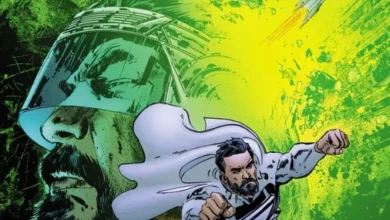
The second crucial sequence grounding VisionQuest is the legendary "Ship of Theseus" debate from the 2021 streaming series WandaVision. In this emotional confrontation within the walls of the Hex, the original synthezoid—reconstructed and reprogrammed as White Vision—engages in a profound logical paradox with Wanda Maximoff’s magical projection of Red Vision. By utilizing the classic philosophical thought experiment of the Ship of Theseus, the two entities debate identity, memory, and authenticity. If every component of a physical vessel is gradually replaced over time, is it fundamentally the same ship? Furthermore, if the discarded parts are reassembled elsewhere, which version holds the true claim to identity? This thought experiment serves as a direct mirror for human cellular biology and forms the exact architectural blueprint for the existential crisis White Vision has faced since regaining his memories.
The Return of James Spader and Broader Narrative Context
Adding significant weight to the philosophical continuity of VisionQuest is the confirmed return of actor James Spader, who originally voiced the villainous artificial intelligence Ultron in Avengers: Age of Ultron. Recent production reports indicate that Spader will portray a physical, human manifestation of Ultron within the series. This casting choice bridges a decade of narrative progression, bringing the creator and creation back into direct thematic conflict. Given that Ultron’s core ideology questioned the value and sustainability of human life, his physical return in a series centered on Vision’s search for identity suggests a deep, introspective examination of how both entities have evolved since their initial clashes.

Furthermore, VisionQuest operates as a direct narrative successor to WandaVision, the groundbreaking series that launched Marvel’s television division on Disney+. While WandaVision explored grief, trauma, and artificial reality, its conclusion fractured the character arcs of several key individuals, most notably leaving White Vision to fly off into the unknown with his memories restored. Although WandaVision provides crucial emotional context for Vision’s current state, the creative team has structured VisionQuest so that viewers can engage with the core narrative without needing an exhaustive recap of every magical event that transpired in Westview.
Regarding the wider corner of this specific television sub-universe, Matalas has noted that while other streaming projects like Agatha All Along share thematic DNA with VisionQuest, they are not mandatory prerequisites. Elements from Agatha’s magical corner of the universe may lightly brush against the periphery of VisionQuest, but the primary narrative remains strictly tethered to the philosophical journey of its mechanical protagonist rather than requiring a complete mastery of mystical lore.
Chronology and Timeline of the Synthezoid Arc
To understand how Vision reached the precipice of his upcoming solo series, it is helpful to examine the precise chronology of his appearances within the Marvel Cinematic Universe timeline. Introduced nearly a decade ago, the character’s evolution spans several key milestones:
- May 2015: Vision is brought to life in Avengers: Age of Ultron, facilitated by Tony Stark, Bruce Banner, and Thor, and subsequently engages in his defining philosophical debate with the final Ultron drone.
- May 2016: Vision navigates the legal and moral ramifications of superhuman oversight alongside the Avengers in Captain America: Civil War, establishing a burgeoning romantic connection with Wanda Maximoff.
- April 2018: Vision becomes a primary target in Avengers: Infinity War due to the Mind Stone embedded in his forehead, ultimately meeting a tragic end at the hands of Thanos.
- January 2021: WandaVision premieres on Disney+, depicting Wanda’s grief-induced creation of a simulated Vision and the military-industrial reanimation of the original corpse into White Vision.
- March 2021: The finale of WandaVision concludes with White Vision absorbing his constructed counterpart’s memories and departing to destinations unknown, setting the stage for his modern status quo.
- October 2026: VisionQuest is scheduled to premiere on Disney+, picking up the lingering narrative threads of identity, resurrection, and artificial sapience.
Implications for Marvel Studios and the Future of Disney+ Streaming
The deliberate strategy behind VisionQuest reflects a broader recalibration within Marvel Studios regarding audience accessibility and content volume. In the immediate aftermath of the Infinity Saga, the studio aggressively expanded its footprint across both feature films and serialized television, leading to occasional critiques about narrative bloat and the aforementioned "homework" problem. By consciously reducing the required prerequisite viewing to just two formative scenes rather than an entire multi-season viewing schedule, Marvel is attempting to lower the barrier to entry for lapsed subscribers.
This production philosophy acknowledges that while interconnected universes are a powerful tool for fan engagement, they can inadvertently alienate viewers who missed a single series or film. By positioning VisionQuest as a character-driven, philosophical exploration rather than an exposition-heavy puzzle piece in a larger crossover plot, the studio hopes to recapture the standalone appeal of prestige television. The integration of legacy actors like James Spader alongside tightly focused thematic callbacks demonstrates a maturation in how serialized comic book storytelling can balance continuity with self-contained narrative integrity.
As subscription models evolve and viewer habits shift toward more discerning consumption, the success of VisionQuest may well serve as a blueprint for future Marvel television projects. If creators can successfully leverage deep-cut emotional continuity while remaining welcoming to casual viewers, the franchise can alleviate the fatigue that has threatened to stall its television expansion. The upcoming premiere on Disney+ will ultimately test whether this minimalist approach to cinematic homework can deliver both the emotional payoff demanded by longtime fans and the narrative accessibility required by broader audiences.