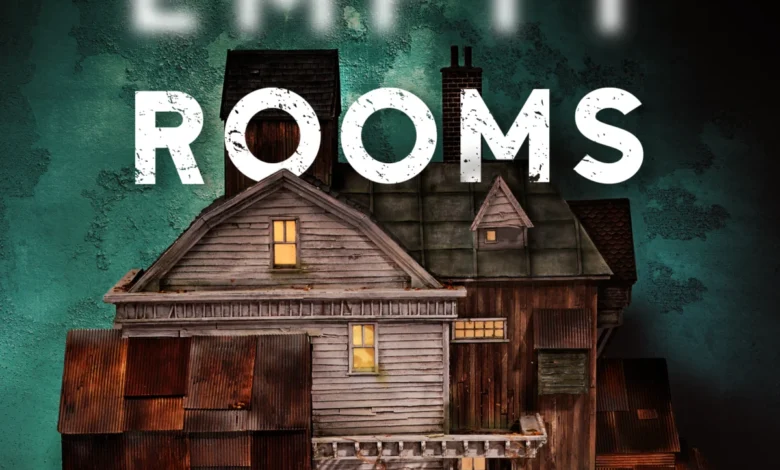
The novel centers on a couple, Soren Murphy and Mara Davis, who arrive at a sprawling, ancient manor inherited following the death of Soren’s aunt. For the protagonists, the estate represents a rare opportunity for stability in an increasingly volatile world. However, the structure—characterized by its "shifting walls" and decaying interior—functions as an active participant in the story rather than a mere setting. The narrative tension escalates when Soren begins receiving directives from an entity referred to as the "Great Other," which mandates that the couple invite strangers into their home to "relieve them of their sorrow."
Literary Context and Critical Reception
Andy Marino has established a reputation for prose that is both striking and evocative. Publishers Weekly, in a starred review, lauded Cold Empty Rooms as a "masterful work of subtle horror," noting that the author successfully elevates standard haunted house tropes by fostering an undeniable sense of creeping, existential dread.
The significance of the work lies in its deconstruction of the "invitation" trope. In many horror classics, the intrusion is forced upon the characters; here, the horror is invited. This subversion places the burden of the ensuing violence on the protagonists’ choices, effectively blurring the lines between victim and accomplice. By examining how trauma and isolation can manipulate individuals into performative acts of "healing" that are, in reality, horrific, Marino positions the novel within the tradition of Gothic psychological thrillers that prioritize atmosphere and internal corruption over visceral gore.
Chronology of the Narrative Development
The progression of Cold Empty Rooms is marked by a series of arrivals and internal shifts. The narrative timeline can be categorized into three distinct phases:
- The Inheritance and Arrival: Soren and Mara move into the dilapidated manor, viewing it as a sanctuary. Their initial attempts at domesticity are quickly undermined by the house’s inherent instability and the unsettling influence of the Great Other.
- The Invitation: In alignment with the entity’s mandates, the couple begins to open their doors to outsiders. This phase introduces characters like William Gregory Payson, whose arrival serves as a catalyst for the tension between Soren and Mara. The introduction of these guests forces the couple to confront their own definitions of morality and freedom.
- The Manifestation: As the house begins to exert more control, the "horrible miracle" hinted at in the synopsis begins to unfold. The boundary between the couple’s reality and the house’s demands dissolves, leading to a climax that tests the limits of their partnership.
Analysis of Character Dynamics
A pivotal element of the novel is the evolving relationship between Soren and Mara. Their connection is framed by a shared, albeit desperate, desire for a new life. Their mantra—"Freedom"—serves as a psychological anchor, yet it is this very quest for freedom that leaves them vulnerable to the house.
The introduction of William Gregory Payson provides a foil to their perceived progress. William’s presence is characterized by a lack of social adherence, effectively exposing the fractures in Soren and Mara’s relationship. His casual discussion of brutal historical practices, such as the "blood eagle" ritual, serves to normalize violence within the home, forcing Mara to grapple with the realization that their sanctuary has become a theater for potentially lethal interactions.
The house itself acts as a third party in this dynamic. The architectural descriptions—"gabled shrugs," "crooked spokes," and "ramshackle oblivion"—suggest an environment that is physically and metaphorically crumbling. The inclusion of the cat, "Gladys," and the presence of mundane objects like a shotgun shell, provide grounded, tangible elements that contrast sharply with the metaphysical demands of the Great Other.

Sociological and Literary Implications
Cold Empty Rooms serves as a mirror for contemporary anxieties regarding housing instability, the dissolution of traditional social structures, and the human propensity to seek authority figures—or entities—in times of distress. The novel interrogates the ethics of "radical honesty" and whether such a philosophy can survive within an environment that rewards manipulation and sacrifice.
By choosing to publish this work in the late autumn, the timing aligns with a seasonal interest in horror literature. However, the themes addressed by Marino transcend seasonal trends. The novel asks difficult questions about the cost of belonging and the dangers of unconditional surrender to external forces. In an era where online echo chambers and extremist ideologies often demand total commitment, the metaphor of the "Great Other" demanding guests be brought in for "relief" carries a chilling, modern resonance.
The Role of Domestic Space in Horror
The haunted house has been a staple of horror since the 18th century, from the works of Horace Walpole to Shirley Jackson’s The Haunting of Hill House. Marino’s work fits into this lineage but updates the stakes. In traditional haunted house stories, the horror is often tethered to the past sins of the property. In Cold Empty Rooms, the house appears to have an active, present-tense hunger that requires the active participation of the living.
This change in agency shifts the focus of the reader from "how will they escape?" to "why would they stay?" By establishing that Soren and Mara are active, willing participants in the house’s strange directives, Marino creates a narrative tension that is inherently uncomfortable. It forces the reader to consider their own boundaries: at what point does the search for a home or a sense of purpose override one’s inherent moral compass?
Future Outlook and Literary Impact
As the publishing industry continues to see a surge in high-concept, character-driven horror, Cold Empty Rooms is positioned to be a benchmark for writers looking to merge psychological depth with traditional genre scares. The novel’s success in balancing the "human" element with the "supernatural" suggests a sophisticated understanding of audience expectations in the current market.
For readers, the novel provides more than just a series of unsettling encounters; it offers a complex look at the fragility of trust and the dangers of isolation. As Mara and Soren navigate the shifting landscape of their inherited home, they reflect a wider societal struggle to define personal liberty in an age where the concept of a "safe space" is increasingly contested.
With its November 10 release, Cold Empty Rooms is available through Hachette Book Group and major retailers. It represents a significant milestone for Andy Marino, solidifying his status as a writer capable of blending the visceral with the existential, and it is highly likely to be a fixture in discussions regarding the best horror fiction of the year. The book’s arrival invites readers to step into a space where the architecture of the mind is just as terrifying as the structure surrounding it, and where the most dangerous entity is often the one we invite in ourselves.
Related posts: