The latest installment of the tabletop roleplaying series Sagas of Sundry: Darkling Gate has deepened the narrative tension surrounding the Montgomery triplets and their companion, Kitty Larke, as they navigate the unsettling atmosphere of Longford House. Following a serendipitous rescue of young Charlotte Dartmoor in the surrounding woodlands, the group has been granted temporary shelter by her uncle, Jonathan Dartmoor. What began as a gesture of hospitality has rapidly evolved into a psychological investigation of a manor steeped in historical baggage and occult undertones.
Chronology of Events at Longford House
The evening’s events followed a structured descent into the supernatural. After the group secured refuge from an encroaching storm, the Montgomery triplets—Aurelia, Arabella, and Augustus—initiated a series of inquiries regarding the legacy of the Longford estate. While the triplets attempted to discern the nature of the house’s past, their interactions with Jonathan Dartmoor were marked by volatility, shifting between strained social etiquette and overt hostility.

Simultaneously, Kitty Larke conducted a private inspection of the estate’s collection of artifacts. Her findings proved significant; she identified several historical items she claimed to have procured personally. The discovery of “faerie stones”—smooth stones with naturally occurring perforations—triggered a visceral memory for the triplets, who associated the objects with their deceased brother, Archibald. According to lore shared within the group, these stones serve as a focal point for viewing the "Other Home," a childhood construct of an alternate reality.
As the night progressed, the narrative shifted toward the psychological state of the protagonists. Augustus experienced a vivid, traumatic vision involving the late Cornelius Longford, the former patriarch of the house. The vision functioned as a warning, urging the "closing of the door" to prevent an impending catastrophe. Meanwhile, the group’s engagement with Gadson, the estate’s reticent butler, provided a moment of human connection that contrasted sharply with the house’s encroaching dread. The butler’s admission that he is rarely the recipient of gratitude highlighted the underlying themes of isolation and servitude that pervade the Longford estate.
Contextualizing the Narrative Arc
Sagas of Sundry: Darkling Gate utilizes a Regency-era aesthetic to ground its cosmic horror elements, a hallmark of the Call of Cthulhu game system. The "Other Home" motif serves as a recurring narrative device, suggesting that the characters’ shared trauma is inextricably linked to the occult history of the locations they frequent.
The inclusion of the Prosopon Paracosmos—a text recovered by the group—marks a turning point in the investigation. The translation of the title, "The Mask of the Other World," implies that the house is not merely a residence but a nexus point between realities. The erratic nature of the text, noted for its lack of punctuation and disorganized structure, aligns with traditional tropes of forbidden knowledge in Lovecraftian fiction, where the act of comprehending the truth is inherently destabilizing to the human mind.
Analytical Perspectives on Character Dynamics
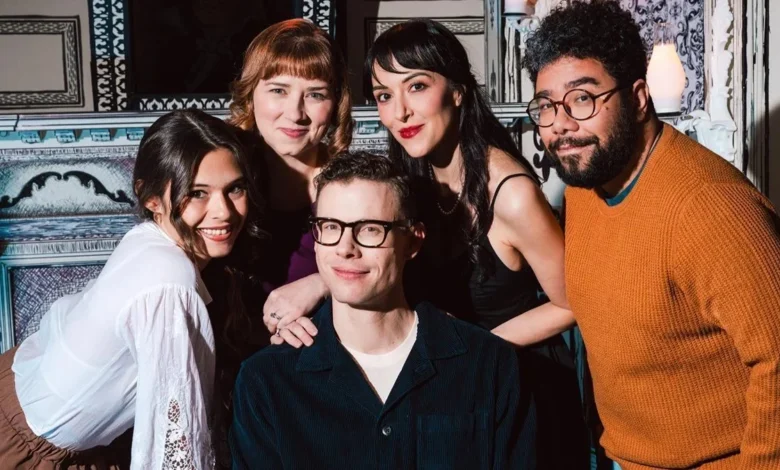
The chemistry between the cast members—Nicole Maines, Paula Deming, Noura Ibrahim, Oscar Montoya, and Ross Bryant—serves as the engine for the series’ success. From a game-mechanics perspective, the interaction between player choices and the Dungeon Master’s responses creates a high-stakes environment. For instance, the decision to hold an impromptu séance, despite the inherent risks, demonstrates the characters’ desperation to reconcile their pasts with the present.
The "sanity roll" mechanic in the Call of Cthulhu system remains a vital component of this storytelling. When Kitty Larke experienced a terrifying vision upon using the faerie stone, the subsequent failure of her sanity roll—and her attempt to conceal the truth from her companions—adds a layer of internal conflict. This behavior underscores a broader theme in the series: the tendency for individuals to suppress traumatic experiences to maintain a facade of normalcy, even when faced with empirical evidence of the supernatural.

Implications of the Longford Legacy
The mystery surrounding Cornelius Longford and the specific warnings provided to Augustus suggest that the house is a "sealed" environment designed to keep external forces at bay. The "door" mentioned in the vision serves as a metaphor for the boundary between the material world and the "Other Home." If the characters are unable to maintain the structural integrity of this boundary, the consequences for the residents of Longford House could be irreversible.
Furthermore, the social dynamic between the triplets and the estate staff highlights the class disparities of the Regency era. The interaction with Gadson is particularly revealing; it suggests that the house’s inhabitants are as much prisoners of the estate’s history as they are its stewards. By treating Gadson with kindness, the triplets have inadvertently gained an ally, though the long-term benefit of this alliance remains to be seen.
The Role of Historical Setting in Modern TTRPGs
The series represents a sophisticated evolution of the Tabletop Roleplaying Game (TTRPG) genre, leveraging historical constraints to heighten the horror. By limiting the technology and social norms available to the characters to those of the early 19th century, the creators force the players to rely on investigation, intuition, and interpersonal negotiation rather than modern investigative tools.

The production value, including the use of period-appropriate costuming and atmospheric set design, enhances the immersion of the audience. The transition from the parlor to the dark corridors of the house mirrors the shift from social drama to existential horror. As the series moves forward, the primary concern for the Montgomery triplets and Kitty Larke will likely be the reconciliation of the Prosopon Paracosmos with the physical manifestations of the "Other Home" that have begun to haunt their waking hours.
Concluding Observations
As the narrative of Darkling Gate unfolds, the audience is presented with a complex tapestry of folklore, psychological trauma, and historical mystery. The success of this series lies in its ability to balance comedy—often generated by the cast’s reactions to the increasingly absurd and terrifying situations—with genuine, heart-pounding suspense.
The upcoming episodes are expected to address the implications of the group’s nocturnal investigation and the true nature of the footsteps heard outside their chambers. With the discovery of the Prosopon Paracosmos, the group has moved beyond mere observation into active engagement with the occult. Whether this engagement will lead to the salvation of the Dartmoor family or the further unraveling of the protagonists’ psyches remains the central question of the season.
For those tracking the chronological progression of the campaign, the events at Longford House represent the most significant escalation in the series to date. The combination of historical research, character-driven subplots, and the unpredictable nature of live-action TTRPG play continues to position Sagas of Sundry: Darkling Gate as a noteworthy contribution to digital storytelling. The series is currently available via YouTube, Spotify, and Apple Podcasts for those seeking to follow the investigation in its entirety. As the characters delve deeper into the house’s history, the distinction between the "Other Home" and reality promises to become increasingly blurred, setting the stage for a dramatic confrontation with the legacy of the Longford estate.