Sumitomo Mitsui Trust Bank and Comisma Partner to Launch 10 Billion Yen Anime Production Investment Fund

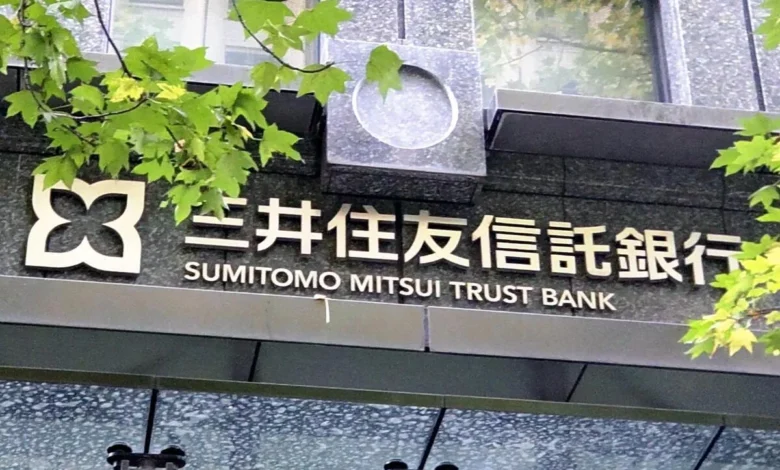
The landscape of Japanese animation finance is poised for a significant transformation following a landmark agreement between Sumitomo Mitsui Trust Bank and IP platform company Comisma. The two entities have formally agreed in principle to establish a specialized investment fund dedicated exclusively to anime production, setting an ambitious target of 10 billion yen—approximately US$63.4 million—in assets under management by the close of fiscal 2027. This strategic collaboration is designed to modernize how anime projects are financed, dismantle traditional funding bottlenecks, attract a diverse pool of domestic and international investors, and ultimately ensure that creators receive fairer financial returns amid an unprecedented global boom in the demand for Japanese animation.
Under the framework of the proposed arrangement, the partnership will leverage the unique strengths of both institutions. Comisma brings its extensive, vertically integrated expertise in intellectual property development, original manga incubation, and animation production. This is paired directly with Sumitomo Mitsui Trust Bank’s sophisticated fund-arrangement capabilities, robust financial structuring, and expansive institutional and retail investor networks. Current projections indicate that the newly established fund will inject crucial capital into approximately 10 high-potential anime projects over a three-year deployment window. Investors participating in the fund will receive financial returns directly linked to a portion of the commercial yields generated by these projects, primarily drawing from broadcast-rights fees and merchandise revenue streams.
The Evolution of Anime Financing: Moving Beyond the Committee Model
For decades, the financial engine driving the Japanese anime industry has been the production committee system, known locally as seisaku iinkai. Under this traditional model, multiple disparate entities—ranging from publishing houses and television broadcasters to physical and digital home video distributors, toy manufacturers, and advertising agencies—pool their financial resources to fund a single anime production. In exchange for bearing a share of the upfront costs, each participant secures specific commercial rights, such as regional licensing, merchandising privileges, or broadcasting windows.
While the production committee model has historically served as an effective risk-mitigation tool by spreading the financial exposure across a consortium of corporate stakeholders, it possesses inherent structural limitations. Chief among these is the cumbersome decision-making process. Because every major strategic choice requires consensus among multiple corporate partners with competing internal priorities, project approvals and creative pivots can experience severe delays. Furthermore, the fragmentation of intellectual property rights among numerous stakeholders often complicates downstream monetization, licensing negotiations, and global distribution efforts, frequently leaving the original creators and animation studios with minimal residual income despite a show’s international success.
The newly proposed investment fund engineered by Sumitomo Mitsui Trust Bank and Comisma introduces a streamlined, market-driven alternative for channeling capital directly into the anime pipeline. By opening up investment avenues to corporate entities eager to tap into the lucrative entertainment sector, alongside institutional funds, overseas entities, and individual retail investors who have historically faced high barriers to entry in content production, the initiative broadens the financial ecosystem. This democratization of capital aims not only to accelerate the greenlighting of new projects but also to ensure that a wider circle of participants can share directly in the commercial triumphs of modern anime hits.
Comisma’s Integrated Ecosystem: From Manga Incubation to Animation Production
The operational viability of the fund heavily relies on the multifaceted capabilities of Comisma, whose footprint spans the entire lifecycle of content creation. Comisma is widely recognized as the operator of Ganma!, a prominent online manga platform dedicated to publishing and nurturing original works rather than relying strictly on pre-existing magazine serialization. Over its operational history, Comisma has successfully cultivated a rich proprietary catalog comprising more than 440 unique intellectual properties.
Crucially, Comisma’s operational scope extends far beyond digital publishing. Through its wholly owned subsidiary, the specialized animation studio Qzil.la, the company possesses direct in-house capabilities to translate its curated manga properties into fully realized animated television series and films. This seamless vertical integration grants Comisma a distinct competitive edge across every stage of the intellectual property value chain—from early-stage talent scouting and IP incubation to script development, artistic direction, and final animation production.
Within the structure of the new fund, Comisma will act as the primary pipeline for IP sourcing, project development, and creative oversight. Meanwhile, Sumitomo Mitsui Trust Bank will manage the complex financial architecture, regulatory compliance, asset management structures, and investor relations. This division of labor ensures that creative projects are backed by industry insiders who understand the nuances of storytelling and fan culture, while being supported by financial professionals capable of delivering institutional-grade risk management and liquidity.
For Sumitomo Mitsui Trust Bank and its parent organization, Sumitomo Mitsui Trust Group, this partnership represents a calculated strategic expansion into the burgeoning asset management sector. In its comprehensive medium-term management plan covering fiscal years 2026 through 2028—published in May 2026—the financial group explicitly designated asset management as a core driver of future corporate growth. Establishing a dedicated anime production fund allows the bank to diversify its investment product offerings while directly supporting a high-growth creative industry that exhibits strong structural tailwinds on the global stage.

Macroeconomic Context: Record Market Growth and Government Ambitions
The launch of the 10 billion yen anime fund occurs against a backdrop of explosive, historic expansion within Japan’s broader content and animation industries, even as structural labor and capacity bottlenecks continue to challenge production studios.
According to comprehensive data compiled in the Association of Japanese Animations’ Anime Industry Report 2025, the total market size of the Japanese anime industry surged to a historic high, crossing the 3.8 trillion yen threshold—approximately US$24.11 billion—in 2024 alone. This sustained financial momentum has been decisively propelled by international markets. Rapid expansion in global subscription video-on-demand (SVOD) streaming platforms has broken down geographic barriers, allowing Japanese studios to reach audiences from North America to Latin America, Europe, and Southeast Asia instantaneously. Simultaneously, targeted digital marketing campaigns and organic social media fandoms have mainstreamed anime culture far beyond traditional demographic boundaries, transforming niche Japanese animation into a dominant global pop-culture phenomenon.
Recognizing the immense economic potential of the creative sector, the Japanese government has elevated the content industry to national strategic importance. Content creation has been officially designated as one of the country’s 17 top-priority areas for long-term economic growth. Under comprehensive national policy guidelines, the government has set an ambitious target to nearly triple the total overseas sales of Japanese cultural content. The objective is to elevate international earnings from 6.1 trillion yen (approx. US$38.7 billion) in 2024 to a staggering 20 trillion yen (approx. US$127 billion) by 2033. Within this broader target, the anime sub-sector is explicitly expected to scale its global footprint from 2.1 trillion yen (approx. US$13.3 billion) to 6 trillion yen (approx. US$38 billion) over the exact same timeframe.
Despite this rosy macroeconomic outlook and unrelenting global appetite, the industry faces severe structural friction. The exponential rise in international demand has thoroughly outpaced the physical production capacity of the domestic anime ecosystem. Established, high-prestige animation studios frequently find their production schedules booked solid years in advance, creating severe bottlenecks that prevent promising new scripts and independent creators from entering active production. Financial capital alone cannot magically resolve chronic shortages of skilled animators, specialized directors, and studio floor space. However, industry analysts note that a broader, more flexible financing base can significantly ease liquidity constraints, provide studios with predictable multi-year operational funding, and foster a more stable, sustainable working environment for creators.
Chronology of Strategic Developments
To fully understand how the Sumitomo Mitsui Trust Bank and Comisma initiative came to fruition, it is helpful to examine the institutional timeline leading up to the formal agreement:
- May 2026: Sumitomo Mitsui Trust Group publishes its comprehensive medium-term management plan for fiscal years 2026–2028, formally designating asset management as a primary pillar for corporate growth and signaling an openness to alternative, high-potential investment classes.
- October 2026 (Late): Reports emerge across major financial and industry publications—including the Nikkei, Branc, and Reuters Japan—detailing preliminary discussions between Sumitomo Mitsui Trust Bank and Comisma regarding a specialized entertainment fund.
- October 28, 2026: Sumitomo Mitsui Trust Bank officially releases public documentation detailing the proposed arrangement to establish a 10 billion yen anime production investment fund.
- Fiscal Year 2027 (Projected End): The institutional partners target achieving the full 10 billion yen (approx. US$63.4 million) in assets under management, alongside the active financing and structuring of approximately 10 primary anime production projects.
Fact-Based Analysis of Implications and Future Outlook
The alliance between a major Japanese trust bank and a vertically integrated IP platform carries profound implications for the future of anime financing and corporate governance within the creative arts.
First, the fund signals a maturation of anime as an institutional asset class. Historically viewed by mainstream financial institutions as a high-risk, volatile endeavor reliant on subjective cultural tastes, anime is increasingly being re-evaluated through the lens of predictable intellectual property monetization. By structuring returns around quantifiable metrics such as broadcast licensing guarantees and international merchandise sales, Sumitomo Mitsui Trust Bank is pioneering a model that bridges traditional banking rigor with creative industries.
Second, the initiative offers a potential blueprint for addressing chronic industry compensation issues. For years, critics have highlighted the precarious financial realities faced by rank-and-file animators and background artists, many of whom operate on tight freelance budgets while production committees capture the vast majority of downstream profits. While an investment fund cannot directly dictate labor union policies, the influx of greater risk capital and the potential for diversified revenue streams could empower studios to negotiate healthier baseline production budgets, thereby improving compensation structures and talent retention over the long term.
Ultimately, the ultimate success of the 10 billion yen anime fund will rest upon several operational execution factors: the meticulous selection of high-caliber intellectual properties by Comisma, the fund’s ability to successfully court conservative institutional investors and yield-hungry retail participants, and the adaptability of the fund’s legal structures in navigating international licensing complexities. Nevertheless, the sheer scale of the planned initiative and the caliber of the institutions involved underscore a permanent shift in how Japanese animation secures its financial future—proving that as anime conquers global screens, the mechanisms powering its creation are evolving just as rapidly to meet the demand.