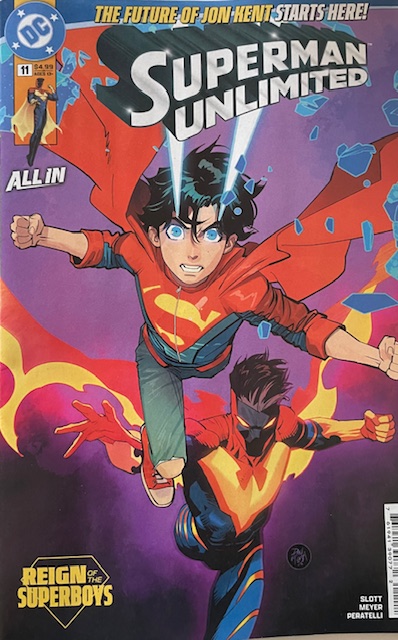
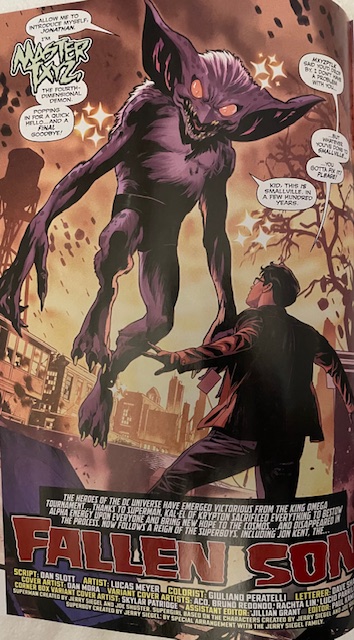
The latest installment of the DC Comics series Superman Unlimited #11 marks a significant narrative pivot for the character of Jon Kent. Written by Dan Slott with interior art by Lucas Meyer, colors by Giuliano Peratelli, and lettering by Dave Sharpe, the issue addresses long-standing fan discourse regarding the character’s trajectory following his controversial rapid aging. By balancing a confrontation with the fourth-dimensional entity Master Txyz with a retrospective examination of the protagonist’s history, the creative team attempts to reconcile the current iteration of the Son of Kal-El with the beloved “Super-Sons” era that defined his early years.
Narrative Overview and Conflict
The plot of Superman Unlimited #11 centers on Jon Kent’s encounter with his arch-nemesis from the future. This confrontation serves as a catalyst for a broader exploration of Jon’s life, utilizing a structural device that forces the protagonist to physically and mentally reconnect with his past. As Jon navigates the machinations of Master Txyz, he is subjected to a series of temporal distortions that pull him between his current status as an adult hero and the childhood formative years that many readers associate with his most iconic stories.
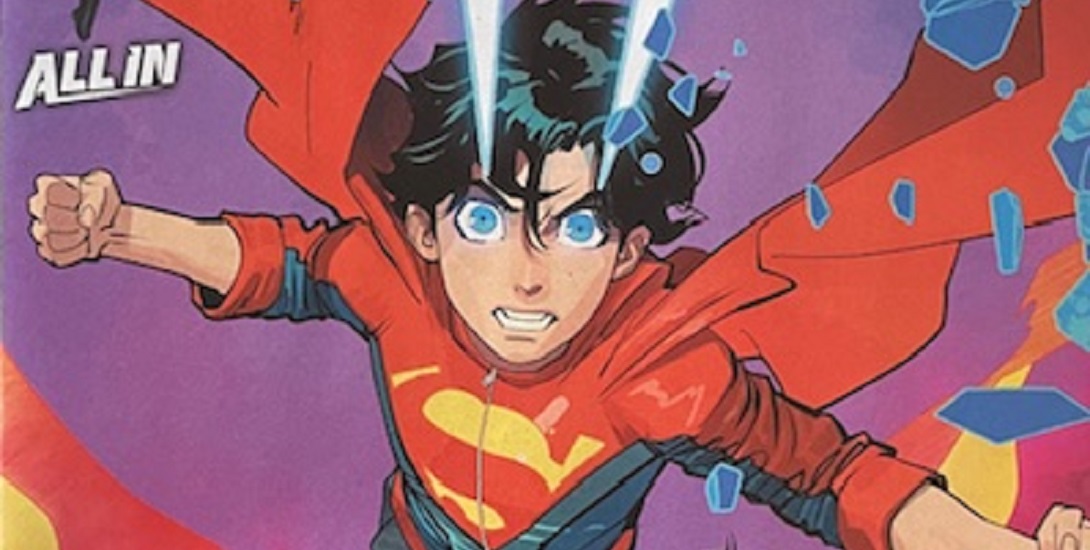
This narrative choice by Dan Slott functions as both a plot engine and a meta-commentary on the character’s development. By placing Jon in a situation where he must confront the duality of his existence, the script provides a sense of agency that has been frequently debated by the fan community since the “age-up” storyline was first introduced.
Chronology of the Character’s Development
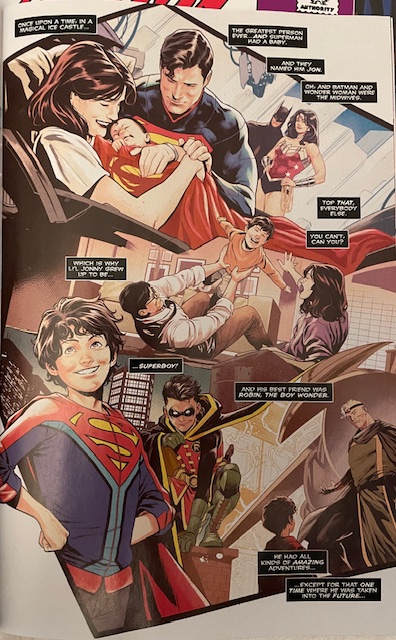
To understand the weight of this issue, it is necessary to examine the timeline of Jon Kent’s development within the DC Universe. Jon Kent first appeared in Convergence: Superman #2 (2015), created by Dan Jurgens. As the son of Clark Kent and Lois Lane, he quickly became a staple of the DC lineup, particularly through the Super-Sons series alongside Damian Wayne.
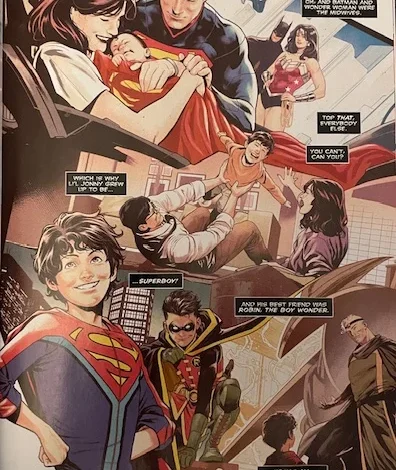
The trajectory of the character remained consistent until the departure of Peter J. Tomasi and the arrival of Brian Michael Bendis in 2018. During the transition, the character was subjected to a narrative event that artificially aged him from a pre-teen to a young adult. This decision sparked years of debate regarding the loss of the character’s original developmental arc. Superman Unlimited #11 attempts to bridge this gap, using the medium of comics to literally and figuratively revisit these earlier stages. The inclusion of the Super-Sons imagery on the cover is not merely a marketing tactic; it reflects an internal creative effort to validate both the pre-Bendis and post-Bendis versions of the character.
Technical Execution and Artistic Contribution
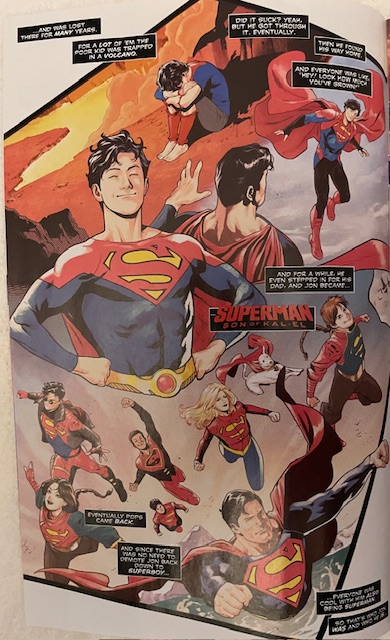
The artistic team, led by Lucas Meyer, plays a pivotal role in the success of this issue. Meyer’s work on the montage sequences, which depict key moments in Jon’s life, serves as the emotional anchor of the story. By visualizing the transition between the “Super-Sons” era and the current timeline, Meyer provides a visual shorthand for the character’s internal conflict.
Giuliano Peratelli’s color palette shifts subtly to accommodate these temporal transitions, providing a clear distinction between the "future" segments—which are characterized by higher-intensity hues—and the "past" segments, which utilize a softer, more nostalgic aesthetic. Dave Sharpe’s lettering maintains the pacing required for a dense script, ensuring that the dialogue-heavy sections do not obstruct the narrative flow of the action sequences.
Analysis of Character Agency
A recurring critique of the modern Jon Kent has been a perceived lack of individual identity, with some critics arguing that his character has been defined largely by his proximity to his father, Superman. In Superman Unlimited #11, Dan Slott introduces a new heroic designation for Jon. While the industry is accustomed to “false starts” regarding name changes and rebrandings, this specific development appears to be calibrated for longevity.
The introduction of this new name serves as a symbol of Jon’s maturation. Rather than simply being the “son of,” the issue suggests a transition toward a character who holds ownership over his own destiny. By embedding this shift within the context of a battle against a fourth-dimensional threat, the writer frames this evolution as an earned outcome of the character’s struggle against his own history.
Market Context and Industry Implications
The release of this issue occurs within a competitive market landscape where legacy characters are increasingly scrutinized by a loyal and vocal readership. Publishers like DC Comics have faced a consistent challenge in balancing the demands of long-term fans with the need for modern, fresh narratives.
Data from the comic book retail sector suggests that issues focusing on character history and “return to form” aesthetics often see higher engagement from legacy readers. However, these narratives run the risk of becoming too insular. The density of Slott’s script in this issue is a testament to this challenge; while it provides deep rewards for those familiar with the history of the character, it demands a significant degree of “homework” from the reader.
From an editorial standpoint, the decision to revisit the “Super-Sons” era is a strategic move to capitalize on the sustained popularity of that team-up. The relationship between Jon Kent and Damian Wayne remains one of the most bankable dynamics in the DC publishing catalog. By folding this dynamic into the current, older version of Jon, the editorial team is attempting to retain the emotional core of the earlier era while continuing to push the character toward his future potential.
Broader Impact and Critical Reception
The ultimate success of Superman Unlimited #11 will likely be determined by the subsequent issues in the arc. The cliffhanger ending suggests that the events of this chapter are merely the prologue to a more expansive conflict. If the narrative successfully sustains the level of intensity introduced in this issue, it may succeed in putting to rest the fallacy that the aging of Jon Kent was a purely detrimental decision.
Conversely, if the story fails to provide a cohesive resolution to the temporal paradoxes introduced here, it may further fragment the audience’s reception of the character. The current industry trend favors "event-based" storytelling, but the strength of this issue lies in its quiet, character-driven moments rather than its grand-scale conflict.
Conclusion
Superman Unlimited #11 serves as a critical junction in the contemporary history of Jon Kent. By utilizing a fourth-dimensional conflict to force a retrospective on the character’s life, Dan Slott and his team have created a narrative that is both an homage to the past and a blueprint for the future. While the issue is dense and potentially overwhelming for new readers, it provides the necessary emotional stakes to justify its existence.
The integration of legacy elements—specifically the Super-Sons dynamic—within the framework of modern DC storytelling demonstrates a conscious effort to heal the rift between different factions of the readership. Whether this development represents a permanent shift in the character’s trajectory or a temporary diversion remains to be seen. However, as it stands, this issue represents one of the most competent attempts at character rehabilitation within the DC Universe in recent years. The success of the project now rests on the writer’s ability to maintain this momentum and ensure that the teased future for the protagonist remains as compelling as the journey through his past.