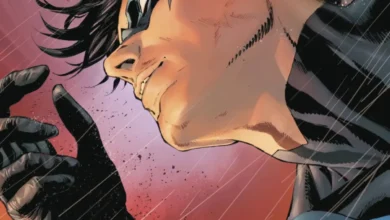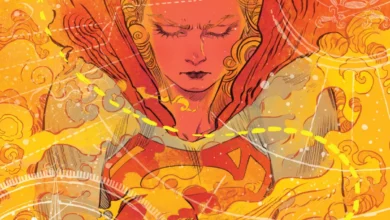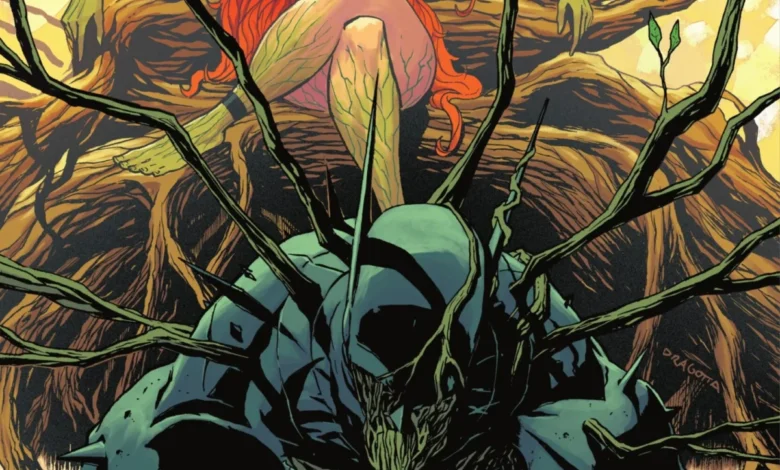
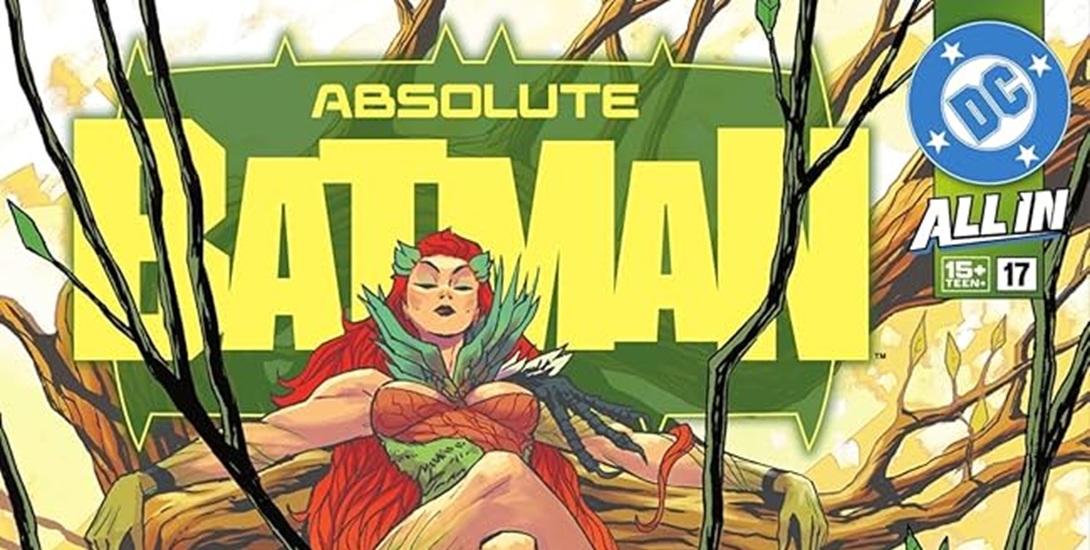
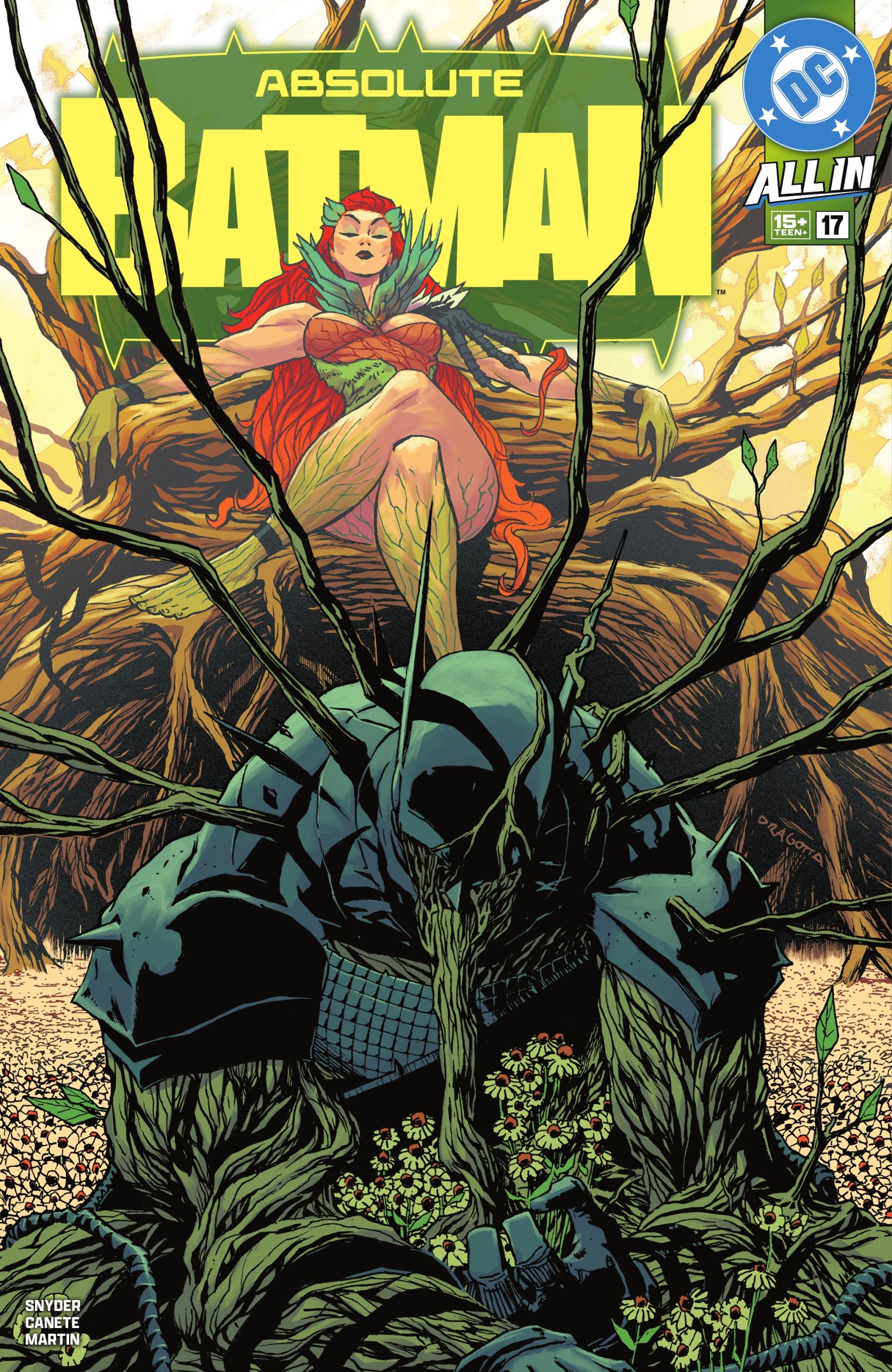
The latest installment of the Absolute Batman series, titled The Seventh Kingdom: Part One, marks a significant shift in the narrative trajectory of the ongoing DC Comics imprint. Written by Scott Snyder and featuring the visceral, high-contrast artwork of Eric Canete, this issue positions Gotham City as a battleground between the Dark Knight and a uniquely dangerous iteration of Dr. Pamela Isley, known to the world as Poison Ivy. The narrative expands the scope of the Absolute Universe, moving beyond the initial establishment of Bruce Wayne’s crusade to explore the tragic origins and evolving threats posed by his rogue’s gallery.
Narrative Context and Character Evolution
In the established lore of the Absolute Universe, Gotham City serves as a gritty, industrial landscape that demands a more desperate form of heroism. Unlike the traditional DC Universe, where relationships between Batman and his former allies often fluctuate between tension and cooperation, the current iteration of the character is struggling with the fallout of a catastrophic confrontation involving the criminal mastermind Bane.
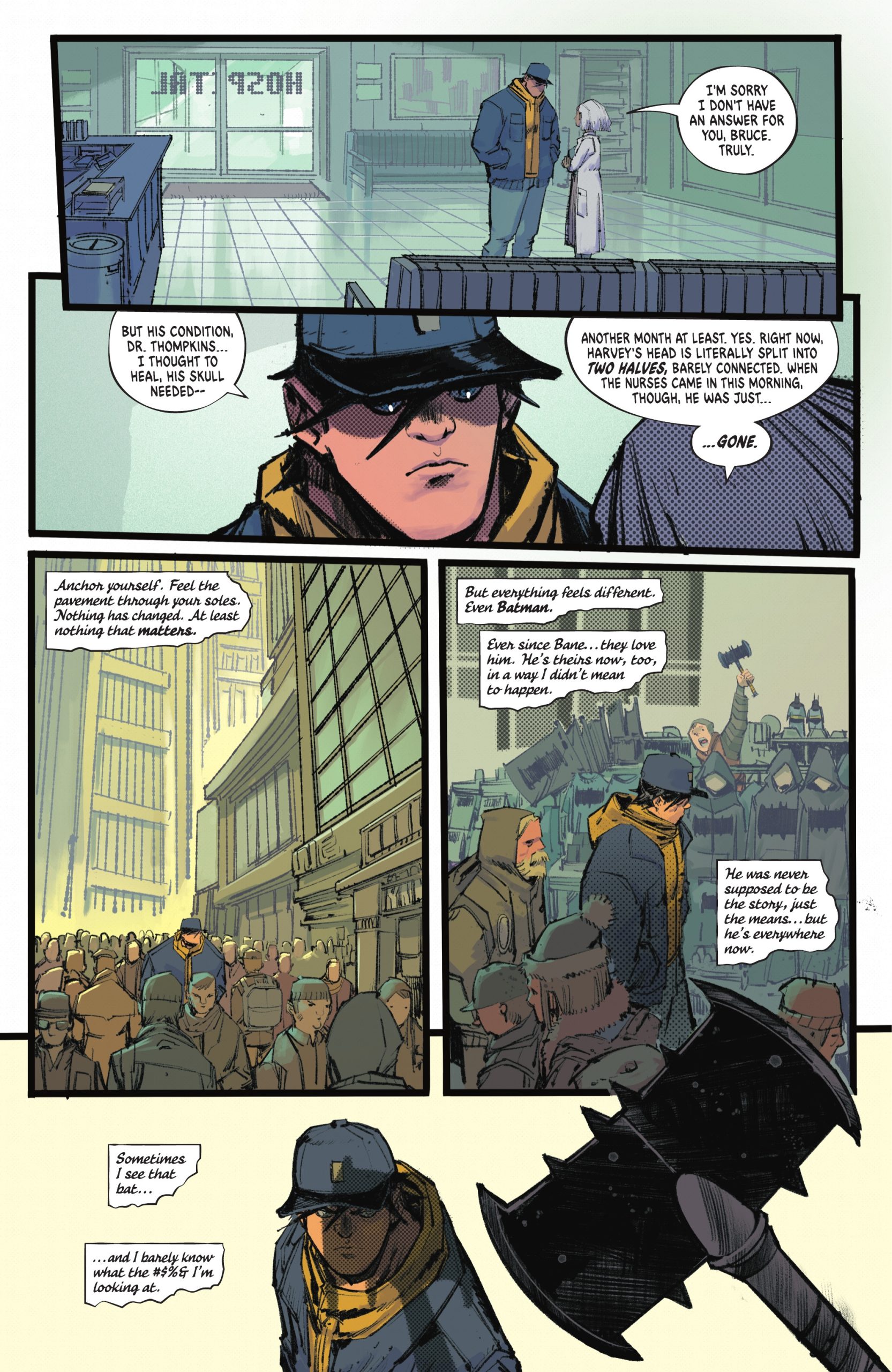
The social fabric of Gotham’s elite—and Bruce Wayne’s personal circle—remains fractured. Former associates, including Oswald Cobblepot, Harvey Dent, Edward Nygma, and Waylon Jones, continue to harbor deep-seated resentment toward Bruce. Their refusal to reconcile, despite his repeated efforts at mediation, highlights a persistent theme of alienation that permeates the current run. Analysts of the series suggest that this isolation is a strategic narrative choice by Snyder, meant to isolate Batman before a presumed escalation orchestrated by the Joker.
The Rise of the Seventh Kingdom
The central conflict of issue #17 centers on the sudden and overwhelming transformation of Gotham’s urban landscape. Poison Ivy has successfully colonized the heart of the city, utilizing her botanical abilities to construct a sprawling, sentient forest that has effectively neutralized local law enforcement.
Chronologically, this event follows a series of minor ecological disturbances reported in the surrounding sectors of the city. The rapid expansion of the foliage represents a departure from traditional botanical threats; rather than merely controlling plant life, Isley has integrated her consciousness into a hybrid form, turning police officers and civilians into biological extensions of her domain. This "Seventh Kingdom" serves as both a literal fortress and a manifestation of Isley’s psychological trauma, which is explored through flashbacks detailing the specific sequence of events that pushed her toward this radical environmental extremism.
Tactical Analysis of the Conflict
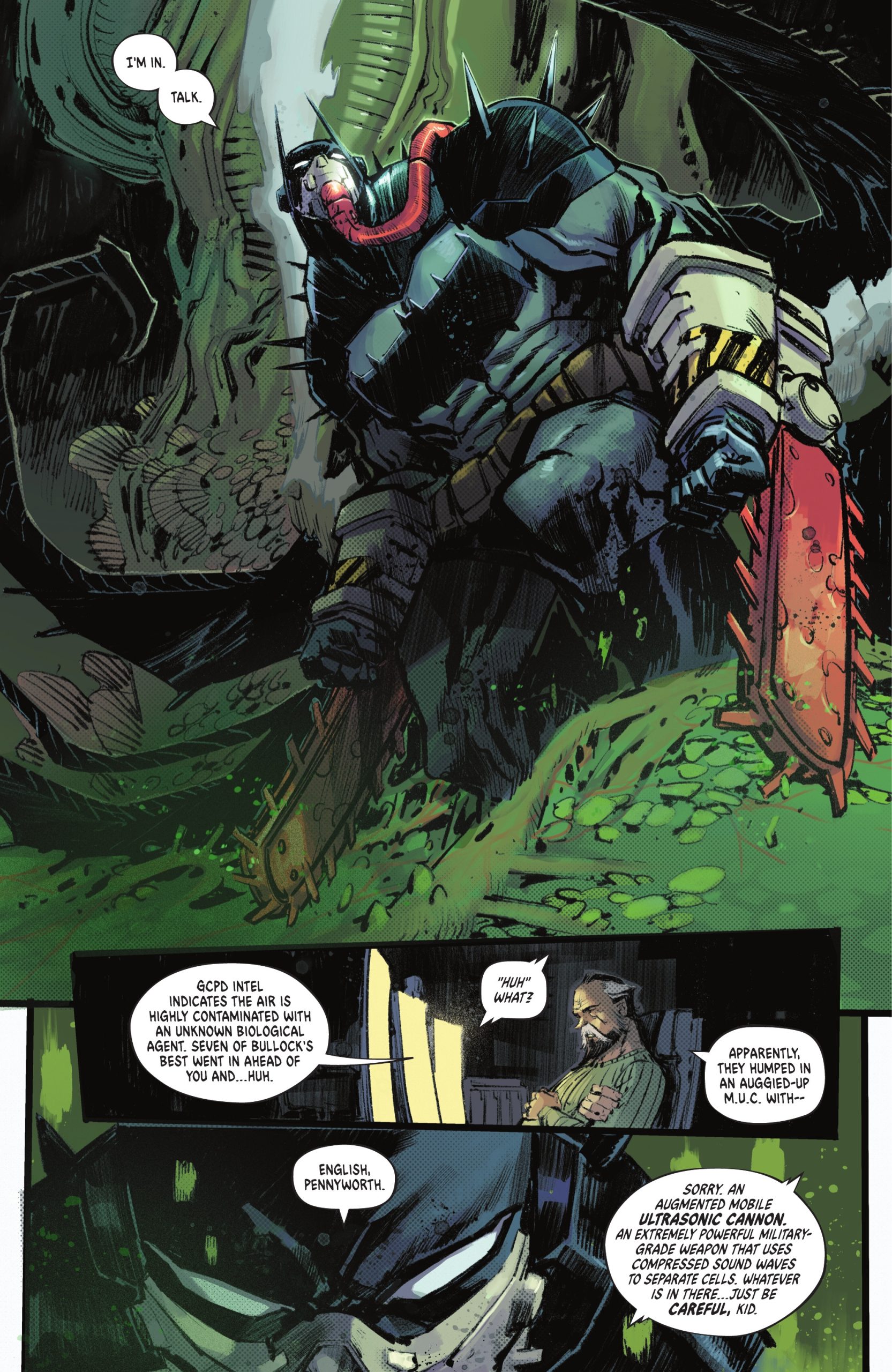
Batman’s response to the infestation is characterized by high-stakes tactical engagement. Recognizing that standard non-lethal deterrents are ineffective against the corrupted police force—who have been rendered beyond medical or psychological rescue—Bruce Wayne adopts a more aggressive stance. The inclusion of industrial-grade buzzsaws on his forearms serves as a grim necessity rather than a tactical preference, underscoring the severity of the threat.
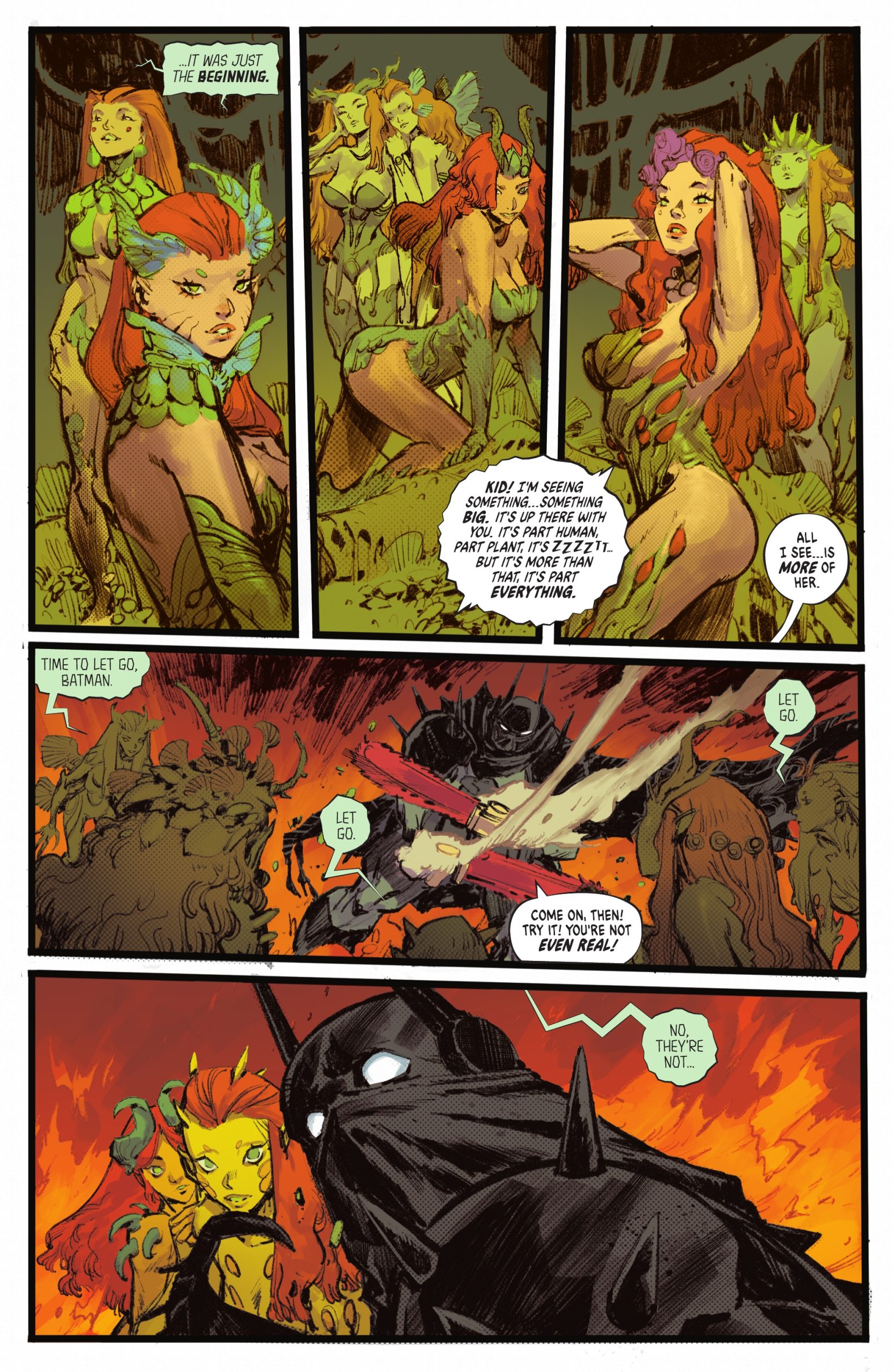
The psychological warfare employed by Ivy involves the manifestation of multiple, idealized avatars designed to distract and disorient. Batman’s disciplined rejection of these phantoms demonstrates a shift toward a more clinical, mission-oriented mindset. The discovery of Ivy’s current physical state—a fully realized human-plant hybrid—suggests that she is no longer merely a conduit for the Green, but a central node in a biological network that threatens to consume the entirety of Gotham.
Supporting Data and Creative Team Contributions
The aesthetic success of the issue is largely attributed to the synergy between the creative team. Frank Martin’s color palette utilizes deep, oppressive greens contrasted with the harsh, metallic tones of Gotham’s industrial structures, creating a claustrophobic atmosphere. Clayton Cowles’ lettering effectively emphasizes the organic, encroaching nature of Ivy’s speech and the environmental noises of the jungle.
- Writer: Scott Snyder
- Artist: Eric Canete
- Colorist: Frank Martin
- Letterer: Clayton Cowles
- Publication Date: March 2026
The technical execution of the art, particularly in the sequences depicting the transition of the urban environment into a jungle, provides a visual timeline of the destruction. The panels showing the transformation of the police force serve as a critical turning point in the issue, establishing the irreversible stakes of the conflict.
Broader Implications for the Absolute Universe
The narrative threads established in this issue extend well beyond the immediate battle with Poison Ivy. A secondary, yet equally critical plot point involves Martha Wayne, who delivers a revelation toward the end of the issue that alters the reader’s understanding of the Wayne family’s history within this specific continuity. While the details remain partially obscured, the impact on Bruce’s character development is expected to be profound.
Furthermore, the persistent antagonism from Bruce’s former friends creates a geopolitical vulnerability for Batman. There is a strong consensus among readers and critics that the Joker is positioning himself to exploit this internal friction. The combination of an external ecological crisis led by Ivy and an internal social collapse orchestrated by the Joker suggests that the upcoming chapters will likely be the most testing period for the Absolute Batman to date.
Theoretical Future and Conflict Resolution
From a thematic standpoint, the refusal of characters like Harvey Dent and Oswald Cobblepot to forgive Bruce acts as a foil to the "sincere" attempts at reconciliation made by the protagonist. If Bruce remains unable to secure his inner circle, the tactical difficulty of fighting external threats like Ivy increases exponentially. The implication is that the "Seventh Kingdom" may be the first of several systemic failures that the city will endure.
As the series progresses, the conflict with Poison Ivy serves as a microcosm for the larger battle for Gotham’s identity. Is the city meant to be an industrial machine, or will it return to a primitive, natural state? Batman stands as the singular variable in this equation, attempting to preserve a status quo that others are actively working to dismantle.
Conclusion of the Current Arc
As Part One of the "Seventh Kingdom" concludes, the immediate outlook for Gotham remains dire. The environmental takeover is not merely a contained incident; it is an existential threat to the city’s infrastructure. With the police force neutralized and his personal alliances in tatters, Batman is forced to rely on his own ingenuity and physical resolve.
The transition into the next issue promises an escalation of the conflict. The focus will likely shift to whether Batman can surgically remove the threat of the hybrid Ivy without destroying the city he is sworn to protect. For readers following the Absolute Batman line, the convergence of these character-driven dramas and the high-octane action sequences makes this run a foundational element of the current DC editorial output. The integration of horror elements, particularly with the portrayal of the corrupted officers, elevates the series, ensuring that the stakes remain high and the narrative momentum continues to accelerate.
The resolution of the Martha Wayne subplot and the inevitable intervention of the Joker are the two most anticipated developments following this issue. Until then, the battle for the Seventh Kingdom stands as a testament to the brutal, unforgiving nature of the Absolute Universe.
Related posts: