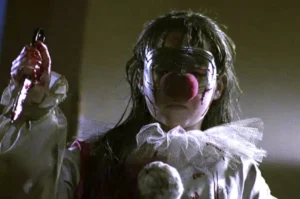
The legendary actress Linda Hamilton has officially confirmed that she has no intention of reprising her iconic role as Sarah Connor in any future installments of the Terminator franchise. The announcement, delivered with characteristic bluntness during a promotional appearance for her latest project, Trust Me, I’m a Doctor, effectively closes the door on one of cinema’s most enduring character arcs. While franchise creator James Cameron has recently disclosed that he is in the early stages of developing a new project within the Terminator universe, Hamilton’s stance appears to be definitive, marking a significant transition for a series that has struggled to find its footing since the early 1990s.
A Career-Defining Role Comes to a Close
For decades, Linda Hamilton’s portrayal of Sarah Connor—a transformation from a vulnerable waitress to a battle-hardened survivalist—has been considered a benchmark for female protagonists in science fiction and action cinema. Having starred in the original 1984 film, its 1991 seminal sequel Terminator 2: Judgment Day, and the 2019 installment Terminator: Dark Fate, Hamilton has become inextricably linked to the character’s legacy.
However, in her recent exchange with JustWatch, Hamilton expressed genuine surprise at the news of further development within the franchise. "I’m out!" she stated, underscoring her perspective that the narrative potential for her character has been exhausted. Her comments reflect a pragmatic view of the film industry, noting that the financial underperformance of 2019’s Dark Fate—which failed to meet the high box-office expectations of its studio backers—made the prospect of a direct continuation seem unlikely. Despite her firm departure, Hamilton maintained a professional tone, expressing well wishes for the future of the brand.
The Evolution of the Terminator Franchise: A Chronology
The Terminator franchise has undergone numerous shifts in creative direction, ownership, and tone since its inception over four decades ago. Understanding the trajectory of the series is essential to contextualizing Hamilton’s current position.

- 1984: The Terminator, directed by James Cameron, premieres, establishing a low-budget, high-concept sci-fi horror aesthetic that defines the series.
- 1991: Terminator 2: Judgment Day is released. Widely regarded as a masterpiece of the genre, it sets a high bar for visual effects and character development.
- 2003–2015: The franchise moves forward without James Cameron’s direct creative involvement, resulting in a series of sequels (Terminator 3: Rise of the Machines, Terminator Salvation, and Terminator Genisys) that receive mixed critical reception and struggle to maintain the cultural cachet of the first two films.
- 2019: Terminator: Dark Fate is released, marketed as the true successor to Judgment Day. It features the return of James Cameron as a producer and Linda Hamilton as Sarah Connor.
- 2025: James Cameron confirms in an interview with Flicks that he is developing a new Terminator project, focusing on the encroaching reality of artificial intelligence.
Financial and Critical Context
The decision by studios to continue the Terminator franchise is often driven by the intellectual property’s status as a global brand. However, the commercial reality has been uneven. Terminator 2 remains the high-water mark, grossing over $520 million worldwide in 1991, a massive sum for the era. In contrast, Terminator: Dark Fate, despite positive reviews for its action sequences and the return of the original cast, struggled to achieve profitability, grossing approximately $261 million against a production budget estimated at $185 million, excluding marketing costs.
This financial tension has created a difficult environment for the franchise. The challenge for any subsequent filmmaker is not only to innovate within the saturated sci-fi market but to satisfy a legacy audience that remains deeply attached to the narrative beats established in the 1980s and 90s.
The Technological Imperative: AI in the Modern Age
James Cameron’s renewed interest in the franchise is rooted in the rapid advancement of real-world technology. When the original film was released, the concept of "Skynet"—a sentient, malevolent AI—was firmly within the realm of speculative fiction. Today, the conversation surrounding generative AI, autonomous weaponry, and machine learning has brought the core themes of the Terminator films into the mainstream discourse.
In his late 2025 comments, Cameron emphasized that he feels compelled to address these themes again, not necessarily as a continuation of the previous narrative, but as a reflection of the current geopolitical and technological climate. The primary hurdle, as identified by the filmmaker, is ensuring that the fiction does not appear dated by the time the film reaches production. The speed at which AI capabilities are evolving means that a script written today could be rendered obsolete or redundant by the time of its release.
Implications for the Future of the Franchise
Linda Hamilton’s departure forces the franchise to pivot. For years, the narrative core of the series was the relationship between Sarah Connor and her son, John, or the broader implications of the war against the machines. Without Hamilton, any new installment must either pivot to entirely new characters—as attempted in previous iterations—or explore the lore from an entirely different perspective.

The industry reaction to this news has been one of professional acknowledgement. Most critics and analysts suggest that the franchise is at a crossroads. The "legacy sequel" format, which brought back original stars to anchor new stories, has been the industry standard for the past decade, as seen in franchises like Star Wars and Halloween. By opting out, Hamilton is signaling a departure from this trend, potentially allowing the studio to take more risks with the intellectual property.
Analysis of the Franchise’s Identity
The struggle of the Terminator brand lies in its difficulty to evolve. Each installment has, to varying degrees, attempted to re-create the "horror-action" synthesis that Cameron perfected in the 1980s. However, as the world becomes increasingly accustomed to the presence of advanced technology, the "scary" element of a sentient machine has changed.
If James Cameron proceeds with his project, it will likely be a departure from the "Connor-centric" narrative that has defined the previous six films. This represents a significant gamble. Audiences often associate the franchise with the specific performances of Hamilton and Arnold Schwarzenegger. Transitioning away from these anchors requires a script that is compelling enough to stand on its own merits, rather than relying on the nostalgia of the past.
Conclusion
Linda Hamilton’s firm exit from the Terminator universe marks the end of an era for one of the most recognizable figures in film history. As the franchise prepares for what could be its most significant reinvention to date, the focus shifts to James Cameron and his vision for a world where the lines between human intelligence and machine capability are blurring. While the absence of Sarah Connor will be felt by longtime fans, it may ultimately provide the creative space necessary for the series to evolve beyond its roots and address the technological realities of the 21st century. Whether or not the franchise can recapture its former glory remains to be seen, but it is clear that the future of the series will have to be written without its most iconic defender.