Bishop #5 Delivers the Climax of Marvel’s Time-Traveling Saga with High Stakes for Lucas Bishop and Shard

The comic book industry prepares for a high-stakes conclusion as Marvel Comics brings its critically engaging time-traveling miniseries to an end. Bishop #5, scheduled for release on Wednesday, October 28, 2026, marks the definitive finale of the current narrative arc centered on Lucas Bishop and his sister, Shard. Published under the Marvel Universe banner, the issue carries a cover price of $4.99 and promises to resolve a complex web of temporal paradoxes, familial loyalty, and multiversal existential threat.

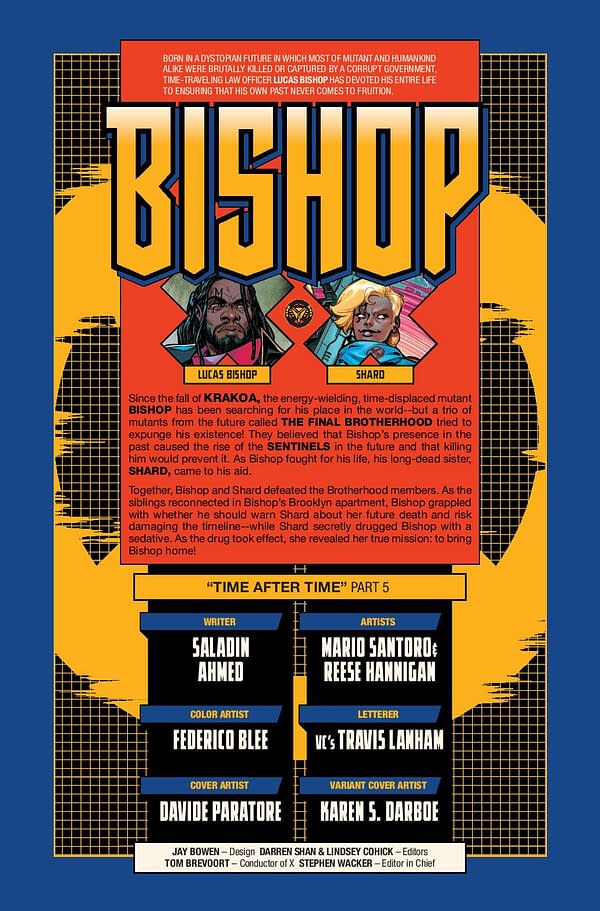
Written by Saladin Ahmed with interior artwork by Mario Santoro and Reese Hannigan, the issue explores the culmination of the Final Brotherhood’s endgame. As narrative tensions reach their peak, the central characters face an intractable moral dilemma that threatens both their immediate family and the foundational integrity of the timeline.
Narrative Overview and Core Conflict
The central premise of Bishop #5 pivots on a classic, high-stakes science fiction dilemma: the preservation of personal familial bonds versus the protection of the broader spacetime continuum. Throughout the miniseries, Lucas Bishop and Shard have navigated a labyrinthine plot orchestrated by the Final Brotherhood. With the true nature of the antagonists’ endgame exposed in the final chapter, the siblings are forced into a zero-sum decision.
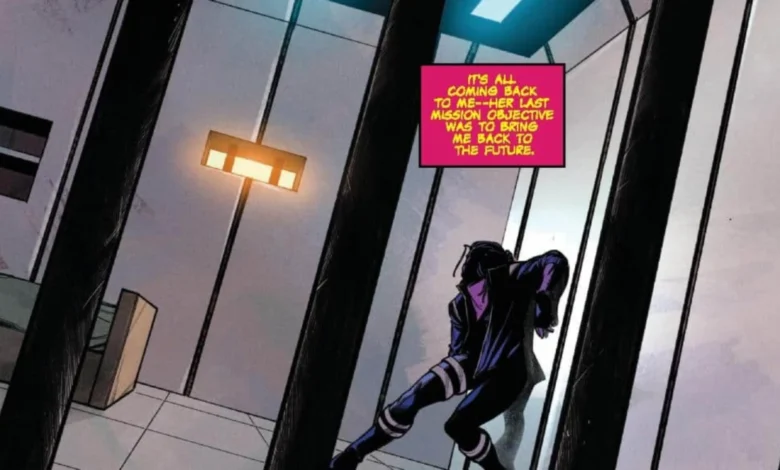
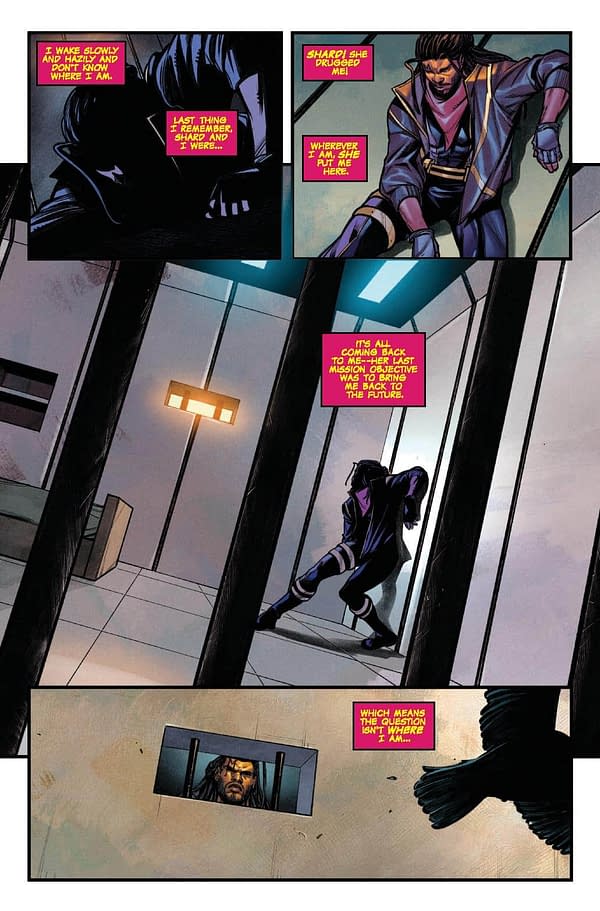
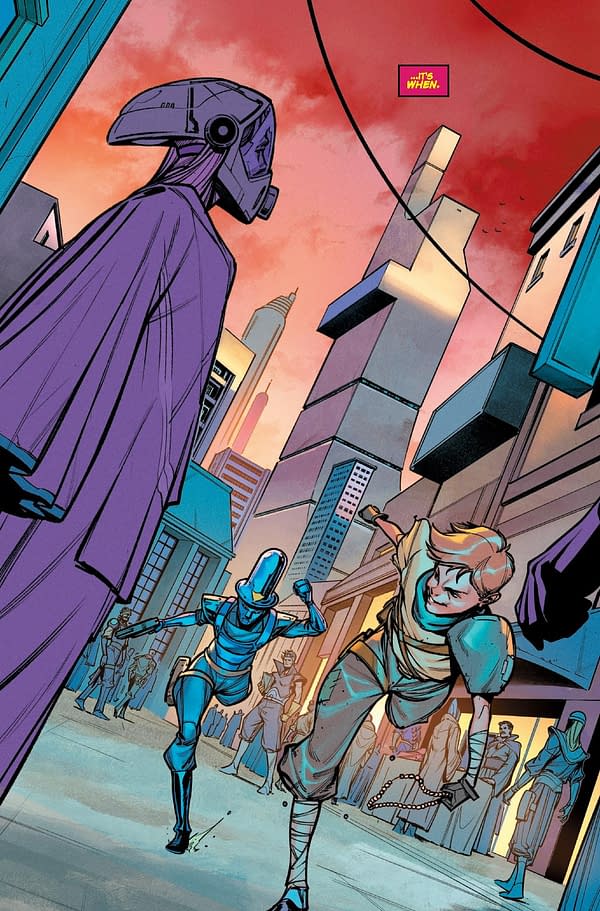
Preview pages released by Marvel indicate that the issue wastes little time establishing its dramatic gravity. Lucas Bishop is depicted waking up in a disoriented and physically compromised state, having been sedated by his own sister. This narrative twist emphasizes the desperation of Shard’s position, illustrating that the conflict extends beyond physical combat into deep psychological and ethical fracture points between allies who share familial ties.
The thematic weight of the issue relies heavily on the emotional toll of temporal manipulation. Characters who exist outside or across traditional timelines frequently grapple with the fragility of history, but Bishop #5 personalizes this struggle by pitting the macro-level survival of reality against the micro-level survival of the Bishop bloodline.
Creative Team and Publication Details
The creative assembly behind Bishop #5 brings together established talent from across the industry:
- Writer: Saladin Ahmed, known for his nuanced character work and extensive contributions to Marvel’s mutant and cosmic lines.
- Artists: Mario Santoro and Reese Hannigan, responsible for the dynamic layouts and sequential art.
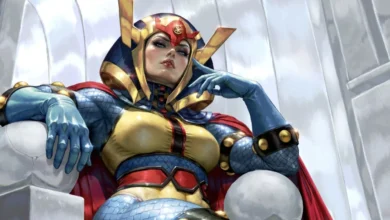
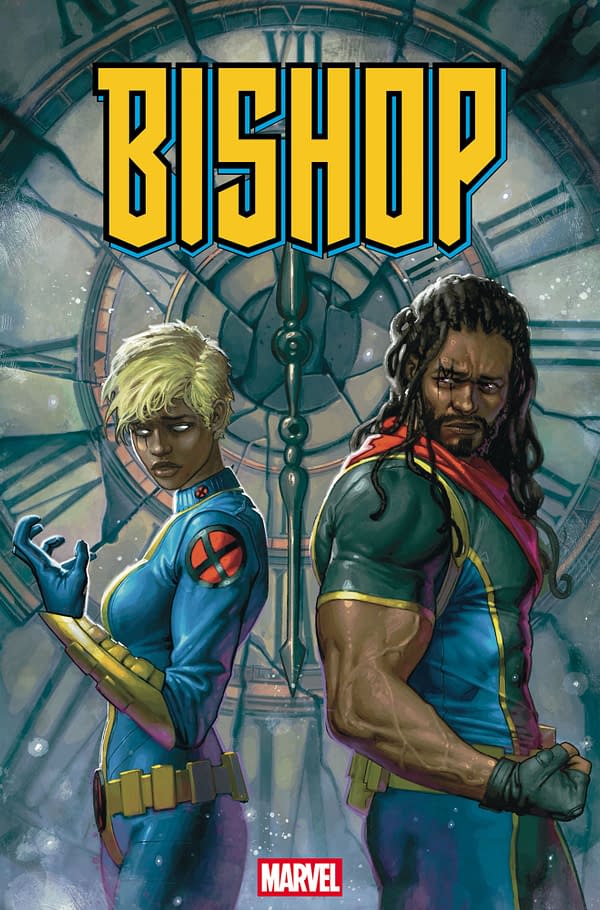
- Primary Cover Artist: Davide Paratore, whose work anchors the standard edition of the book.
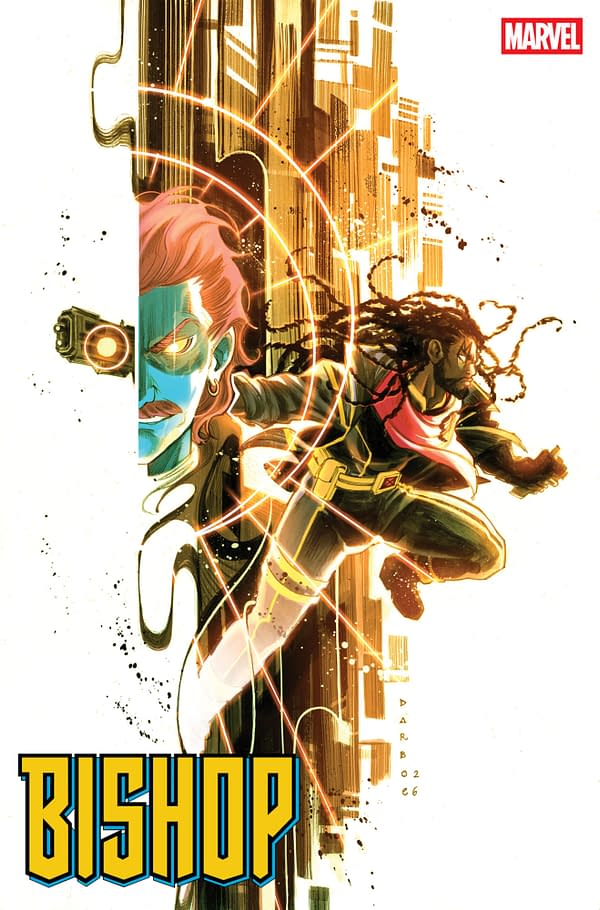
- Variant Cover Artist: Karen Darboe, providing an alternative collectible cover for the issue.
Issue Specifications
- Publisher: Marvel Comics
- Imprint: Marvel Universe
- Release Date: October 28, 2026
- Page Count: 32 pages
- Format: Standard comic book floppy
- Rating: T+ (Teen Plus)
- Standard Price: $4.99 US / $6.25 CAN
- Diamond/Lunar/PRH Identifiers: UPC 75960621447100511 (Standard), 75960621447100521 (Karen Darboe Variant)
Background Context and Chronology
Lucas Bishop, a character with a long and storied history within the X-Men franchise, has frequently been defined by his relationship with time travel. Hailing from a dystopian future where mutants were placed in concentration camps, Bishop originally traveled to the present era to prevent the assassination of a prominent X-Man that purportedly triggered his timeline’s dark history.
Over the decades, Bishop’s narrative arc has evolved from a straightforward chronological refugee into a complex figure associated with temporal policing, multiversal exploration, and deep-seated familial dynamics alongside his sister Shard—an artificially created photonic hologram given independent life through advanced future technology.
The current miniseries was designed to recontextualize Bishop’s place within the modern Marvel Universe, stripping away cosmic distractions to focus tightly on the psychological burdens borne by temporal exiles. By isolating the characters within a closed narrative loop against the Final Brotherhood, the creative team has sought to explore how decades of continuity weigh on characters whose very existences are defined by altered timelines.
Industry Implications and Reader Reception
The conclusion of a tightly focused, five-issue limited series carries specific strategic importance for major comic book publishers like Marvel. Miniseries allow creators to tell self-contained, high-impact stories without requiring readers to follow sprawling, crossover-heavy event books.
Industry analysts note that character-driven limited series focusing on secondary and tertiary mainstays—such as Bishop—often serve as testing grounds for broader narrative shifts or character rebranding. The resolution of Bishop #5 is expected to ripple outward, potentially influencing how time-travel mechanics are handled across other mutant-centric titles in the Marvel catalog. Furthermore, the decision to offer specialized variant covers, such as the Karen Darboe iteration, highlights publishers’ continued reliance on variant collector incentives to drive direct-market comic shop sales.
As comic book specialty stores prepare for the October 28 release, anticipation remains high among fans of X-Men lore. Whether Bishop and Shard can find a third path that bypasses the binary choice between family and reality will be revealed when the issue arrives on physical and digital shelves.