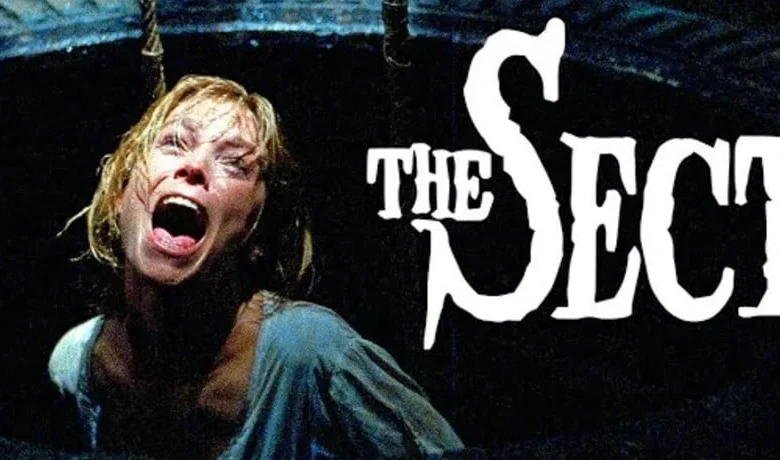
The landscape of 1990s European horror cinema remains indelibly marked by the contributions of director Michele Soavi, a filmmaker whose pedigree includes a crucial apprenticeship under cinematic master Dario Argento. While Soavi achieved international acclaim with his 1994 whimsical zombie-comedy Cemetery Man, originally released as Dellamorte Dellamore, his preceding 1991 feature The Sect, also known as The Devil’s Daughter or by its original Italian title La Setta, represents a distinct pivot toward solemn, high-concept apocalyptic dread. Distributed on home video formats by specialty labels such as Severin Films, the picture stands as a prime artifact of late-stage cinematic Satanic Panic, merging grand narrative ambition with the distinct stylistic sensibilities of the Italian horror tradition.
Main Facts and Production Background
Released in 1991, The Sect was directed by Soavi from a screenplay co-written by Dario Argento, Gianni Romoli, and Franco Ferrini. The production benefited significantly from the involvement of veteran industry talents, including cinematographer Raffaele Mertes, whose atmospheric lens captured the eerie duality of sun-bleached California deserts and the gothic, subterranean architecture of Frankfurt, Germany. Special makeup effects were engineered by Sergio Stivaletti, a frequent collaborator of Argento whose practical effects credits include Demons 2 and Phenomena.
The narrative centers on an international conspiracy dedicated to orchestrating the birth of the Antichrist. The film stars Kelly Curtis—elder sister to actress Jamie Lee Curtis—in the leading role of Miriam Kreisl, a repressed schoolteacher whose life is upended by a sinister cult led by the eccentric and menacing Moebius Kelly, portrayed by veteran actor Herbert Lom. The supporting cast features notable European genre figures, including Giovanni Lombardo Radice. The resulting film is an ambitious, albeit surreal, exploration of predetermined fate, psychological trauma, and occult manipulation set against the backdrop of European urbanism.
Chronology of the Narrative
The structural chronology of The Sect spans two decades, beginning with a prologue set in 1970 in the desert of Southern California. In this opening sequence, a group of transient hippies encounters a disheveled wanderer named Damon, portrayed with erratic intensity. Unbeknownst to the travelers, Damon is an operative for a global satanic organization. Upon lulling the group to sleep, Damon coordinates a midnight raid, resulting in the ritualistic slaughter of the commune members and the destruction of their encampment, all orchestrated under the watchful eye of the cult’s leadership.
The narrative then jumps forward roughly two decades to Frankfurt, Germany. The plot accelerates when a defector from the cult, Mary Crane, is hunted down and murdered by an assassin, played by Lombardo Radice. Following this, the film introduces Miriam Kreisl, who nearly strikes Moebius Kelly with her vehicle. Displaying misplaced hospitality, Miriam brings the cantankerous elder into her apartment.
While Miriam sleeps, Moebius initiates a series of psychological and physical incursions, utilizing a sacred scarab and secret subterranean tunnels beneath her building to execute rituals. After Moebius seemingly dies within the apartment—leaving behind a shroud reminiscent of cheesecloth—Miriam finds herself increasingly enmeshed in the cult’s designs. The chronology culminates in a surreal final act within a secluded forest, where Miriam is subjected to demonic forces before being thrust into a birthing chamber to deliver the cult’s prophesied child.
Supporting Data and Technical Collaborations
The production budget and technical allocation of The Sect reflect the waning years of the traditional Italian genre film boom, wherein directors frequently sought international co-production funding to maintain high production values. Shot extensively on location in Germany, the film relied on practical illusion rather than digital enhancement, a hallmark of Stivaletti’s workshop.
| Production Element | Personnel / Details |
|---|---|
| Director | Michele Soavi |
| Writers | Dario Argento, Gianni Romoli, Franco Ferrini |
| Cinematography | Raffaele Mertes |
| Special Effects | Sergio Stivaletti |
| Principal Cast | Kelly Curtis, Herbert Lom, Giovanni Lombardo Radice |
| Original Release Year | 1991 |
| Distributor (Modern Media) | Severin Films |
The collaboration between Soavi and Mertes established a visual grammar that balanced pedestrian realism with heightened, dreamlike sequences. The lighting and framing choices sought to ground the absurdities of the narrative—such as ancient cults operating within modern European infrastructure—in a believable, albeit oppressive, aesthetic reality.
Official Industry Responses and Critical Reception
Upon its initial theatrical release, The Sect received mixed commercial distribution outside of Italy, often struggling to find a unified global audience due to shifting trends in mainstream horror during the early 1990s, which favored slick American studio thrillers and independent slasher revivals. However, critical reappraisal among cineastes and scholars of European genre cinema has been largely favorable.
Contemporary film historians frequently analyze Soavi’s filmography as the concluding chapter of the golden age of Italian horror, positioning Soavi as the legitimate heir to the stylistic lineage established by Mario Bava and continued by Dario Argento and Lucio Fulci. Critics have particularly singled out Kelly Curtis’s performance for praise, noting that her grounded portrayal of a traumatized woman navigating incomprehensible circumstances provides an emotional anchor that prevents the narrative’s more eccentric elements from collapsing into farce. Furthermore, Herbert Lom’s performance as Moebius Kelly has been recognized as a masterclass in eccentric villainy, contrasting sharply with Curtis’s understated restraint.
Broader Impact and Genre Implications
The release and subsequent cult rediscovery of The Sect offer significant insight into the cultural anxieties surrounding the Satanic Panic of the late 20th century. While American media was heavily saturated with sensationalized real-world accounts of ritual abuse and occult conspiracies, European filmmakers approached the subject through a lens of surrealism, folklore, and high gothic artifice.
Soavi’s approach in The Sect bypassed direct social commentary in favor of universal themes of paranoia, bodily autonomy, and institutional corruption. By casting an ordinary individual—a schoolteacher—as the vessel for global catastrophe, the film reflects a broader anxiety regarding the individual’s helplessness in the face of vast, invisible conspiracies.
In the decades following its premiere, the film’s availability on restored home video formats, courtesy of companies like Severin Films, has allowed a new generation of film scholars and enthusiasts to evaluate its place within the broader pantheon of international horror. While it may not have achieved the ubiquitous pop-culture penetration of Argento’s Suspiria or Fulci’s The Beyond, The Sect endures as a meticulously crafted, visually arresting exercise in apocalyptic dread, cementing Michele Soavi’s status as a distinct and formidable auteur of fantastic cinema.