Star Trek Scouts returns for a second season with high-stakes space basketball and new holodeck adventures

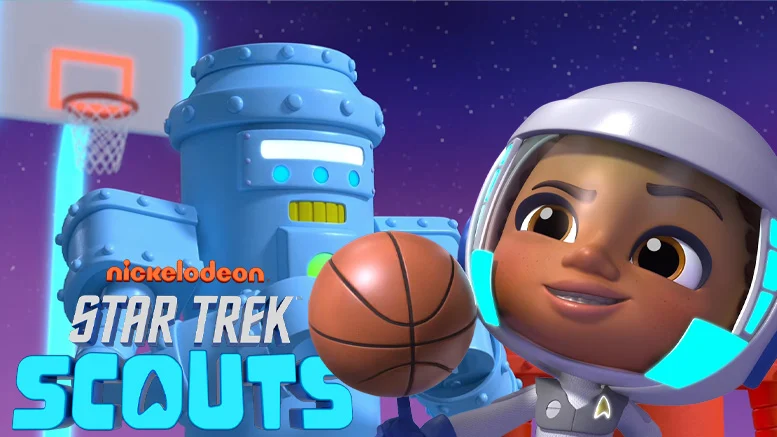
The animated web series Star Trek: Scouts, a Nickelodeon-produced venture targeting the preschool demographic, has officially returned for its second season. Premiering on Star Trek Day, October 3, 2026, the series continues to expand the Star Trek franchise into the youngest corners of its audience base. Following a successful inaugural run that debuted on Star Trek Day in 2025, the series has been renewed for 30 additional three-minute episodes, a slate that promises to keep the young protagonists—JR, Sprocket, and Roo—at the forefront of digital educational content for the foreseeable future.
Origins and Strategic Positioning
Star Trek: Scouts was first introduced as a surprise entry into the Star Trek canon during the 2025 Star Trek Day festivities. Developed as a collaboration between Paramount’s Star Trek franchise team and Nickelodeon, the series serves a specific strategic purpose: introducing the foundational values of Starfleet—exploration, empathy, and cooperation—to children aged 3 to 6.
By utilizing the familiar framework of the Holodeck, the writers are able to bypass the more complex geopolitical constraints of the primary Star Trek timeline, allowing the characters to engage in imaginative scenarios that prioritize problem-solving and social-emotional development. This approach mirrors the broader strategy of the Star Trek franchise under the stewardship of Paramount, which has sought to diversify its offerings across demographics, from the mature, serialized narratives of Star Trek: Picard to the youth-oriented adventures found in Star Trek: Prodigy and now Star Trek: Scouts.
Season Two Launch and Narrative Scope
The second season of Star Trek: Scouts was officially greenlit following an announcement at San Diego Comic-Con (SDCC) in July 2026. The production commitment for 30 episodes represents a significant investment in the brand’s digital footprint. The season’s opening arc leans heavily into high-energy, relatable themes designed to capture the attention of younger viewers while subtly introducing concepts of physics and teamwork.
The latest episode, "Holodeck Rescue #14," introduces a conflict centered on the basketball court—a classic trope of youth-oriented programming—transposed into a zero-gravity environment. The antagonists, identified as "robo-bros," serve as an affectionate nod to the history of the franchise, specifically referencing "Satan’s Robot" from the Star Trek: Voyager episode "The Adventures of Captain Proton." In the narrative, the Scouts must assist a group of "moonchucks"—critters experiencing exclusion—by utilizing their unique gadgets and individual skill sets to navigate the complexities of low-gravity dribbling and spatial maneuvering.
Chronology of Recent Releases
The rollout for the second season has been aggressive, with the producers opting for a multi-episode drop to maintain momentum following the September 3, 2026, Star Trek Day promotional window. The current release schedule is as follows:
- September 3, 2026: Initial announcement and teaser content released to coincide with the global Star Trek Day celebration.
- October 3, 2026: Official premiere of the second season, featuring the debut of the space basketball episode.
- October 3, 2026 (Simultaneous): Release of three additional episodes covering themes of mind control, asteroid rescue, and space-based dietary mishaps.
This content cadence is designed to populate the Blaze and the Monster Machines YouTube channel, where the series is hosted, with a sufficient backlog to ensure that viewers have ample content for repeat viewing—a key metric in the preschool digital media sector.
Supporting Data and Educational Framework
The pedagogical structure of Star Trek: Scouts is built upon the "Starfleet Academy" concept, where cadets-in-training must learn to interact with alien species and exotic environments. According to industry standards for children’s media, the three-minute duration of each episode is optimized for the attention spans of the preschool demographic.
The inclusion of scientific or pseudo-scientific concepts, such as gravity variations and asteroid dynamics, serves to pique curiosity in STEM (Science, Technology, Engineering, and Math). While the show remains firmly in the realm of fiction, the use of recognizable Star Trek terminology—"Holodeck," "Starfleet," and "Cadets"—acts as a brand-building exercise, cultivating a new generation of fans who will be familiar with the terminology before they reach the age required to engage with the more complex, live-action entries in the franchise.
Industry Implications and Brand Expansion
The success of Star Trek: Scouts highlights a significant shift in how intellectual properties are managed in the digital age. By utilizing existing infrastructure—in this case, the YouTube channel for the highly successful Blaze and the Monster Machines—Paramount is able to leverage a pre-existing audience of millions of subscribers to introduce the Star Trek brand to a demographic that might not otherwise encounter it.
This "crossover" marketing strategy serves as a low-risk, high-reward initiative. The costs of producing three-minute animated shorts are substantially lower than full-scale live-action series, yet the potential for long-term brand loyalty is immense. Analysts suggest that the proliferation of such content is essential for the sustainability of a long-running franchise. As older fans age out of their peak viewing years, the franchise must constantly replenish its base with younger cohorts.
Official Stance and Future Outlook
While specific ratings for web-series content are rarely disclosed in the same manner as linear television, the decision to produce a second season consisting of 30 episodes is a clear indicator of positive internal performance metrics. The producers have maintained that the goal of the series is to keep the "spirit of exploration" alive for the youngest viewers.
The integration of callbacks to previous series, such as the Voyager-inspired robots, indicates a desire to satisfy long-term fans who may be watching with their children or grandchildren. By balancing these "Easter eggs" with clear, simple, and moral-driven stories, the production team has successfully bridged the gap between legacy fan service and modern educational requirements.
As the season progresses, viewers can expect a continued focus on these bite-sized adventures. The production team has indicated that future episodes will continue to explore the diverse ecosystem of the Star Trek universe, with potential for further character development for JR, Sprocket, and Roo as they hone their skills under the watchful eye of their virtual mentors.
Summary of Impact
The return of Star Trek: Scouts confirms that the Star Trek franchise remains committed to a multi-generational strategy. By meeting children where they are—on digital platforms—and presenting the complexities of space travel through the lens of friendship and cooperation, the series functions as a vital entry point for the next generation of space enthusiasts.
The success of these 30 new episodes will likely dictate the future of the sub-brand. If the current trajectory holds, Star Trek: Scouts could become a permanent fixture of the Star Trek ecosystem, ensuring that the legacy of Gene Roddenberry’s vision continues to inspire curiosity, kindness, and exploration, even in the smallest of audiences. As of October 2026, the series remains available on the Blaze and the Monster Machines YouTube channel, with the production team encouraging feedback from parents and educators as they continue to refine the pedagogical elements of the Scouts’ adventures.
Related posts: