Monster Strike: Mera×Death: Shinigami to Boku no Ijou na Koi TV Anime Announced for January 2027

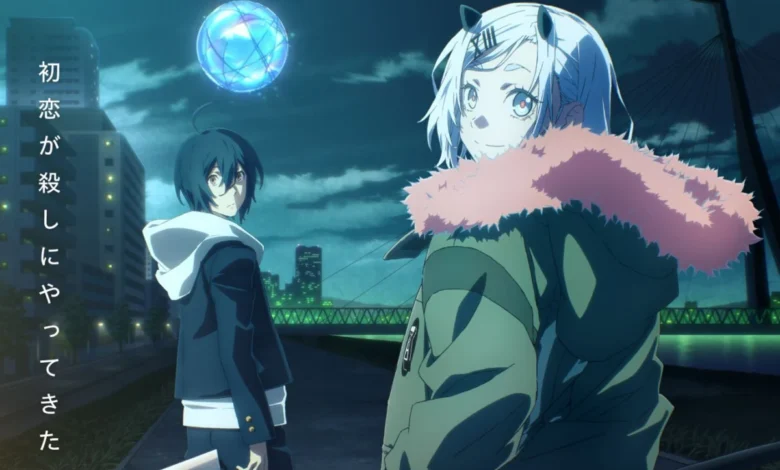
Game publisher and developer Mixi has officially announced a brand-new television anime adaptation set within the expansive universe of its flagship smartphone role-playing game, Monster Strike. Subtitled Monster Strike: Mera×Death: Shinigami to Boku no Ijou na Koi (translated as The Unusual Love Between Me and the Grim Reaper), the upcoming series has generated considerable buzz following updates from the franchise’s official channels. Alongside the title announcement, the production committee unveiled a striking key visual, the official promotional video, and a comprehensive roster of the creative minds steering the project. Scheduled to premiere on Tokyo MX and other broadcasting stations on January 5, 2027, this new installment marks another major milestone for one of mobile gaming’s most commercially successful multimedia franchises.
Production Staff and Creative Vision
The announcement of Mera×Death also shed light on the formidable lineup of industry veterans and rising talents tasked with bringing this dark and unconventional romance to life. At the helm as director is Kenta Kushiya, who previously made waves with his episode-direction work on the critically acclaimed Kaijuu 8-gou (Monster #8). Providing overarching guidance as an advisor is Takao Kato, known for his directorial expertise on Fuufu Ijou, Koibito Miman. (More Than a Married Couple, But Not Lovers).
The narrative foundation is being constructed by Daisuke Oohigashi, whose scriptwriting and series composition credits include the highly anticipated Fate/strange Fake. Character designs for the series are being handled by Tadashi Sakazaki, recognized for his work on Tensei Kizoku, Kantei Skill de Nariagaru (As a Reincarnated Aristocrat, I’ll Use My Appraisal Skill to Rise in the World), while Masayuki Honda—celebrated for Ao Ashi—takes charge of prop and creature designs.
Visual aesthetics play a crucial role in establishing the eerie yet vibrant tone of Mera×Death. Azusa Sasaki, whose vibrant color design work on Lycoris Recoil captivated audiences, serves as the color designer. The artistic vision is further shaped by art setter Haruka Taira (Shichisei no Subaru) and art director Norifumi Nakamura (Kono Kaisha ni Suki na Hito ga Imasu). Meanwhile, Asuka Fukada acts as the CG director, Takuma Morooka manages photography as the director of photography, and Ichirou Chaen oversees editing.
The auditory landscape of the anime is equally star-studded. Fumihiko Ootera takes on the role of sound director, with sound production handled by Magic Capsule, renowned for their work on Dr. Stone: Science Future Part 3. The musical score is a collaborative effort among a trio of accomplished composers: Masaru Yokoyama (Mikadono Sanshimai wa Angai, Choroi.), Kana Hashiguchi (Otome Game Sekai wa Mob ni Kibishii Sekai desu), and Natsuki Hamada (Nigashita Sakana wa Ookikatta ga Tsuriageta Sakana ga Ookisugita Ken). Music production is credited to Miracle Bus, fresh off their success with Sousou no Frieren (Frieren: Beyond Journey’s End) 2nd Season.
Production duties for the animation itself are divided between studios Qzil.la (Champignon no Majo) and Studio Keel, with the production house Arch serving as producer.
Plot Synopsis and Narrative Premise
The narrative of Monster Strike: Mera×Death: Shinigami to Boku no Ijou na Koi unfolds against a backdrop of past trauma and supernatural mystery. Set in the town of Ouma, the story looks back at a catastrophic event that shook the community six years prior—a massive, city-shuffling explosion that, by some miraculous stroke of fate, resulted in zero fatalities.
In the present day, Ouma is defined by an unsettling architectural and atmospheric anomaly: a mysterious, glowing celestial body known as the "Glass Sun" that continuously floats in the sky. Within this surreal environment lives Mera Kagari, a 16-year-old boy plagued by chronic alienation, finding life monochrome, monotonous, and utterly devoid of meaning.
Mera’s stagnant existence is abruptly upended on his sixteenth birthday when he crosses paths with a mysterious girl named Thirteen. This fateful encounter infuses his previously gray world with vibrant, overwhelming colors. However, this sudden emotional awakening comes at a steep price. Concurrently with Thirteen’s arrival, a series of bizarre, inexplicable, and potentially catastrophic occurrences begin to unfold across Ouma, intertwining the boy’s destiny with that of a self-proclaimed grim reaper in an unusual and dangerous romance.
Franchise Chronology and Background
To fully appreciate the weight of the Mera×Death announcement, it is essential to contextualize the historical trajectory of the Monster Strike multimedia empire. Originally developed by Mixi and released under its XFLAG brand, the original Monster Strike mobile game debuted on iOS devices in Japan in September 2013, followed by an Android release in December 2013. The cooperative physics-based puzzle-RPG quickly became an unprecedented cultural phenomenon in the Japanese domestic market, eventually expanding globally. A North American localization launched in October 2014, though it struggled to capture the same fervor and was ultimately discontinued in August 2017. Despite regional closures, the title has accumulated staggering metrics, boasting over 55 million registered downloads worldwide.
Capitalizing on its massive player base, Mixi aggressively expanded Monster Strike into a multimedia powerhouse, utilizing web anime as a primary vehicle for storytelling. The chronology of the franchise’s cinematic and televisual adaptations maps out a decade of sustained content delivery:
- October 2015 – December 2016: The first web anime series premiered, running for a substantial 51 episodes and establishing the core lore of the universe.
- December 2016: The franchise made its theatrical debut with the first anime movie, Hajimari no Basho e (To The Place of Beginnings), which functioned as a prequel narrative to the initial net anime.
- April 2017 – September 2017: A second television/web season aired, spanning 23 episodes and deepening the overarching lore.
- October 2017 – January 2018: The third season, subtitled Kieyuku Uchuu-hen (The Fading Cosmos), ran for 13 episodes.
- July 2018 – December 2019: The fourth major series streamed over an extensive 63-episode run, further engaging the dedicated fan base.
- November 2020: The third and most recent theatrical film, Lucifer – Zetsubou no Yoake, opened in Japanese cinemas, cementing the franchise’s cinematic viability.
The upcoming January 2027 premiere of Mera×Death represents a distinct thematic and structural shift for the animation side of the franchise. While previous animated iterations heavily mirrored the fast-paced, action-oriented, and ensemble-driven nature of the mobile game’s character rosters, Mera×Death appears to lean into a more focused, character-driven, supernatural psychological romance narrative.
Industry Implications and Strategic Analysis
From an industry perspective, the greenlighting of Monster Strike: Mera×Death underscores the enduring commercial viability of legacy mobile gaming IPs in the modern anime adaptation landscape. In an era where seasonal anime lineups are heavily saturated with light novel adaptations and original multimedia projects, major tech and gaming conglomerates like Mixi continue to leverage internal intellectual properties to maintain ecosystem engagement.
By entrusting the project to a specialized collaborative studio setup—pairing Qzil.la and Studio Keel with high-profile individual creators like director Kenta Kushiya and composer Masaru Yokoyama—Mixi signals a deliberate pivot toward prestige aesthetics. The choice to utilize a broadcast television slot on major networks like Tokyo MX, rather than relying exclusively on streaming distribution as seen with earlier web-era Monster Strike content, indicates a renewed push to capture a broader mainstream demographic beyond the core gaming populace.
Furthermore, the tonal shift toward a dark, atmospheric romance involving a grim reaper reflects broader trends in contemporary Japanese animation, where supernatural melodrama and high-concept urban fantasy continue to dominate international and domestic viewership metrics. As the January 5, 2027 premiere date approaches, industry analysts will be watching closely to see whether Mera×Death can successfully translate the billion-dollar gaming juggernaut into a critically acclaimed narrative drama that resonates with both veteran fans and newcomers to the franchise.
Related posts: