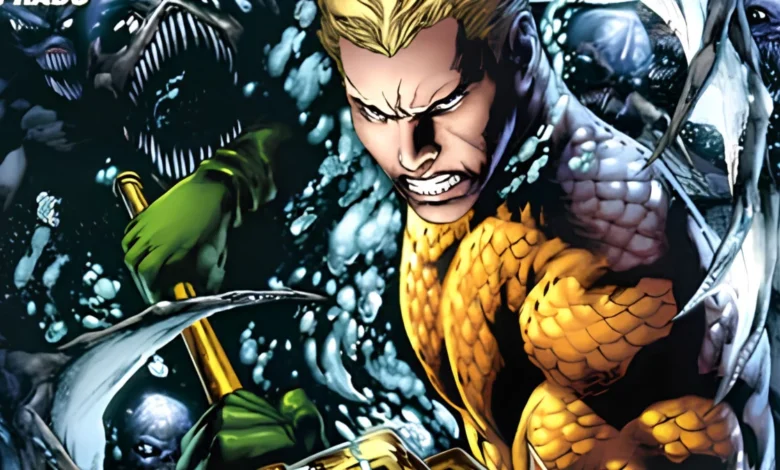
Fifteen years ago, DC Comics embarked on one of the most ambitious and risky publishing initiatives in modern comic book history: the New 52. By wiping the slate clean on September 28, 2011, and relaunching its entire superhero line with 52 simultaneous issue-ones, the publisher sought to capture a modern audience and revitalize stagnant franchises. Among the titles bracing for a major shift was Aquaman, a foundational Golden Age hero who had spent decades trapped in pop culture purgatory. Through the creative vision of writer Geoff Johns and artist Ivan Reis, Aquaman #1 did not shy away from the character’s legacy of ridicule. Instead, it weaponized those insults, confronted them directly, and plunged the King of Atlantis into a high-stakes, terrifying horror narrative that forever altered how the world perceived the DC icon.
The Origins of a Misunderstood Icon and Decades of Satire
To understand the immense challenge facing Johns and Reis in 2011, one must examine how Aquaman devolved from a respected pillar of the DC Universe into a perennial punchline. Created by writer Mort Weisinger and artist Paul Norris, Arthur Curry debuted in More Fun Comics #73 in November 1941. Operating alongside icons like Batman and Superman, Aquaman was a charter member of the Justice League of America and possessed immense strength, durability, and telepathic command over marine life. For his early decades in print, Aquaman starred in serious, swashbuckling adventures that explored political intrigue in Atlantis and environmental conservation.
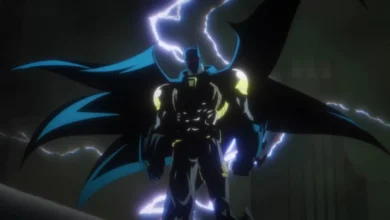
However, the cultural tipping point arrived with the 1973 debut of the Hanna-Barbera animated series Super Friends. Broadcast on Saturday mornings to millions of impressionable young viewers, the show operated under strict network broadcast standards and practices that heavily limited physical conflict and violence. Consequently, writers struggled to find practical ways for a marine-based hero to contribute on land, reducing Aquaman primarily to a character who summoned whales or rode a giant seahorse.
As generations grew up watching the amiable, non-confrontational Saturday morning caricature, the reputation stuck. By the 1990s and 2000s, late-night television, internet culture, and sketch comedy programs like Robot Chicken and Family Guy cemented the perception that Aquaman was the most useless superhero in existence. Pop culture reduced a royal monarch, tactical warrior, and ecological protector to "the guy who talks to fish." Despite acclaimed comic book runs by writers like Peter David—whose 1990s Aquaman series introduced the iconic bearded, harpoon-handed warrior—the public consensus remained stubbornly dismissive.
Confronting the Critics Head-On: The New 52 Relaunch
When DC greenlit the New 52 initiative under the guidance of then-co-publishers Dan DiDio and Jim Lee, Geoff Johns recognized that a standard superhero debut would not suffice for Arthur Curry. To fix the narrative, Johns chose a meta-textual approach: acknowledge the jokes immediately, put them in the mouths of the characters, and systematically dismantle them.
In the opening pages of Aquaman #1, Arthur stops a crew of armed criminals mid-heist. Rather than trembling in fear, the thieves immediately burst into laughter, mocking him as "Tuna Man." When local law enforcement arrives, the officers are equally baffled, openly questioning why a man who breathes underwater is standing on dry pavement and asking if he requires a glass of water. Aquaman demonstrates his incredible durability—shrugging off a point-blank gunshot—and subdues the criminals with effortless, quiet authority. Yet, even in victory, the mockery continues as the police officers joke among themselves that they have been upstaged by a punchline.
The psychological deconstruction extends further when Arthur visits a coastal diner to eat fish, prompting a patron to accuse him of hypocrisy and heartlessness. When another customer asks what it feels like to be "nobody’s favorite superhero," Arthur quietly walks away, exhausted by the relentless public apathy. By airing these exact fan grievances within the text, Johns effectively cleared the air, allowing the character to shed the baggage of decades of Saturday morning television and establish his dignity.
Introducing the Trench: A Shift Toward Deep-Sea Horror
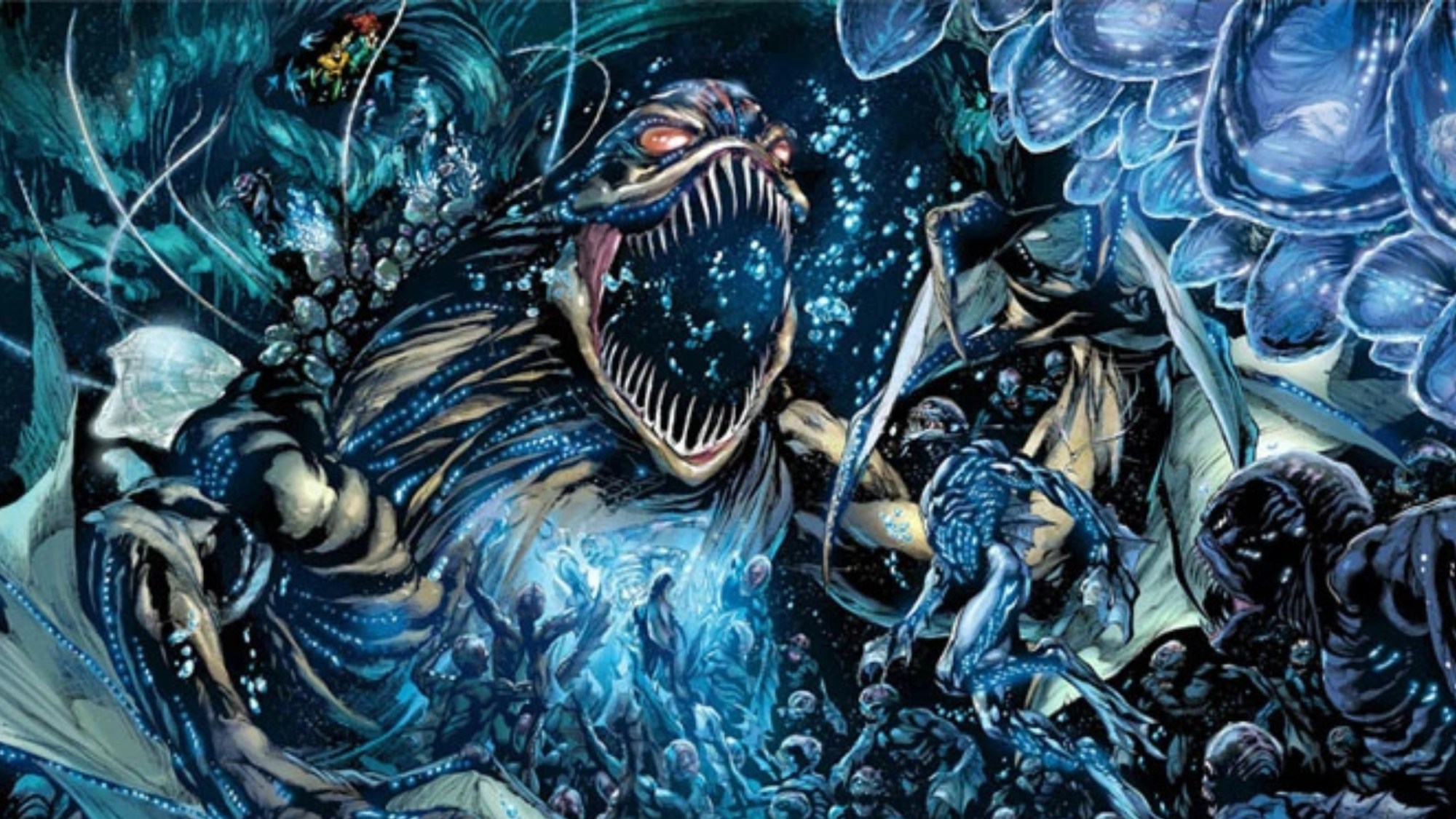
While the opening pages addressed the cultural ridicule, the overarching plot immediately shifted gears into an entirely different genre. Before Arthur even encounters the terrestrial skeptics, the comic opens in the pitch-black abyss of the Mid-Atlantic Ridge. There, readers are introduced to the Trench—a grotesque, evolutionarily distinct race of predatory sea monsters with razor-sharp teeth, bulbous eyes, and an insatiable hunger for surface flesh.
These creatures, capable of complex communication within their own clicking, guttural language, realize that the barrier keeping them in the dark depths is weakening. They set their sights on the terrestrial world, viewing humanity not as a civilization to conquer, but as a food source.
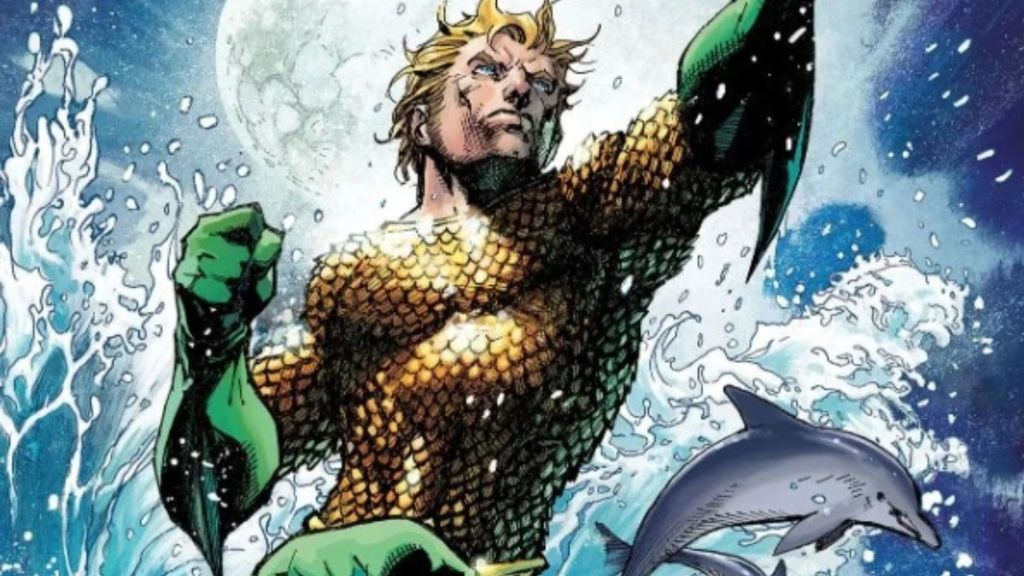
The horror elements quickly escalate when a local fishing crew falls victim to the swarm. The sequence is rendered with terrifying detail by artist Ivan Reis, whose framing and pacing evoke classic creature features like Alien or Jaws. When the Trench swarm breaches the surface, slaughtering fishermen and terrorizing a seaside community, the municipal police are forced to call upon the one person they previously mocked. Aquaman steps up as a tactical defender, proving that his dominion over the ocean is not a cute party trick, but a terrifying responsibility born of necessity.
Broader Implications and Transition to the DCEU
The commercial and critical success of the New 52 Aquaman run proved pivotal for Warner Bros. and DC Films as they developed the DC Extended Universe (DCEU). When casting director and filmmakers sought a way to modernize the character for the silver screen, they leaned heavily into the rugged, unapologetic confidence established by Johns and later runs. Actor Jason Momoa was cast as Arthur Curry, trading the classic clean-cut blonde aesthetic for a tattooed, long-haired powerhouse who treated the sea with reverence and brute strength.
Furthermore, the comic book’s atmospheric horror elements made a direct leap to cinema in director James Wan’s 2018 Aquaman film, which grossed over $1.1 billion worldwide. The terrifying sequence in which Arthur and Mera navigate a pitch-black ocean trench while fending off swarms of monstrous predators directly adapted Johns’ narrative breakthrough. The imagery was so compelling that Warner Bros. actively considered developing a horror-focused spin-off titled The Trench, showcasing the lasting impact of the 2011 comic book relaunch.
Fifteen years after its initial rollout, Aquaman #1 remains a masterclass in character rehabilitation. By refusing to run from its past, the creative team transformed a cultural joke into a box-office titan and a respected anchor of the DC Universe. Through sharp writing, striking artwork, and a bold pivot into creature horror, Geoff Johns and Ivan Reis proved that Aquaman was never a joke—the world just needed to see him fight in the deep.