Official: Marvel Comics Integrates Miracleman into the Avengers Universe as Chip Zdarsky Unveils Major Expansion Plans

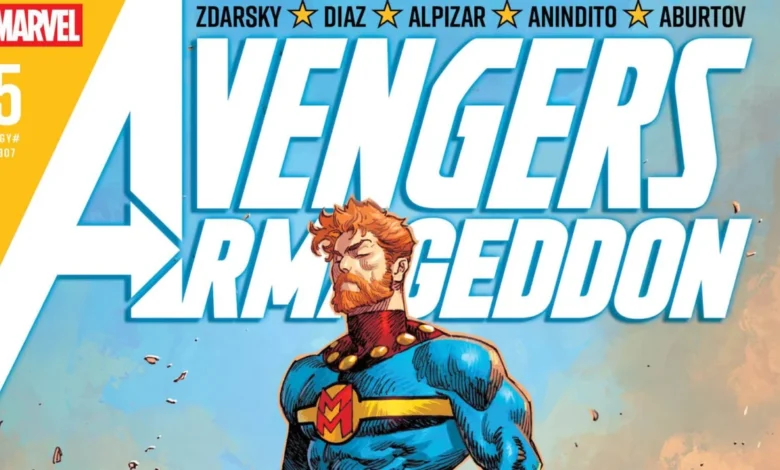
Marvel Comics has officially confirmed one of the most heavily anticipated and tightly guarded secrets in contemporary comic book publishing: the legendary, reality-altering character Miracleman has been formally integrated into the mainstream Marvel Universe. Following weeks of escalating rumors, carefully placed clues, and rampant speculation across online fan communities, the publication of Avengers: Armageddon #4 has blown the doors off Earth’s Mightiest Heroes, revealing that Miracleman serves as the foundational source of the mysterious Origin Box. This artifact previously granted unprecedented powers to David Colton, the complex twenty-first-century character introduced during Chip Zdarsky’s celebrated run on Captain America.
The revelation marks a seismic shift for the publisher’s overarching continuity. By bringing Miracleman—a towering figure in the history of deconstructionist superhero fiction—into direct contact with the Avengers, Marvel is not merely executing a high-profile crossover; it is laying the groundwork for a sweeping narrative era. According to creative teams and editorial staff, writer Chip Zdarsky has much larger, long-term plans for the character that extend far beyond the immediate conclusion of the Avengers: Armageddon event.
The Chronology of a Leak and Official Confirmation
The path to this monumental crossover was characterized by a prolonged game of cat-and-mouse between sharp-eyed fans and publishing executives. Rumors first began circulating roughly a month prior to the official announcement, sparked by industry scoops that pointed toward a massive paradigm shift within the Avengers franchise. Over the ensuing weeks, a trail of breadcrumbs—including subtle cover alterations, design changes to the central Avengers logo, and classified variants by renowned artists such as Michael Cho and John Romita Jr.—fueled relentless discussions across digital forums and comic book retail shops.
The rollout reached its zenith with the release of Avengers: Armageddon #4, the penultimate chapter of the five-issue event series. Co-created by writer Chip Zdarsky alongside artistic contributors Delio Diaz and Frank Alpizar, the issue delivered the definitive narrative payoff. The story establishes that the Origin Box, the enigmatic catalyst behind David Colton’s meteoric rise in power, derives directly from Miracleman. Consequently, Colton has formally assumed the mantle of the iconic hero, stepping directly into the spotlight of the Marvel Universe during a period of extreme existential crisis for its protectors.
Narrative Context and the Evolution of David Colton
To understand the weight of this integration, one must examine the trajectory of David Colton. Introduced to readers as a modern, morally ambiguous interpretation of the Captain America archetype in Zdarsky’s Captain America title, Colton has consistently challenged traditional notions of heroism, duty, and state-sanctioned power.

The introduction of Miracleman into Colton’s narrative arc recontextualizes the character entirely. Miracleman—historically recognized for pioneering mature, philosophical deconstructions of the superhero genre through seminal British comic runs by creators such as Alan Moore and Neil Gaiman—carries immense thematic baggage. By transferring this legacy onto Colton, Marvel is bridging classic independent comics history with its own mainstream universe in a manner rarely attempted on this scale.
Within the narrative of Avengers: Armageddon, Colton’s transformation arrives at a precipitous juncture. Earth’s Mightiest Heroes are currently engaged in a grueling conflict that threatens to fundamentally alter public perception of them as global guardians. As Colton steps forward to wield powers of cosmic magnitude, the central tension of the event pivots on a dark question: even with the formidable, god-like capabilities of Miracleman at their disposal, will the Avengers have an intact planet left to defend once the dust settles?
Creative Insights and Editorial Perspectives
Speaking on the magnitude of the issue, writer Chip Zdarsky acknowledged both the inevitability of internet spoilers and the unique joy of experiencing a narrative twist without prior warning. Comparing the reveal to classic cinematic surprises—such as unexpected character appearances in blockbuster films—Zdarsky emphasized that the moment was the culmination of years of deliberate, long-term plotting.
"It’s a big issue for Avengers: Armageddon as issue four gives a massive reveal," Zdarsky stated. "If you’re an online person, you probably already know what it is, and I’m sad for you, but it’s still a pretty fun read! In times like this, I’m often reminded of a pal who consciously chose to not watch any trailers or read news about the movie Captain America: Civil War before it came out so he could go in cold and just be surprised… Anyway, it’s a beautiful issue—the result of some long-time planning—with big implications for the future."
Echoing these sentiments, Avengers Editor Wil Moss underscored that the integration of Miracleman is merely the opening salvo in a much grander editorial roadmap. Moss highlighted the psychological depth of David Colton, suggesting that his new status quo will reverberate far outside the confines of the Avengers titles.
"Dave Colton is a fascinating, complicated character, now much more so as he takes on the mantle of Miracleman," Moss noted. "Chip has big plans for him that will affect not just the Avengers, but the entire Marvel Universe. This is the beginning of something really special."
Publishing Impact and Retailer Response
The commercial impact of the Avengers: Armageddon event has already been felt across the industry. Comic book retail shops nationwide have reported surging demand, leading to multiple sold-out printings for earlier chapters in the five-issue run.
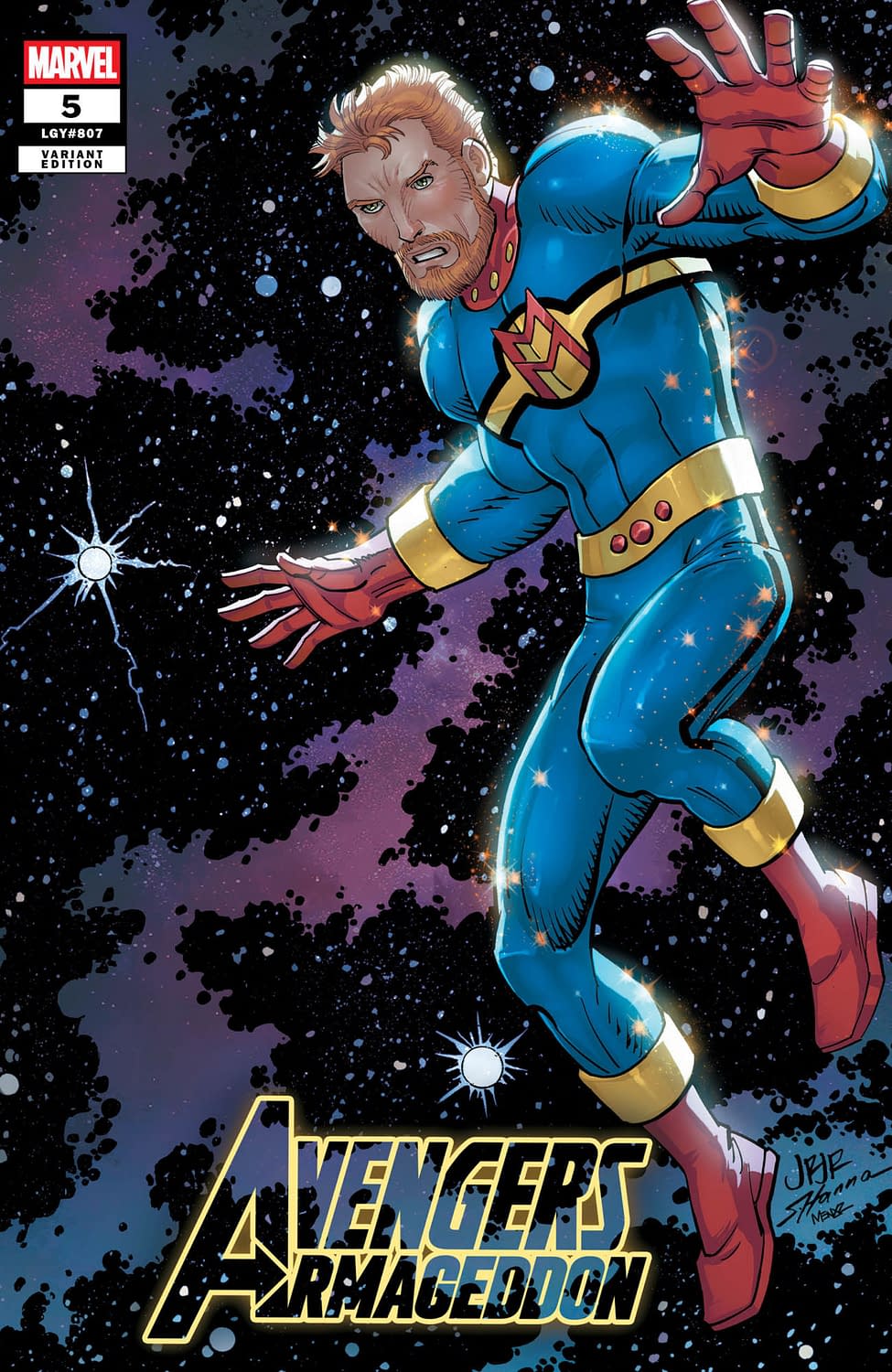
To reflect the monumental nature of the storyline’s conclusion, Marvel has instituted last-minute adjustments to its publishing schedule and promotional materials. Notably, the cover art for Avengers: Armageddon #5—initially illustrated by Dike Ruan—was revised to mirror the high-stakes narrative shifts occurring within the interior pages. Additionally, Marvel released a first look at the official variant cover for issue #5 by industry veteran John Romita Jr., further fueling collector interest ahead of the event’s finale next month.
Broader Implications for the Marvel Universe
The inclusion of Miracleman within standard Marvel continuity represents a fascinating structural evolution. For decades, the publishing rights and distinct intellectual property history of Miracleman existed at a distance from the traditional Marvel superhero ecosystem, even after Marvel acquired the character rights. Bringing the entity directly into active continuity—and attaching it to a prominent, modern character like David Colton—signals a willingness by editorial to blur the lines between corporate superhero universes and independent masterworks.
As the industry looks toward the conclusion of Avengers: Armageddon #5, the ultimate legacy of this crossover remains to be written. Whether Miracleman’s presence will act as a stabilizing force for Earth or introduce a new paradigm of existential peril will depend heavily on the narrative direction charted by Zdarsky and the editorial team in the months to come. For now, however, Marvel has successfully executed one of the most talked-about comic book events of the decade, permanently altering the landscape for its flagship heroes.