The editorial history of DC Comics is filled with contentious creative disputes, power struggles, and ideological clashes between writers, artists, and corporate leadership. Among these, few controversies have persisted in fan consciousness quite like the systematic, multi-year attempt by former DC co-publisher Dan DiDio to eliminate Dick Grayson—better known as Nightwing—from the publisher’s continuity. As one of the most prominent legacy heroes in modern American comic book history, Nightwing occupies a unique space within the DC Universe. Bridging the gap between the grim, street-level vigilantism of Batman and the optimistic, cosmic heroism of Superman, the character has maintained a high approval rating among readers and creators alike since graduating from the mantle of Robin. However, this universal acclaim placed him at direct odds with DiDio’s publishing philosophy during his tenure from 2003 to 2020, resulting in a prolonged backstage war over the fate of the first Boy Wonder.
The Ideological Roots of Editorial Conflict
To understand why Nightwing became a primary target for editorial removal, it is necessary to examine the foundational editorial philosophy that governed DC Comics during the mid-2000s and 2010s. When Dan DiDio assumed a prominent leadership role at DC, first as a vice president and later as co-publisher alongside Jim Lee, his editorial vision was heavily anchored by two seemingly contradictory paradigms: a nostalgic reverence for the Silver Age of comic books (roughly spanning from 1956 to 1970) and an affinity for the gritty, cynical deconstructionism popularized by titles like Alan Moore and Dave Gibbons’s Watchmen.
DiDio’s strategy involved reverting the publisher’s core intellectual properties to the status quo of his childhood, while simultaneously imposing dark, high-stakes narratives that challenged or dismantled traditional superhero tropes. Within this framework, legacy characters—heroes who aged in real-time, ascended to new mantles, or superseded their mentors—presented a systemic problem. Legacy characters naturally aged the classic Silver Age lineup, complicated internal continuity, and crowded a crowded editorial slate.
Characters such as Hal Jordan, Barry Allen, and Donna Troy found themselves subjected to massive editorial overhauls. Yet, Dick Grayson emerged as the ultimate test case. Having evolved from Robin into Nightwing in 1984 under the guidance of writer Marv Wolfman and artist George Pérez, Grayson represented organic growth. Fans had watched him transition from a child acrobat into an independent adult, a team leader, and occasionally a temporary successor to Batman himself. By the mid-2000s, DiDio viewed Nightwing’s advanced age and independent prestige as an impediment to the core Batman mythos, sparking a behind-the-scenes campaign to terminate the character permanently.
The Infinite Crisis Death Sentences and the Writer Uprising
The first major confrontation regarding Nightwing’s survival occurred during the planning of Infinite Crisis, the 2005–2006 line-wide crossover event written by Geoff Johns with art by Phil Jimenez, George Pérez, Ivan Reis, and Jerry Ordway. Designed to restructure the DC Universe in the wake of Crisis on Infinite Earths, the event served as a testing ground for DiDio’s desire to prune the character roster.
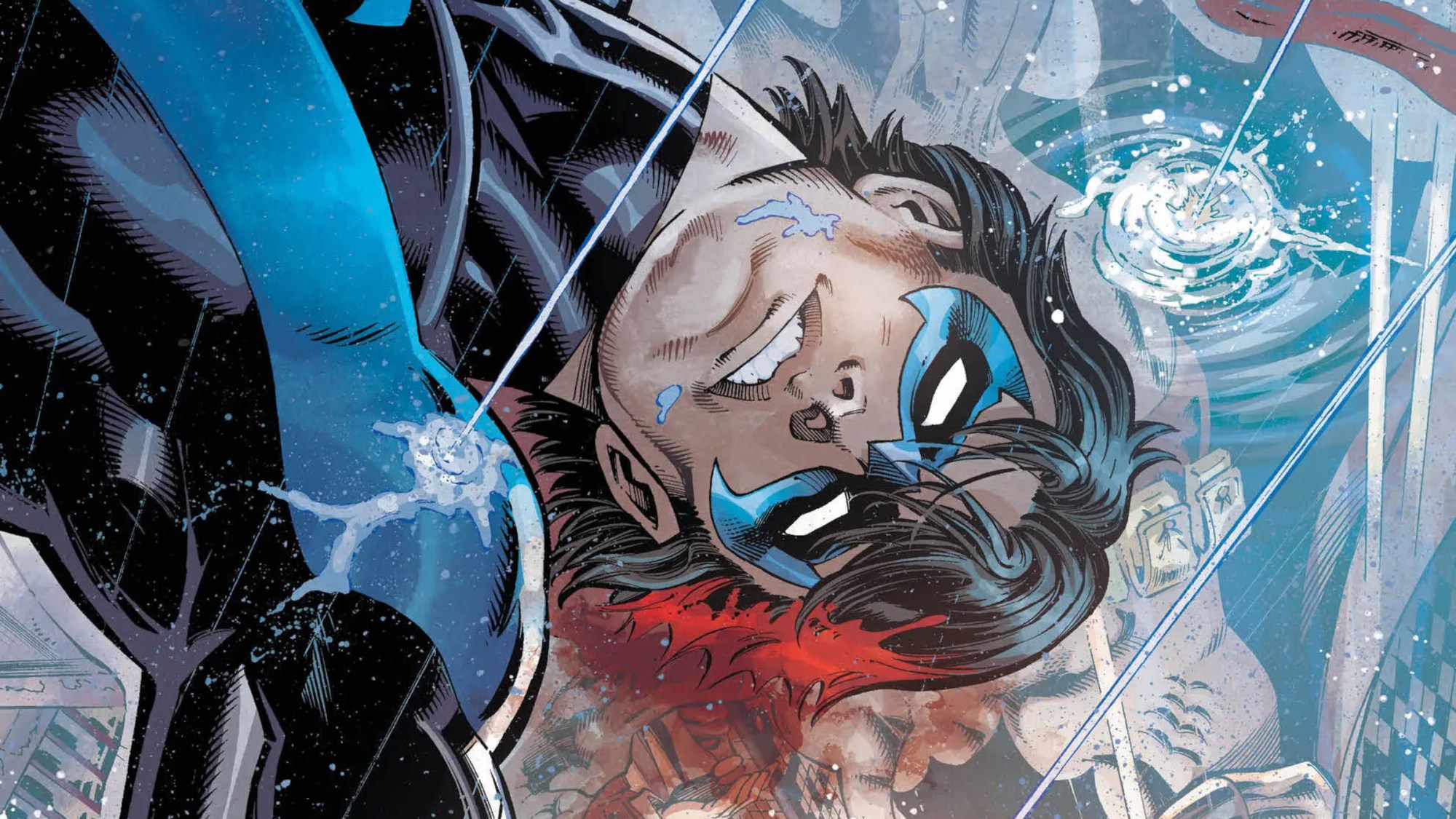
In early script drafts and editorial outlines for Infinite Crisis, DiDio intended for Nightwing to be killed off decisively, with the villain Superboy-Prime serving as his executioner. The narrative justification was designed to shock readers and permanently alter the emotional stakes of the Batman family of titles. Concurrently, DC editorial orchestrated the destruction of Blüdhaven—Nightwing’s adopted home city—via a nuclear attack executed by the Society in Infinite Crisis #4, effectively stripping the hero of his supporting cast and operational base.
However, the directive to kill Nightwing encountered unprecedented internal resistance. Unlike routine editorial mandates, the pushback from DC’s stable of writers, artists, and editors was swift and organized. Numerous creators assigned to the crossover and related titles flatly refused to participate in a storyline that culminated in the execution of a character deemed essential to the moral fabric of the DC Universe. According to industry reports and retrospective accounts from the era, the collective outcry forced an eleventh-hour revision. While Superboy-Prime still inflicted devastating injuries upon Nightwing, editorial compromise spared his life, substituting Superboy (Kon-El) as the casualty of the climactic battle.
Continued Escalation: The New 52 and the Ric Grayson Era
Despite surviving Infinite Crisis, Nightwing remained vulnerable to ongoing editorial pressure throughout the subsequent decade. When DC implemented the New 52 publishing initiative in 2011—a line-wide reboot that wiped clean decades of established continuity—Nightwing’s history was streamlined, yet the character remained a focal point for high-stress narrative trials.
In the 2013–2014 crossover event Forever Evil, written by Geoff Johns, Nightwing’s secret identity as Dick Grayson was exposed to the global public by the Crime Syndicate. The villains subsequently trapped him in a specialized death machine connected to his heartbeat, forcing Batman and his allies to temporarily stop his heart to save his life. While this narrative temporarily sidelined the character and led to his reinvention as a secret agent in the espionage series Grayson, it demonstrated the persistent editorial impulse to strip away his traditional superhero status.
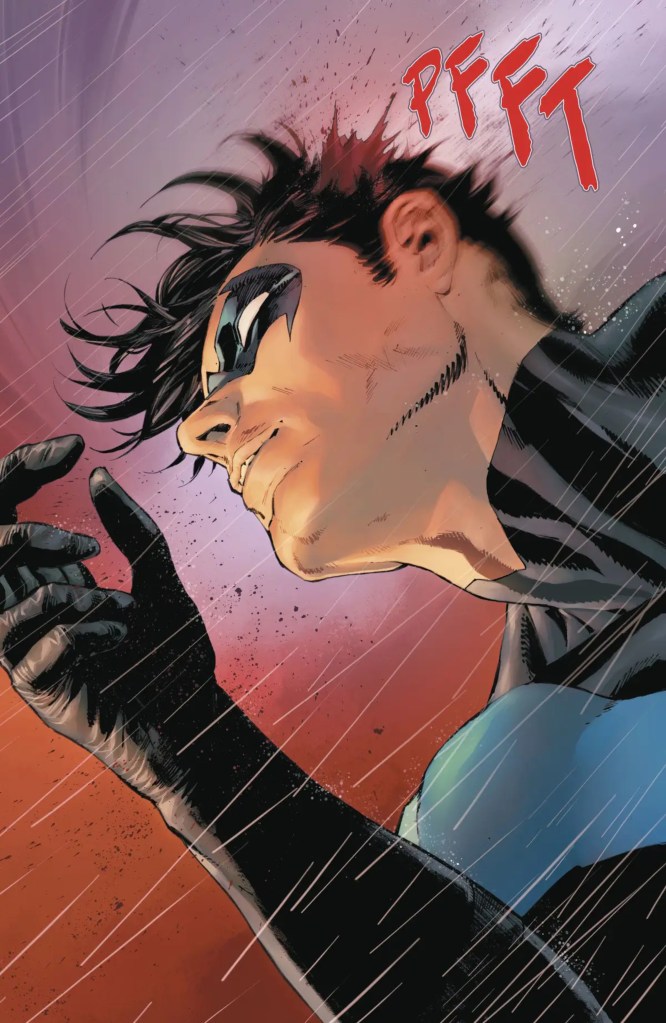
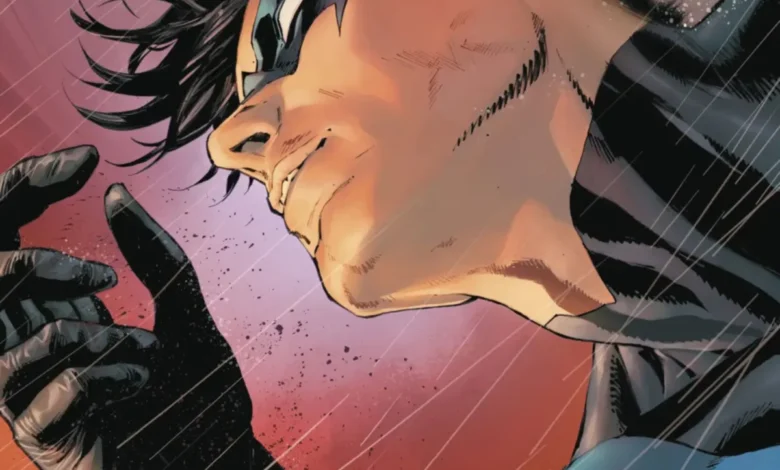
The tension peaked following the conclusion of Tom King’s run on Batman. In Batman #55 (2018), written by King with art by Tony S. Daniel, the assassin KGBeast shot Nightwing in the head. While the injury was not fatal, it triggered severe neurological trauma that erased Dick Grayson’s memories, personality, and history, replacing him with an alter ego known as "Ric Grayson."
The "Ric Grayson" storyline spanned multiple years, removing the hero from his traditional costume, supporting cast, and city. Industry analysts and fan communities widely interpreted the prolonged status quo as a continuation of DiDio’s long-term desire to dismantle the character’s legacy, reasoning that if the character could not be killed outright, his core identity would be systematically dissolved to alienate his readership. Much like the resistance to Infinite Crisis, however, fan engagement and creative persistence ensured that the character survived the multi-year narrative detour.
Broader Implications and Legacy
The departure of Dan DiDio from DC Entertainment in February 2020 marked a definitive turning point for the publisher’s treatment of legacy characters. Following his exit, editorial direction pivoted sharply away from Silver Age strictures and destructive deconstructionism, embracing the generational breadth and historical interconnectedness of the DC Universe.
Under subsequent editorial leadership, Nightwing was promptly restored to his classic identity, memory, and status quo. The subsequent ongoing series written by Tom Taylor and illustrated by Bruno Redondo received widespread critical acclaim, securing multiple Eisner Award nominations and wins, and cementing the character’s commercial viability as one of DC’s premier tier-one properties.
The history of editorial interference surrounding Nightwing serves as a significant case study in the modern American comic book industry. It highlights the inherent tension between corporate mandates aimed at nostalgic preservation and the organic evolution demanded by contemporary audiences and creators. Ultimately, the survival and subsequent elevation of Nightwing demonstrate the economic and narrative power of legacy characters within serialized fiction, proving that audience loyalty and creative solidarity can successfully counteract top-down editorial directives.