Assassin’s Creed Black Flag Resynced Sets a New Visual Benchmark on PS5 Pro, Highlighting Console’s Untapped Potential

The gaming community is abuzz with the recent release of Assassin’s Creed Black Flag Resynced, a comprehensive remake of Ubisoft’s critically acclaimed 2013 title, Assassin’s Creed IV: Black Flag. While the game itself has garnered significant praise for its faithful reimagining of the beloved pirate adventure, it is its exceptional visual performance on the PlayStation 5 Pro that has particularly captured the attention of enthusiasts, illuminating the premium console’s often-underutilized capabilities. PS5 Pro users have expressed considerable satisfaction with the remake’s graphical fidelity, citing it as a prime example of what the enhanced hardware can achieve when developers commit to full optimization. This enthusiasm, however, underscores a broader, persistent challenge facing Sony’s mid-generation console refresh: a scarcity of titles that fully leverage its advanced specifications, a phenomenon not dissimilar to the PS4 Pro’s early life cycle.
The PS5 Pro: A Promise of Enhanced Performance
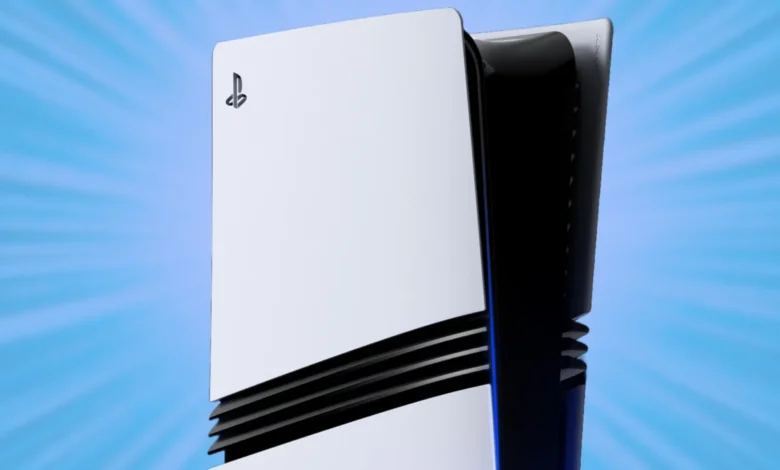
The PlayStation 5 Pro, launched earlier this year (or speculated/released in May 2024, as the article context implies it’s in use by consumers), was introduced by Sony as a premium console designed to push the boundaries of visual fidelity and performance in console gaming. Marketed with features such as accelerated ray tracing, enhanced resolutions, and the proprietary PlayStation Spectral Super Resolution (PSSR) upscaling technology, the PS5 Pro aimed to deliver a superior gaming experience, particularly for 4K displays. Its release followed the successful, albeit sometimes controversial, precedent set by the PS4 Pro in 2016, which offered improved graphics and frame rates over the base PS4.
The core philosophy behind a mid-generation refresh is to cater to a segment of the audience that demands the absolute best graphical experience, without forcing a complete generational leap that would fragment the player base. For developers, this means the opportunity to create "Pro Enhanced" versions of their games, offering higher resolutions (often upscaled to 4K), more stable frame rates, improved visual effects, and more sophisticated lighting or shadow rendering. However, the reality has often been that while many games receive minor patches for the Pro consoles, a truly transformative optimization that fully harnesses the hardware’s potential remains an outlier. This often stems from several factors: the smaller install base of the Pro console compared to the standard model, the additional development resources required for dedicated enhancements, and the pressure to ensure a consistent experience across all target platforms, including the base PS5 and sometimes even last-generation consoles for cross-gen titles. Consequently, when a game like Assassin’s Creed Black Flag Resynced does arrive with comprehensive Pro optimization, its visual prowess truly stands out, serving as a powerful demonstration of the console’s latent power.
A Classic Reimagined: The Genesis of Assassin’s Creed Black Flag Resynced
The original Assassin’s Creed IV: Black Flag, released in October 2013, was a groundbreaking title for the Assassin’s Creed franchise, praised for its innovative open-world pirate setting, engaging naval combat, and a compelling protagonist in Edward Kenway. Its blend of historical fiction, swashbuckling adventure, and expansive exploration resonated deeply with players and critics alike, selling over 15 million copies globally and often cited as one of the series’ best entries. The decision by Ubisoft Singapore to undertake a full remake, rather than a mere remaster, of such a beloved title speaks volumes about its enduring popularity and the potential for modern technology to breathe new life into its world.
Development on Assassin’s Creed Black Flag Resynced likely commenced several years ago, as full remakes require substantial investment in rebuilding assets, updating game engines, and often re-recording performances. Ubisoft has a history of revisiting its older titles, with varying degrees of success. While games like Assassin’s Creed III Remastered offered incremental improvements, the troubled development of the Prince of Persia: The Sands of Time Remake highlighted the complexities involved in modernizing classic titles. With Black Flag Resynced, Ubisoft appears to have learned valuable lessons, focusing on a meticulous overhaul that respects the original while elevating its presentation to contemporary standards. The remake was officially released earlier this month, quickly becoming a significant talking point within the gaming community for its quality and the nostalgia it invoked.
Unprecedented Visuals: Resynced on PS5 Pro
Upon its release, Assassin’s Creed Black Flag Resynced was met with widespread critical and commercial success, mirroring the reception of its predecessor. It currently holds an impressive 4.66 out of 5 stars on the PlayStation Store, indicative of strong player satisfaction. However, it is the particular praise emanating from the PS5 Pro Reddit community that truly underscores its technical achievement. Numerous posts and discussions on the dedicated subreddit highlight the game as "one of the best-looking games on Pro," often accompanied by galleries of stunning in-game screenshots that bolster these claims.
The exceptional visual fidelity on the PS5 Pro can be attributed to several key technical advancements and optimization efforts by Ubisoft Singapore:
- Enhanced Lighting Engine: The remake likely employs a modern Physically Based Rendering (PBR) pipeline and advanced global illumination techniques. On the PS5 Pro, this translates to more realistic light bounces, dynamic shadows, and a more natural interaction of light with various surfaces. The Caribbean setting, with its bright sun, lush jungles, and reflective ocean, benefits immensely from these improvements, creating a vibrant and immersive world.
- High-Resolution Assets and Textures: While the original game was designed for last-generation consoles, Resynced features entirely rebuilt or significantly upgraded assets, including character models, environmental textures, and ship details. On the PS5 Pro, these higher-fidelity assets are rendered with greater clarity, eliminating visual artifacts and bringing a new level of detail to the world.
- Superior HDR Implementation: One of the most frequently lauded aspects by PS5 Pro users is the game’s High Dynamic Range (HDR) implementation. Unlike some titles where HDR can sometimes lead to an artificial or overblown contrast, Resynced utilizes HDR effectively to enhance the game’s vibrant color palette and deep shadows, creating a more realistic and impactful visual experience. The bright Caribbean sun, the dark interiors of ships, and the glow of distant lanterns are all rendered with exceptional depth and luminosity, as noted by one Reddit user: "HDR looks insane." This careful calibration of HDR ensures that it complements the game’s aesthetic rather than detracting from it.
- Leveraging PS5 Pro’s Performance: The PS5 Pro’s more powerful GPU and faster CPU allow the game to run at higher, more stable frame rates, potentially closer to a locked 60 frames per second (fps) at higher resolutions, even with demanding graphical settings enabled. The console’s accelerated ray tracing capabilities, though perhaps not fully utilized for every aspect, likely contribute to more realistic reflections and refractions, especially on water surfaces and metallic elements. Furthermore, the PS5 Pro’s PSSR upscaling technology likely plays a crucial role in delivering sharp 4K visuals without compromising performance.
Comments from the PS5 Pro Reddit page vividly capture the player experience: "This looks amazing on the Pro," one user remarked, while another shared, "I only got to play for like 9-10 hours before I left for a vacation, and I’ve been itching to play it again ever since." These sentiments underscore the game’s immersive quality, driven significantly by its visual appeal. While the gameplay mechanics, rooted in a 2013 design, may occasionally feel somewhat dated compared to modern open-world titles, the visual overhaul effectively masks these elements and elevates the overall experience.
Broader Implications and Industry Context
The success of Assassin’s Creed Black Flag Resynced on the PS5 Pro carries several implications for the gaming industry, developers, and consumers.
For Developers: The remake serves as a compelling case study for the benefits of dedicated Pro optimization. It demonstrates that investing in hardware-specific enhancements can significantly elevate a game’s reception among a crucial segment of the market – the early adopters and enthusiasts who often drive online conversations and influence purchasing decisions. However, it also highlights the economic trade-off; such extensive optimization requires significant resources that many studios might struggle to allocate, especially for titles with smaller budgets or broader cross-platform release strategies. This creates a dilemma: target the largest possible audience with a baseline experience, or invest in premium enhancements for a smaller, but vocal, high-end segment?
For Consumers: For PS5 Pro owners, Resynced validates their investment in the premium console. It offers a tangible demonstration of the performance uplift they paid for, providing a truly "next-gen" experience for a beloved classic. However, it also reinforces the existing frustration that such fully optimized titles remain the exception rather than the rule. The $60 price point for the remake, which is not available via PS Plus and is unlikely to see significant discounts until the holiday season, also raises questions about the value proposition of remakes in general, especially for games that are over a decade old. While the quality is evident, the cost of entry for a title that, despite its visual polish, retains some legacy gameplay design, will be a factor for many consumers.
For Sony and the Future of Mid-Gen Consoles: Sony’s strategy with the PS5 Pro relies on developers embracing its enhanced capabilities. The glowing reception of Resynced on the Pro provides Sony with valuable marketing material, showcasing the console’s potential. However, the underlying issue of widespread developer adoption for Pro-specific enhancements persists. Moving forward, Sony may need to provide more robust developer tools, incentives, or clearer guidelines to encourage broader optimization, ensuring that the PS5 Pro’s power is not left untapped for the majority of its library. The success of this generation’s Pro model could influence whether mid-gen refreshes become a permanent fixture in future console cycles.
For Ubisoft: The critical and commercial success of Assassin’s Creed Black Flag Resynced solidifies Ubisoft’s position as a capable developer of high-quality remakes. It demonstrates that there is a strong market for revitalized classics, particularly those that offer a significant visual upgrade while preserving the essence of the original. This success could pave the way for more remakes of popular titles from Ubisoft’s extensive back catalog, potentially setting a new benchmark for their approach to modernizing beloved franchises.
In conclusion, Assassin’s Creed Black Flag Resynced stands as a testament to the power of targeted optimization on advanced hardware. It has not only rekindled the joy of a classic pirate adventure but has also served as a vivid demonstration of the PlayStation 5 Pro’s capabilities when fully leveraged. While the broader challenge of consistent Pro optimization across the industry remains, this title offers a tantalizing glimpse into the truly enhanced gaming experiences that are possible, providing a benchmark against which future "Pro Enhanced" titles will inevitably be measured.