The Man Behind the Monster: Carl Toop Reflects on His Iconic Role as the Alien Warrior in "Aliens"

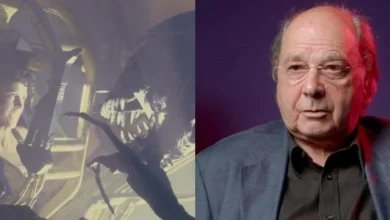
The enduring terror and visceral impact of James Cameron’s 1986 masterpiece, "Aliens," owe a significant debt to the meticulously crafted Xenomorphs that stalk its corridors. While the creature’s design is a testament to the genius of H.R. Giger and the practical effects prowess of Stan Winston’s studio, the physical embodiment of one of the film’s most menacing iterations, the "Alien Warrior," was brought to life by a singular performer: Carl Toop. In celebration of the film’s 40th anniversary, Toop shared his remarkable journey from dancer to monster, detailing the arduous audition process, the transformative experience of wearing the suit, and the unforgettable moments that cemented his place in cinematic history.
Toop’s path to becoming the iconic creature was anything but direct. Initially, he was a dancer, honing his craft at dance college and performing in London’s West End theatre scene. His expertise in wire work, a skill honed in a Tom Stoppard play where he portrayed a flying astronaut, unexpectedly became his ticket into the world of "Aliens." His agent contacted him about a role requiring wire work for a film titled "Aliens." At the time, Toop admits, the connection to Ridley Scott’s groundbreaking 1979 film "Alien" had slipped his mind. Driven by the need for work and rent payments, he and a friend attended an open audition at Pinewood Studios, a legendary hub for British filmmaking.
The Grueling Audition Process: From 200 to One
The initial audition was a daunting spectacle. "We walked in and there are 200 other people there. Wow!" Toop recalled. The casting call was for individuals who could "move like an alien," a directive that plunged the hopefuls into a chaotic free-for-all of improvised movement. "None of us had a clue what we were doing. It was chaos. Everyone’s doing these weird moves, and I was a dancer, so it helps [being a bit more] agile." This inherent physicality proved advantageous, propelling Toop through multiple rounds of auditions.
The process was designed to test adaptability and instinct. Candidates were not given specific movements to replicate. Instead, they were placed in hypothetical scenarios. "They weren’t suggesting movements to us or anything; it was just putting us in situations, saying, ‘Soldiers are charging at you. What would your reaction be?’" Toop explained. "So you’re just ad-libbing most of the time." A crucial element of the audition involved high-altitude wire work on scaffolding, a direct application of Toop’s existing skillset.
The casting trajectory took a dramatic turn due to budgetary constraints. Initially, the production sought approximately thirteen performers for the alien roles. However, as the final audition approached, this number was drastically reduced. "They said, ‘With the budget and everything, we only need one now.’" This announcement cast a pall over the remaining candidates, who believed their chances had evaporated. "So we all looked at each other and thought, ‘Well, that’s it… It’s not going to be me.’" Toop was informed he could go home and they would be in touch. Within a mere ten minutes of returning home, his agent delivered the life-changing news: "The job’s yours." This moment marked one of the proudest achievements of his career, securing him a role in a major Hollywood production filmed in London.
The Metamorphosis: Becoming the Xenomorph
The realization of the film’s scale and the significance of his role began to dawn as Toop encountered the costume. He described his initial impression of the early iterations of the Xenomorph suit: "I had my own dressing room. I walked in and there were about six bodysuit costumes hanging up. They were just limp Lycra costumes with rubber stuck on them and I wasn’t very impressed." His perception shifted dramatically as he encountered the more elaborate components: a strap-on backpack with intricate piping, oversized feet and hands, and the pièce de résistance, a headpiece exceeding a meter in length, detailed with astonishing craftsmanship.
The process of donning the suit was a multi-stage transformation. It began with the Lycra bodysuit, followed by the backpack and ribcage elements to assess movement capability. Then came the prosthetic feet and hands, significantly larger than his own, fundamentally altering his silhouette and gait. The final, and most impactful, addition was the headpiece. "And so you’re learning what the movements were available to you [with those pieces], and then, eventually, they put the head on that. That just sets the whole thing off because I had a mirror in front of me, and, once the head went on, you just go straight into character. It just brought the whole thing together." The transformation was so profound that it immediately imbued him with the character’s essence.
Toop collaborated closely with Stan Winston’s team, including Tom Woodruff Jr., who were instrumental in the suit’s development. "I suppose we spent about a week on the costume, learning how it moved, and Stan Winston would come in and check that there’s no rubbing parts when I was moving." This meticulous attention to detail ensured both comfort and the preservation of the creature’s terrifying fluidity.
On Set with Hollywood Royalty
Toop’s first day on set was a surreal convergence of his childhood dreams and the harsh realities of filmmaking. As he was being prepared for his first shot, Sigourney Weaver, the film’s lead actress and a childhood crush of Toop’s, entered the scene. "Sigourney Weaver comes onto the set as well, because they called us all at the same time. And [Weaver] is my boy school crush, and she has just walked on the set with me. I’m like, ‘This is just unbelievable.’" Weaver’s gracious introduction, "Hi, I’m Sigourney Weaver. It’s nice to be working with you and hope it all goes well," grounded him amidst the awe.
Filming itself was a lesson in patience and precision. Toop observed that filmmaking, particularly on a large-scale production like "Aliens," is a laborious process. "It’s a lot of setting up the scenes, and you’ve got the actors there rehearsing, and then they get me to do a few movements to see where James Cameron wanted me to end up." This contrast with his background in live television, where immediate perfection was paramount, was eye-opening. "You did have to get it right straight away with James Cameron, so if there was a mistake made or something needed to be adjusted, it could be done. That was quite a luxury to have when you’re doing the film sets."
Toop also lauded the professionalism and dedication of the entire cast and crew. He noted Sigourney Weaver’s remarkable humility, stating, "You’d never have known she was a huge star the way she treated everyone." James Cameron’s directorial style was characterized by his relentless pursuit of excellence, pushing his team to deliver their best. "James Cameron just wanted the most from everyone and he managed to get people to give their best."
Beyond the principal actors, Toop expressed profound admiration for the uncredited crew members. "I appreciate the people behind-the-scenes, the ones we don’t see; they’re the ones that are doing the crazy work." He highlighted their crucial role in problem-solving, from costume malfunctions to set piece failures, emphasizing that "without them, these films wouldn’t mean anything."
The Iconic Water Scene: A Near-Disaster
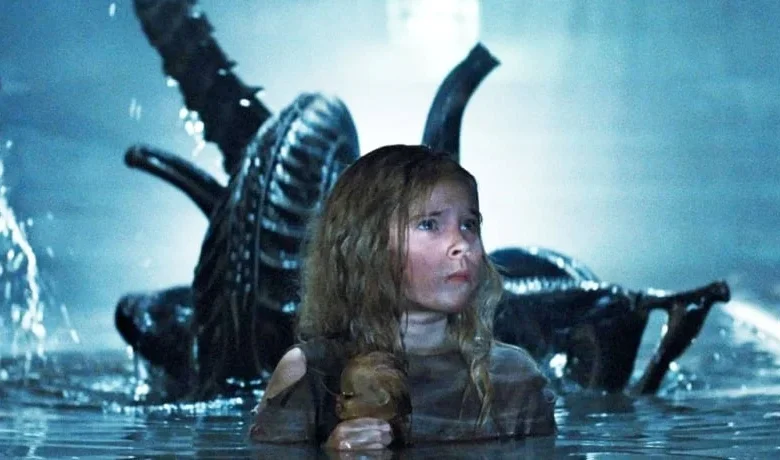
One of the most indelible moments in "Aliens" is the terrifying sequence where the Alien Warrior emerges from the water to confront Newt. This scene, however, presented significant technical challenges for Toop. "That was a costume problem because we didn’t rehearse," he admitted. The scene involved a heated pool, with Toop submerged to a depth of approximately two and a half feet to accommodate Newt’s presence. To remain hidden beneath the water’s surface, Toop had to lie horizontally, with his head and the cumbersome headpiece submerged.
The plan was for Toop to emerge on cue, signaled by James Cameron tapping the side of the pool. However, as he descended, the water settled, obscuring any visual indicators. Upon hearing the tap, Toop found himself unable to surface. "The whole of the headpiece had just filled up with water, and because I was in a position where my arms were stuck in front of me, I really couldn’t get around to push myself up. With the weight of the head in the water, I was just blocked down there."
A tense forty seconds elapsed before the crew realized something was amiss. "I’m not coming up." Eventually, a crew member entered the water to lift his head. The incident led to an immediate modification: "They did cut a side in the helmet so there was no pressure created." Toop acknowledged the gravity of the situation: "If they hadn’t realized on time, it could have turned into something serious because I was panicking as well." Despite the harrowing experience, the scene was successfully filmed, with Carrie Henn, who played Newt, delivering a chilling scream.
Camaraderie and Lasting Friendships
While Toop’s role often kept him physically isolated within the suit, he cherishes the interactions he had with the cast. He recalls a memorable moment with Bill Paxton, who played Hudson. Due to the constraints of the costume, Toop was unable to eat easily. Paxton, noticing this, rushed to the canteen and returned with a cheese roll, patiently feeding Toop due to his inability to use his hands while in costume. "Bill Paxton’s feeding me a cheese roll… that was pretty memorable."
Toop observed that many of the younger actors, like himself, were relatively new to major film productions, fostering a sense of shared ambition and eagerness. The cast formed a cohesive unit, characterized by a positive and supportive atmosphere. "There was a good atmosphere and there was no nastiness at all."
These bonds have endured over the decades. Toop recounted reconnecting with cast members at film festivals and conventions. "The first one I met from the cast was Jenette [LeBlanc], I did a film festival down in Spain and she was there as well. It was the first time I’d seen her since the film, but it was just like we’ve seen each other yesterday." The experience of attending conventions has been particularly rewarding, allowing him to connect with fans and witness the profound impact "Aliens" has had on their lives. "Some people watch ‘Aliens’ once a month, once a week. It’s amazing how it’s touched people in so many different ways."
The Legacy of Practical Effects and Timeless Terrors
As "Aliens" celebrates its 40th anniversary, Toop reflects on its lasting appeal, particularly in contrast to the pervasive use of CGI in modern cinema. "Aliens was one of the last films without CGI, and I think the young kids now are saying, ‘You actually did that?’" He emphasized the tangible nature of the effects, where fire was real and physical stunts were performed without digital augmentation. This authenticity, he believes, contributes to the film’s enduring power.
The recent success of "Alien: Romulus," which incorporated elements of older filmmaking techniques alongside CGI, suggests a renewed appreciation for practical effects. Toop posits that this blend resonates with younger audiences, explaining why "Aliens" continues to captivate. "There may be a few things that don’t look quite right, but the film does pretty well after 40 years."
The film’s influence has transcended generations, with families now experiencing it together. "We get three generations coming along now. I’ve got the grandparents, the parents, and now the kids, and it’s just being passed along." For Toop, who initially pursued a career in dance, his involvement in "Aliens" was an unexpected yet deeply fulfilling gift. "It’s rewarding for everyone that was involved in the film because it’s created part of cinema history and it’s an honor to be a part of that."
Carl Toop continues to engage with fans and share his experiences. He can be found on Instagram at instagram.com/carltoop.alienwarrior1986/ and has been a featured guest at numerous fan conventions, including San Diego Comic-Con, allowing audiences to connect directly with the man who brought one of cinema’s most terrifying creatures to life. His story serves as a powerful reminder that behind every iconic monster, there is often a dedicated individual whose performance shapes the indelible images that haunt our collective imagination.