Walt Disney Animation Studios Embraces the Macabre with Fantastical Coming-of-Age Feature Hexed

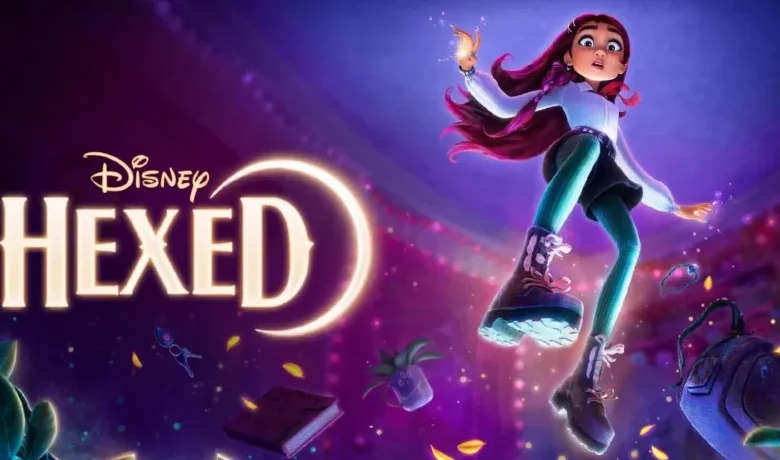
Walt Disney Animation Studios has long maintained a formidable legacy in the global entertainment landscape, defined by generations of timeless animated classics that range from hand-drawn masterpieces to advanced computer-generated blockbusters. The studio’s latest addition to its illustrious catalog, the fantastical coming-of-age feature Hexed, attempts to bridge traditional family-friendly warmth with a distinctly Halloween-inspired aesthetic. Directed by the collaborative duo Fawn Veerasunthorn and Jason Hand, the film leans heavily into witchcraft, self-empowerment, and supernatural lore, inviting comparisons to modern pop-culture touchstones while establishing its own unique thematic footprint within the modern animated landscape.
Main Facts and Narrative Premise
At the narrative center of Hexed is Billie Doe, a spirited and rebellious teenager voiced by Hailee Steinfeld. Billie finds her life upended when she is expelled from her private school on what is already the most difficult day of her youth. This catastrophic event unlocks a hidden reality: Billie discovers she is a witch, descending from a powerful occult lineage that her overbearing, rule-obsessed mother, Alice—voiced by Rashida Jones—has spent her entire life trying to conceal and suppress.
Desperate to keep her daughter safe from the inherent dangers of their magical heritage, Alice has relied on a suppressing crystal bracelet and a rigid checklist of domestic rules. However, upon her expulsion, Billie dives headfirst into Hexe, a sprawling, vibrant, and perilous realm populated by witches and wizards. In this hidden world, Billie finally experiences a profound sense of belonging—until her latent abilities manifest in a way that marks her as a political and existential threat. Queen Celeste, voiced by Jodie Foster, rules Hexe and views Billie as the only other living witch capable of taking flight, identifying the young newcomer as a direct challenge to her throne.
To navigate this treacherous new reality, Billie must embrace her prophesied role as Hexe’s fabled savior. She is aided—albeit reluctantly—by her mother Alice and a cynical, green, three-eyed cat named Beef Roger Crummchuk, voiced by Walton Goggins, who serves as a laid-back, drifter-style mentor through the shadowy back alleys and institutional secrets of the magical realm.
Chronology and Production Context
The development of Hexed follows a strategic shift within Walt Disney Animation Studios toward diversifying its thematic portfolio by incorporating genre-adjacent storytelling, specifically tapping into horror-light elements that appeal to both younger demographics and older genre enthusiasts. Co-directors Fawn Veerasunthorn—who previously co-helmed Disney’s Wish—and Jason Hand approached the project with an explicit desire to balance whimsical humor with genuine emotional stakes.
The production timeline for Hexed spans several years of remote and hybrid animation development, reflecting post-pandemic shifts in major studio pipelines. Conceptualized as an exploration of generational trauma and maternal anxiety, the project moved through standard studio milestones: script development overseen by writers Jared Bush and Dana Ledoux Miller, vocal talent recording sessions completed across 2024 and 2025, and a rollout of promotional materials culminating in its late 2026 theatrical release window.
The film’s visual and musical identity took shape during the middle phases of production, where creative leads deliberated on how to balance traditional Disney orchestral sweeps with a modern, needle-drop-heavy soundtrack designed to resonate with contemporary teenage audiences.
Supporting Data and Creative Analysis
From a structural standpoint, Hexed relies on familiar narrative frameworks that have historically anchored children’s fantasy literature and cinema. The dynamic between Billie and Alice serves as an exploration of the classic parental dilemma: the tension between absolute protection and the necessity of exposure to the real world. Screenwriters Jared Bush and Dana Ledoux Miller utilize the magical suppression bracelet as a physical manifestation of generational anxiety, illustrating how well-intentioned maternal overprotection can inadvertently foster teenage rebellion.
Despite its predictable narrative beats, the film incorporates surprisingly mature thematic explorations. The societal ostracization of "outsiders" and the dangers of toxic bloodlines are handled with a surprising degree of narrative weight. Queen Celeste’s institutionalized fear of up-and-coming talent provides a geopolitical backdrop that elevates the stakes beyond a standard teenage coming-of-age story.
Visually, Hexe is constructed with meticulous attention to detail, offering a blend of spooky and comforting aesthetics. Reviewers and early audiences have noted similarities to the whimsical, gothic stylings associated with Tim Burton productions, combined with the accessible framing of contemporary studio animation. Design elements such as Billie’s sentient pet cauldron, errant spellcasting mechanics, and living, breathing architectural wonders establish a horror-adjacent atmosphere without alienating younger viewers. Furthermore, subtle visual nods to classic Disney villains—such as Ursula-inspired silhouettes and floating, warty figures—ground the film in animation history while pushing slightly past traditional boundaries through non-cartoonish depictions of spider familiars and psychological tension.
Critical Reception and Industry Assessment
Upon its release, Hexed received a generally favorable critical consensus, earning a solid 3/5 star rating across major entertainment outlets. Critics have praised the film’s charm, voice acting performances—particularly the comedic timing of Walton Goggins and the emotional gravity brought by Hailee Steinfeld and Rashida Jones—and its accessible introduction to horror-adjacent concepts for younger audiences.
However, industry analysts and film critics have noted certain stylistic limitations. Visually, while competent and vibrant during magical duels, the film’s animation style has been described as standard for contemporary studio outputs rather than boundary-pushing. Comparisons to Disney’s historic peaks—such as Frozen or Moana—highlight a perceived reliance on conventional studio formulas. Additionally, the heavy deployment of pop music needle-drops has drawn mixed reactions, with some reviewers arguing that the soundtrack occasionally feels overproduced and reminiscent of factory-ready DreamWorks releases rather than the organic musicality historically cultivated by Disney’s animation division.
Broader Impact and Industry Implications
The release of Hexed carries notable implications for Walt Disney Animation Studios’ ongoing strategy in a shifting global box office ecosystem. By leaning into light horror and Halloween-centric motifs, Disney is actively testing the waters for genre-blending animation that can capture seasonal holiday markets outside of the traditional winter holiday window.
The film demonstrates the studio’s willingness to address complex domestic themes, such as fractured parent-child relationships and the burden of inherited expectations, within an accessible fantasy framework. While it may not achieve the revolutionary cultural footprint of the studio’s definitive masterworks, Hexed underscores a reliable commitment to entertaining family audiences while gently expanding the thematic parameters of mainstream American animation. As studios increasingly look for intellectual properties that can appeal simultaneously to nostalgic adults and digitally native youth, projects like Hexed offer a blueprint for balancing commercial formula with creative genre exploration.