Marvel Age of Comics: Paul Levitz on the growth of Marvel Comics Examining the explosion of Marvel success from 1968-1972

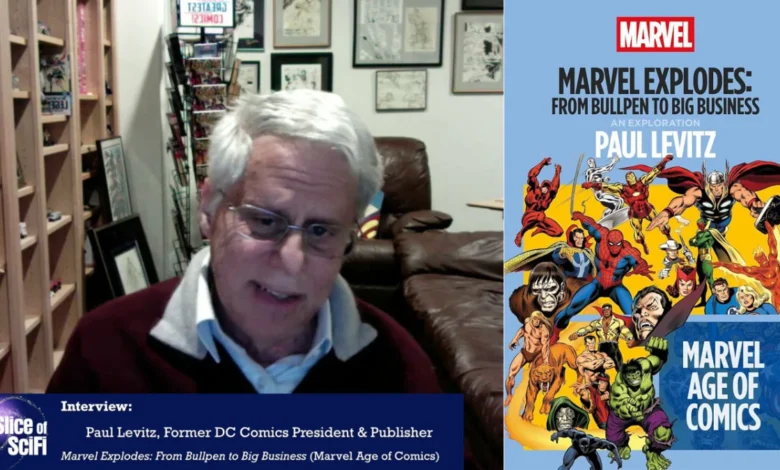
The landscape of the American comic book industry was defined for generations by a seismic shift that occurred during the late 1960s and early 1970s, a transformative era that is now the subject of deep academic and historical scrutiny. Former DC Comics President and Publisher Paul Levitz has turned his extensive industry expertise and scholarly focus toward this pivotal window with his latest book, Marvel Explodes: From Bullpen to Big Business. Published as part of Bloomsbury Academic’s esteemed “Marvel Age of Comics” series, the volume explores the rapid, unprecedented expansion of Marvel Comics between 1968 and 1972—a critical four-year period that cemented the House of Ideas not merely as a creative insurgent, but as the dominant commercial titan in comic book publishing.
In a recent comprehensive interview on the Slice of SciFi podcast, Levitz unpacked the mechanics behind this explosive growth, offering listeners a rare insider’s perspective on how a scrappy group of creators transformed into a corporate heavyweight. By analyzing the structural, financial, and artistic changes that occurred within Marvel’s legendary Manhattan offices, Levitz’s work bridges the gap between pop-culture fandom and rigorous business history, providing a definitive look at the dawn of the modern comic book industry.
Setting the Stage: The Golden Age to the Marvel Revolution
To understand the weight of the 1968–1972 era, one must examine the precarious foundations upon which the comic book industry rested following the post-World War II superhero slump. Throughout the 1950s, the medium suffered heavily under the weight of moral panic—spearheaded most notably by Dr. Frederic Wertham’s anti-comics polemic Seduction of the Innocent—which led to congressional hearings and the self-regulatory Comics Code Authority (CCA). Publishers abandoned traditional superhero titles in droves, pivoting instead toward horror, romance, crime, and western genres.
The tide turned dramatically at the dawn of the 1960s. Spearheaded by writer Stan Lee, artist and co-plotter Jack Kirby, and artist Steve Ditko, Marvel introduced a radical new paradigm. Characters like the Fantastic Four, Spider-Man, the Incredible Hulk, and the X-Men shattered the idealized mold of pristine, infallible heroes. Instead, Marvel’s protagonists grappled with mundane financial struggles, teenage angst, physical disabilities, and profound existential guilt. This relatable humanization resonated deeply with an aging readership of college students and teenagers, sparking the phenomenon known as the "Marvel Age of Comics."
However, while the creative foundation was firmly established by the mid-1960s, the enterprise remained a relatively modest operation, functioning out of a tight-knit office environment affectionately dubbed the "Bullpen." It was not until the late 1960s that this cultural momentum translated into unmitigated corporate dominance.
Why 1968–1972? The Crucial Four-Year Pivot
When asked why his new Bloomsbury volume zeroes in on the narrow window of 1968 through 1972 rather than the broader expanse of the Silver Age, Levitz points to a convergence of corporate restructuring, creative diversification, and shifting market economics.
By 1968, Marvel’s parent company, Martin Goodman’s Magazine Management, was acquired by the Perfect Film & Chemical Corporation (later known as Cadence Industries). This corporate buyout liberated Marvel from legacy distribution caps that had previously limited the number of titles the company could publish each month. No longer constrained by restrictive distribution deals with independent competitors like Independent News (which was owned by DC’s parent company, National Periodical Publications), Marvel was suddenly empowered to expand its product line aggressively.
This structural freedom coincided with a generational transition in the bullpen. While founding geniuses like Jack Kirby began their eventual migrations away from the company due to creative and financial disputes—culminating in Kirby’s historic jump to rival DC Comics in 1970—a new wave of brilliant, younger talent stepped into the spotlight. Writers and artists such as Roy Thomas, Gerry Conway, Jim Starlin, Steve Englehart, and Neal Adams infused the line with fresh narrative ambitions, pushing the boundaries of fantasy, cosmic science fiction, and socially conscious storytelling (such as the landmark Green Lantern/Green Arrow run at DC and Marvel’s own exploration of drug addiction in The Amazing Spider-Man).
Furthermore, the period marked the birth of modern comics distribution formats, including the introduction of standard 25-cent giant-size issues and the early experiments with direct market distribution concepts that would eventually revolutionize how comic books reached consumers.
DC Comics Responds: The Industry Reacts to Marvel’s Ascent
As Levitz detailed in his discussion, Marvel’s aggressive expansion did not go unanswered. As a lifelong industry insider who spent decades at the helm of DC Comics—starting as a fan historian and writer before rising to presidential leadership—Levitz possesses a uniquely intimate understanding of how the "Distinguished Competition" attempted to stem the rising tide.
During the late 1960s and early 1970s, DC Comics found itself caught in an existential crisis. Long accustomed to being the undisputed king of the medium with Superman, Batman, and Wonder Woman, DC watched in real-time as its market share eroded. In an effort to recapture youthful demographics, DC engaged in a series of sweeping creative gambits. Carmine Infantino, who took over as editorial director in 1967 and later became publisher, initiated a modernization wave that included revamping Batman’s aesthetic into darker, gothic detective tales, updating Wonder Woman into a depowered martial arts spy (briefly), and launching innovative horror and suspense anthologies like Swamp Thing and House of Mystery.
Perhaps the most dramatic counter-offensive occurred when DC successfully poached Jack Kirby from Marvel in 1970, giving the legendary creator unprecedented creative freedom to launch his sprawling "Fourth World" epic (New Gods, Mister Miracle, and The Forever People). Although these titles initially struggled to match the sales numbers of Marvel’s juggernauts, they permanently enriched the vocabulary of superhero fiction and demonstrated that the rivalry between the two publishers was fostering unprecedented levels of creative ambition across the board.
From Bullpen Culture to Big Business
The transition from a ragtag editorial room to a corporate media property is a central thesis of Marvel Explodes. In the early days, the Marvel Bullpen operated with a distinct improvisational charm—often relying on the famed "Marvel Method," where artists plotted stories based on brief synopses provided by Stan Lee before dialogue was added later.
However, by the turn of the decade, the sheer volume of publications necessitated tighter editorial organization, formalized administrative hierarchies, and a much sharper focus on commercial viability. Characters were no longer just monthly entertainment; they were intellectual property assets destined for licensing deals, international syndication, and embryonic multimedia adaptations.
Levitz analyzes how this commercial scaling altered the daily reality of comic book creation. The casual, familial atmosphere of the 1960s Bullpen gradually yielded to more contractual, business-oriented relationships between creators and management—a tension that continues to influence debates regarding creator rights, ownership, and compensation in the modern comic book industry.
Broader Implications and Current Industry Parallels
Beyond historical documentation, Paul Levitz’s academic inquiry into the business maneuvers of the past offers valuable insights into the contemporary trials facing the comic book and entertainment industries. During his recent media appearances, Levitz has drawn conceptual lines between the corporate pressures of the 1970s and the modern struggles defining Warner Bros. Discovery and DC Entertainment today.
The comic book industry has always existed at a precarious intersection between high art and low commerce. The decisions made during the 1968–1972 period—how to scale production, how to diversify intellectual property, how to navigate corporate acquisitions, and how to retain creative talent amid changing business models—remain strikingly relevant to modern executive suites. As media conglomerates continually reevaluate the value of comic book publishing as a primary R&D engine for multi-billion-dollar cinematic universes, examining how Marvel successfully navigated its first major corporate adolescence provides a masterclass in strategic resilience.
Academic and Fan Reception
Bloomsbury’s “Marvel Age of Comics” series has rapidly established itself as an essential bookshelf staple for serious comics scholars and dedicated historians alike. By treating comic books not merely as disposable ephemera for children, but as significant cultural artifacts with complex economic, social, and industrial histories, authors like Levitz elevate the discourse surrounding the medium.
The response from both academic circles and long-term fandom has underscored a growing appetite for behind-the-scenes historical scholarship. Podcasts, documentaries, and specialized literature dedicated to unpacking the formative decades of the comic book medium have transformed pop-culture history into a vibrant field of study. Through meticulous research, personal institutional memory, and an engaging narrative style, Paul Levitz’s Marvel Explodes: From Bullpen to Big Business stands as a definitive text on the moment comic books truly grew up and entered the modern corporate age.