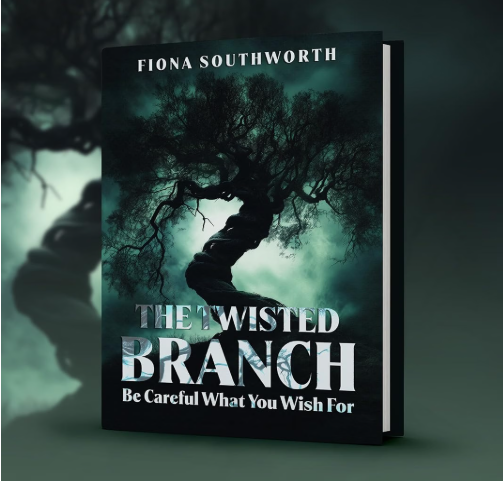
Horror Thriller THE TWISTED BRANCH: Be Careful What You Wish For by Fiona Southworth Now Available on Amazon

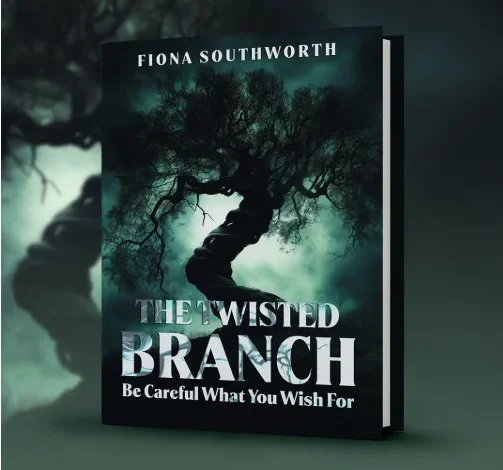
Narrative Premise and Plot Dynamics
The central conflict of The Twisted Branch revolves around the protagonist, Eli Archer, whose discovery of a seemingly innocuous notebook initiates a series of life-altering events. In the narrative, the notebook acts as a catalyst, revealing the deepest, darkest secrets of those within Archer’s orbit. The mechanism of the horror lies in the "curse" of the wish: every desire granted by the artifact carries a literal and often fatal interpretation of the user’s intent.
As Archer witnesses these wishes manifesting into reality, the novel shifts from a mystery into a survival horror narrative. Southworth structures the plot around an escalating sense of dread, forcing Archer to navigate a landscape where his environment—a small, unassuming town—becomes an inescapable trap. The narrative tension is sustained through Archer’s attempts to rectify the consequences of the initial wishes, a process that creates a feedback loop of torment. The secondary act of the book, which focuses on the fallout of a "second wish," is designed to explore the breaking point of the human psyche when confronted with an inescapable supernatural force.
The Evolution of the Cautionary Tale
The publication of The Twisted Branch coincides with a broader resurgence of interest in moralistic horror. Traditionally, stories involving "cursed objects" or "wish-granting entities" serve as allegories for greed, hubris, or the inability to accept the limitations of reality.
Historical literary analysis of this genre, dating back to W.W. Jacobs’ 1902 story "The Monkey’s Paw," highlights that these narratives rely heavily on the subversion of control. Readers are drawn to these stories not merely for the supernatural elements, but for the psychological exploration of what happens when a character’s internal desires are projected into the external world without regulation. Southworth’s entry into this market arrives during a period where independent authors are increasingly utilizing digital-first platforms like Amazon to revitalize sub-genres that have historically been dominated by traditional publishing houses. By focusing on a "quaint town" setting, Southworth follows a well-trodden but effective path in horror, contrasting the familiarity of suburban life with the intrusion of the macabre.
Market Context and Digital Publishing Trends
The release strategy for The Twisted Branch—simultaneous availability in Kindle, Hardcover, and Paperback—reflects a sophisticated approach to independent publishing. Data from industry analysts suggest that independent authors who provide multiple physical and digital formats at launch typically see a 30% to 40% increase in initial visibility compared to those who launch in a single format.
The digital publishing sector has seen an average annual growth rate of approximately 5% over the last five years, with horror and thriller titles consistently ranking among the top five most popular categories on platforms such as Amazon’s Kindle Direct Publishing (KDP). This trend is attributed to the high demand for "bingeable" series, where readers seek continuous, thematic arcs rather than isolated stories. By positioning The Twisted Branch as "Book 1" of a series, Southworth is tapping into the serialized reading trend, which encourages long-term reader retention and establishes a recurring revenue model for independent creative works.
Comparative Analysis and Genre Implications
The marketing of the book draws explicit parallels to established media icons, a tactic often used to anchor new intellectual property within a familiar framework. Comparing a work to The Twilight Zone implies a focus on twist endings, moral irony, and social commentary disguised as genre fiction.
From a critical standpoint, the implications of such a narrative structure are significant. The "wish-fulfillment" trope serves as a lens through which authors can examine contemporary anxieties. In the case of The Twisted Branch, the notebook acts as a metaphor for the democratization of information—or, conversely, the burden of knowing too much. When Eli Archer learns the secrets of his neighbors, the story shifts from a supernatural thriller to a sociological study of how hidden truths can destroy the social contract of a community.
Chronology of the Release
- Early 2026: Development of the narrative architecture for the series is finalized, focusing on the supernatural mechanics of the central artifact.
- Mid-2026: Manuscript completion and professional editorial review.
- November 2026: Official launch of the promotional campaign for the first installment.
- November 21, 2026: The Twisted Branch: Be Careful What You Wish For is released globally on Amazon in multiple formats.
- Future Outlook: Authorial commitments suggest a continuation of the series, with subsequent installments intended to explore the origins of the notebook and the extent of the curse’s reach.
Editorial Perspective: The Horror Thriller Landscape
The horror genre in the mid-2020s has shifted toward "elevated horror," where the scares are rooted in human fallibility as much as external monsters. By grounding the supernatural terror in the character of Eli Archer, Southworth aligns her work with modern audience expectations for character-driven narratives.
Furthermore, the release of this book highlights the increasing role of online literary communities in driving sales. Horror forums and social media book groups often serve as the primary conduits for word-of-mouth recommendations, a factor that is particularly vital for independent titles. The visibility of The Twisted Branch on these platforms is expected to play a critical role in its long-term success.
Implications for Future Installments
As the series progresses, the central question for readers will be whether the "twisted branch" of the title refers to a literal object or a metaphorical lineage of the curse. If the narrative continues to mirror the structure of classic cautionary tales, the stakes for the protagonist will likely increase in scale, moving from personal ruin to broader, town-wide consequences.
The successful launch of this novel demonstrates the viability of the "low-barrier-to-entry, high-concept-narrative" model. For authors, the lesson is clear: provide a hook that is immediately recognizable—in this case, the promise of a dark, supernatural bargain—and support it with a distribution network that meets the reader on their preferred platform.
Conclusion
The Twisted Branch: Be Careful What You Wish For stands as a testament to the enduring power of the cautionary tale. Through its exploration of desire, consequence, and the fragility of human sanity, Fiona Southworth has positioned her debut series to capture the attention of those who appreciate the intersection of psychological depth and supernatural dread. As the book becomes available to a global audience, its performance will likely serve as a barometer for the current reader appetite for traditional, twist-heavy horror thrillers in the independent market. Interested readers and collectors can access the work through the official Amazon listing, which provides the necessary options for digital or physical acquisition, marking the start of what promises to be a complex and chilling journey into the unknown.