The comic book industry has long utilized the bold creative experiment of the dialogue-free issue to test the visual storytelling limits of the medium. Rekcah Comics has officially announced that its ongoing series *The Future Is… ** will join this storied tradition in January 2027. Written by Fred Van Lente and illustrated by the legendary David Lapham, issue #21 of the dystopian sci-fi series will be entirely silent, featuring zero spoken words. The issue number itself serves as an overt, deliberate homage to one of the most famous milestones in comic book history: Larry Hama and Steve Leialoha’s iconic 1984 "Silent Interlude" in G.I. Joe: A Real American Hero #21.

By tying their milestone issue to the legacy of Snake-Eyes infiltrating a Cobra base without uttering a single syllable, Van Lente, Lapham, and the creative team are stepping into a prestigious lineage of comic book creators who temporarily abandoned dialogue to let pure visual narrative drive their stories. As solicitations for Rekcah Comics’ early 2027 slate roll out, the announcement has sparked renewed discussion regarding the history, execution, and enduring impact of wordless storytelling within mainstream and independent comic book publishing.
A Storied Tradition: Tracing the History of the Silent Comic Issue
The concept of telling a complete, compelling narrative without relying on speech bubbles or text boxes is often considered the ultimate test of a comic book artist’s sequential storytelling capability. When Larry Hama and Steve Leialoha produced G.I. Joe: A Real American Hero #21 for Marvel Comics in 1984, they broke conventions in a medium heavily reliant on exposition. The resulting issue became a masterclass in pacing, choreography, and visual communication, permanently embedding itself in pop culture history and inspiring subsequent generations of creators.

Decades later, the industry-wide appreciation for the format remains robust. Marvel Comics famously orchestrated an entire "’Nuff Said" month in 2002, challenging its creators to produce dialogue-free issues across its entire publishing line. Among the most memorable entries from that initiative was Grant Morrison and Frank Quitely’s atmospheric exploration of mutant life in New X-Men. Similarly, mainstream heroes like Batman have frequently returned to silence. John Byrne and Jim Aparo’s Batman #434 in 1989 used minimal dialogue to capture the heavy, mournful silence of Gotham City reacting to the apparent death of the Dark Knight.
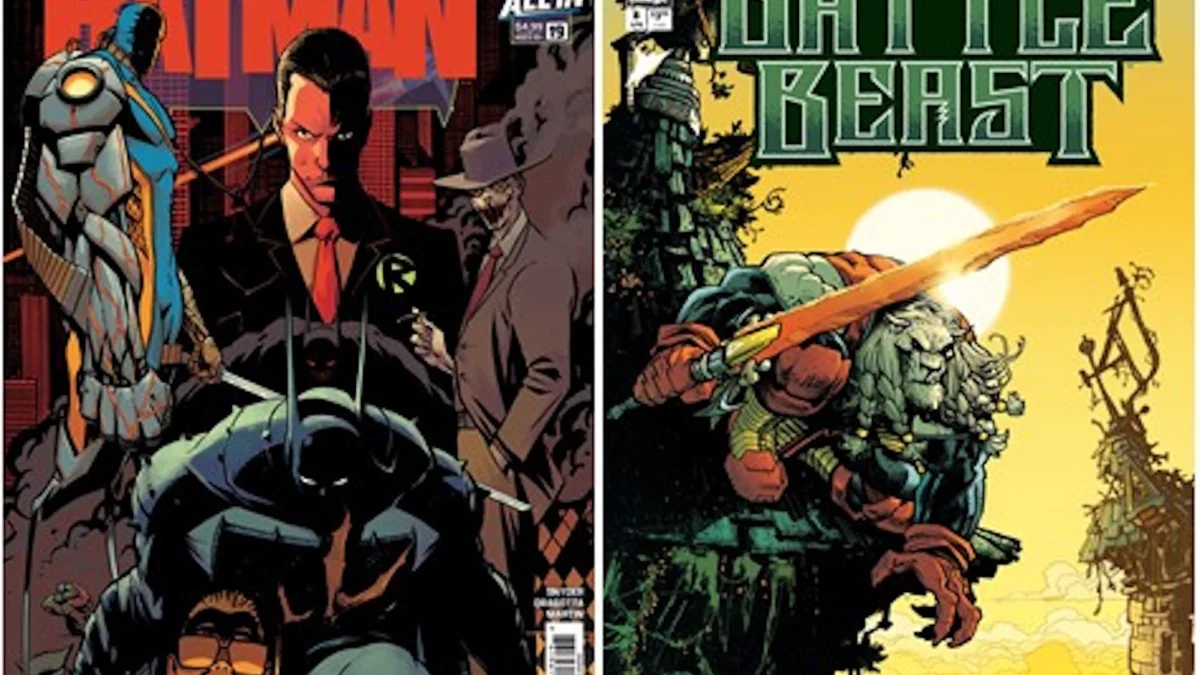
Over the years, the Batman title alone has revisited the silent format under various creative teams, including Peter J. Tomasi and Patrick Gleason in Batman #18, and Tom King, Lee Weeks, and Jorge Fornés in Batman #67. More recently, Tom Taylor and Mikel Janín utilized wordless framing for the lead story of 2025’s Detective Comics #1100, while Matt Fraction and Matteo Scalera dialed back the vocabulary in Batman #13 during the publisher’s "Bad Seeds" event. Fraction’s approach drew direct comparisons to his celebrated work with artist David Aja on Marvel’s Hawkeye #11—famously known as the "Pizza Dog" issue—which communicated a complex crime story almost entirely through sensory diagrams, pictograms, and minimal, muffled human speech.
Independent publishers have similarly embraced the format. Valiant Comics published Ninjak #22 by Matt Kindt and CAFU, an intentional narrative nod that invited direct comparisons to the pacing of the original G.I. Joe classic. Meanwhile, international and comedic talents have explored the medium’s boundaries through projects like Gustavo Duarte’s DC Silent Tales (originally published under the title Speechless before trademark disputes forced a title change), and the late Kevin O’Neill’s final masterwork, Silent Pictures, a slipcased hardcover pair featuring an introduction by legendary writer Alan Moore.
Behind the Creative Shift: The Evolution of The Future Is… **
The decision to publish a silent issue #21 is the latest milestone in a sustained creative evolution for Rekcah Comics’ *The Future Is… ** Series. The path to this pivotal issue has been marked by significant artistic transitions designed to reinvigorate the book’s visual identity and expand its readership.

In late 2026, the publisher initiated a deliberate push to onboard new readers and elevate the series’ artistic profile. Issue #19, released in November 2026, served as a deep dive into the complex motivations of the title’s most popular villains, featuring interior art by Mario D’Alessandro and Andrea Meloni, alongside a striking variant cover by Trish Fornster. Crucially, that issue also introduced the second variant cover presented in "Lapham-Vision," signaling the imminent arrival of industry veteran David Lapham—renowned for his foundational work on the crime noir masterpiece Stray Bullets—as the book’s new regular interior artist.
The momentum continued into December 2026 with the release of issue #20, which officially established Lapham as the ongoing interior artist alongside colorist Rico Renzi. Positioned as a bold new beginning and a self-contained "done-in-one" narrative, issue #20 was specifically engineered to act as an accessible entry point for new readers curious about the dystopian world built by Van Lente. Rekcah Comics supported this launch with robust retail incentives, offering value-priced ten-copy bundles featuring covers by Simone Ragazzoni and Lapham himself, complete with rare black-and-white chase variants.
What to Expect from Issue #21
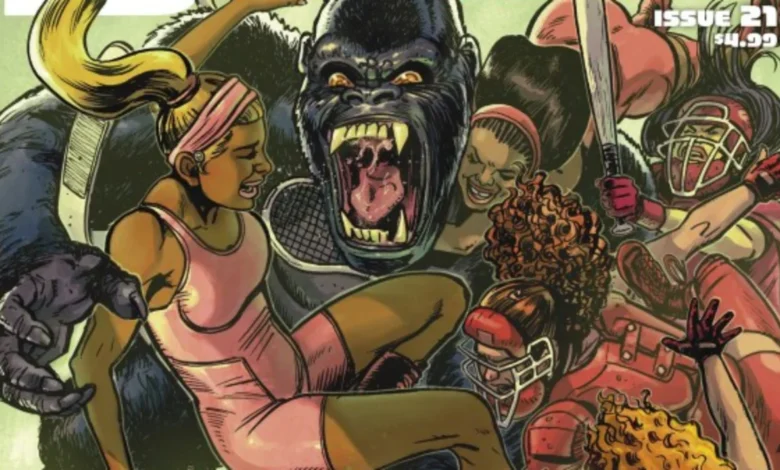
Moving directly from Lapham’s explosive arrival as the regular artist in issue #20, *The Future Is… ** #21 arrives on January 13, 2027, priced at $4.99 under a Mature Readers rating. Written by Fred Van Lente with art by David Lapham and Rico Renzi, and featuring a cover by Patrick Piazzalunga, the issue shifts its narrative focus squarely onto the character of Martina.
Because the issue is entirely wordless, the storytelling burden falls heavily on Lapham’s expressive linework, character acting, and environmental details. In keeping with the series’ unique interactive formatting, the issue will also continue its recurring educational hook, providing readers with new "Capture The Flag" hacking challenges embedded directly into the publication—proving that even a silent, highly artistic homage can maintain the interactive elements that loyal fans have come to expect.
Industry Implications and Retailer Response
The announcement of a silent milestone issue carries specific strategic implications within the modern comic book market. Single-issue sales heavily rely on "hook" issues, variant incentives, and anniversary nods to capture the attention of speculative collectors and weekly direct-market shoppers. By deliberately echoing G.I. Joe #21, Rekcah Comics explicitly signals to veteran comic shop patrons that issue #21 is designed to be a collector’s item—a self-contained artistic exercise rather than just another chapter in a sprawling trade-paperback arc.
Furthermore, the pairing of Van Lente’s sharp pacing with the veteran noir sensibilities of David Lapham provides a fascinating tonal experiment. While G.I. Joe #21 was an exercise in high-stakes military infiltration and martial arts action, *The Future Is… ** operates within a complex, tech-heavy dystopian landscape. Executing a silent issue in a world defined by cyber-espionage, hacking challenges, and sci-fi world-building requires meticulous visual clarity to ensure readers can follow the plot without traditional exposition.
As comic book publishers increasingly look for creative ways to break through the noise of a crowded direct market, conceptual experiments like the upcoming silent issue of *The Future Is… ** demonstrate the enduring appeal of the medium’s foundational tools. By stripping away dialogue, Van Lente and Lapham are betting that pure sequential art can speak louder than words—a gamble that has historically yielded some of the most memorable single issues in comic book history.