Johnny Knoxville, Doug Jones and More Join Return of the Living Dead Cast Alongside New Highlights

in Genre Entertainment
The landscape of horror and speculative fiction entertainment is undergoing a significant expansion, marked by high-profile casting announcements, high-concept indie acquisitions, premium literary releases, and seasonal home-media collections. Industry updates from late 2026 reveal a diverse array of projects moving through development, production, and distribution, highlighting both nostalgic revivals and avant-garde cinematic experiments. Central to these developments is the ongoing resurrection of classic intellectual properties through entirely practical filmmaking techniques, contrasted by rapid innovations in micro-budget indie distribution and luxury publishing.
The Resurrection of an Undead Classic: Return of the Living Dead
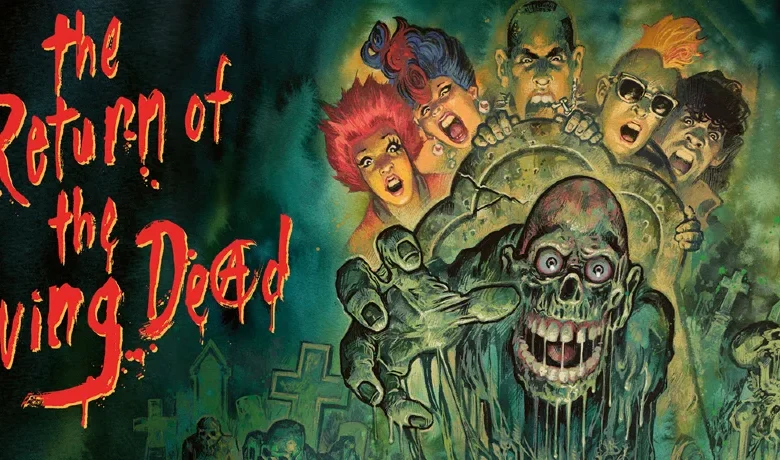
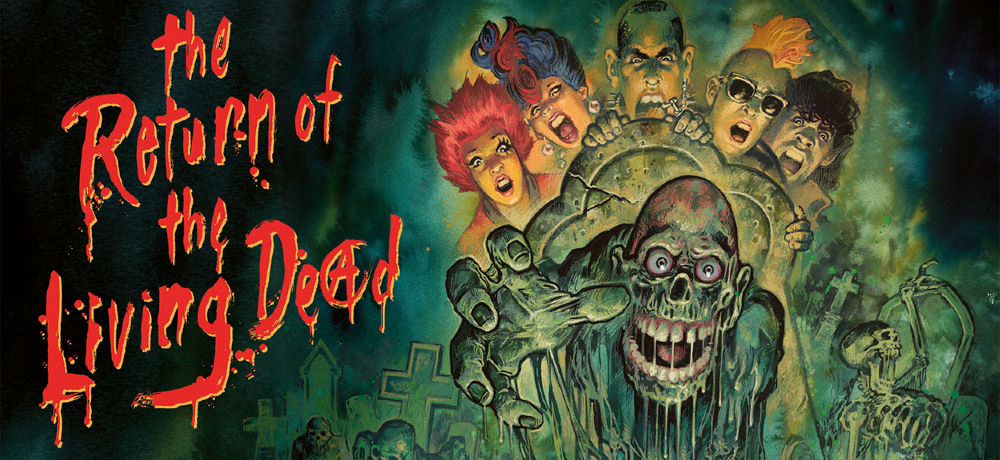
The iconic 1985 horror-comedy franchise The Return of the Living Dead is officially expanding with a direct sequel set in 1984. Writer-director Steve Wolsh is at the helm of the new installment, bringing a distinct vision that honors the punk-rock aesthetic, dark humor, and outrageous zombie mythology established by Dan O’Bannon’s landmark original film.
The production has secured an eclectic ensemble cast featuring Johnny Knoxville of the Jackass franchise, Ruby Snowber (Scary Movie 6), Blake Richardson of Netflix’s War Machine, legendary creature performer Doug Jones (Hellboy, The Shape of Water), and Sean Gunn (Guardians of the Galaxy, Superman). The involvement of such a diverse cast signals a blend of comedic timing, dramatic weight, and specialized creature acting crucial to the franchise’s tone.
Behind the camera, veteran producer Ted Field—known for helping revive major horror properties like The Texas Chainsaw Massacre (2003) and The Amityville Horror (2005)—is producing alongside Academy Award-nominee Mason Novick (Juno, Jennifer’s Body). Rodger May serves as executive producer through MayDay Movie Productions, partnering with Christopher W. Fox. Notably, Christopher W. Fox is the son of Tom Fox, who produced the first five installments of the Return of the Living Dead franchise, maintaining a direct familial and institutional link to the series’ history.
Commitment to Practical Effects
A defining characteristic of the new production is its strict adherence to traditional filmmaking methodologies. Producer Ted Field expressed immense enthusiasm for Wolsh’s script, emphasizing that the entire production will rely exclusively on practical creature effects rather than computer-generated imagery.
To achieve this tactile, visceral horror, the filmmakers have enlisted acclaimed special makeup effects artist Tony Gardner, whose extensive credits include Chucky, Zombieland, and Rise of the Planet of the Apes. By bypassing digital visual effects in favor of handcrafted creature design and practical gore, the production aims to recapture the authentic, grungy atmosphere that cemented the 1985 original as a cult masterpiece.
Uncovering Cult European Cinema in Print
Shifting from mainstream studio revivals to independent print journalism, the summer months inspired a collective of film enthusiasts to examine the shadowy corners of disreputable European cinema. This endeavor culminated in the creation of Euro Trash Immortals, a new independent print zine dedicated to the guilty pleasures, hidden histories, and controversial artistry of European cult films.
The debut issue, available via eurotrashimmortals.com, features deep dives into various subgenres, notably uncovering long-standing mysteries surrounding Hollywood royalty in the European exploitation sphere. Among the publication’s primary revelations are previously unreported details regarding Carroll Baker, the Oscar-nominated actress who transitioned from mainstream American stardom to become an icon of Italian giallo thrillers, softcore dramas, and sex comedies.
Following a contentious legal battle with her home studio that effectively stalled her Hollywood career, the Baby Doll star relocated to Europe. Over a nine-year period, she built a prolific resume in continental genre cinema before returning to the United States to establish a respected career as a character actor, later recognized by younger generations as the grandmother in Kindergarten Cop. Despite decades of intense academic scholarship, home-video restorations, and boutique box sets dedicated to her giallo output, Baker’s personal perspective on these films had remained ambiguous. Editor Brian Abrams utilized conversations with Baker’s overseas contemporaries and New York inner circle to reveal that the actress privately dismissed the very films that secured her immortal status among genre fans as "crap." While her appraisal stands in stark contrast to the adoration of modern cult-film enthusiasts, the revelation adds a fascinating human dimension to transnational film history.
Luxurious Dystopian Literature: The Handmaid’s Tale and The Testaments
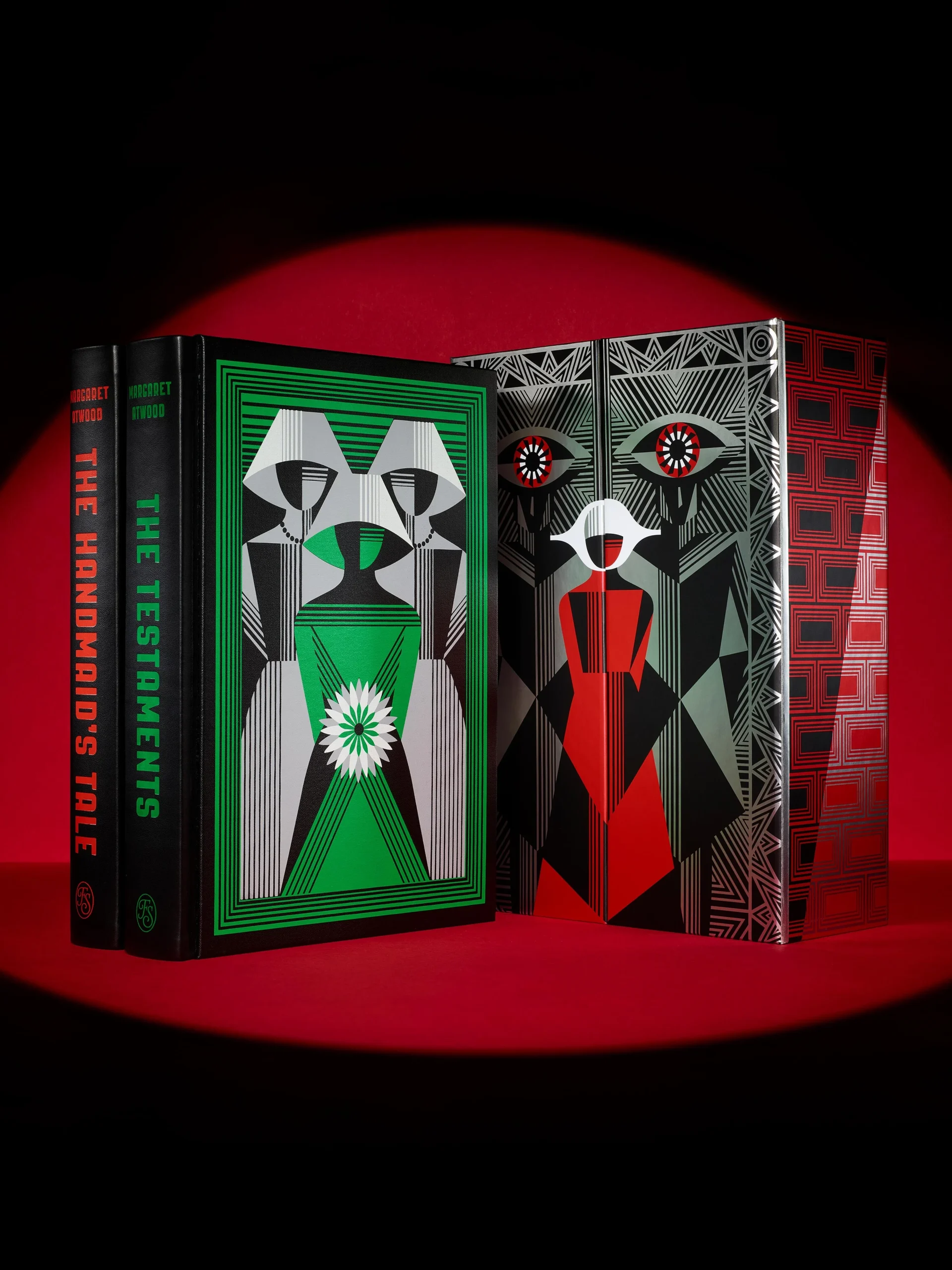
In the realm of high-end publishing, The Folio Society has announced an exquisite Limited Edition box set pairing Margaret Atwood’s dystopian masterworks, The Handmaid’s Tale and The Testaments. Scheduled for release on November 3, 2026—coinciding with the United States midterm elections—the publication underscores the enduring political and cultural relevance of Atwood’s creation.

Limited to just 750 copies priced at £535 / $760 each, the set is housed in a bespoke clamshell box designed by the multi-award-winning Italian artistic duo Anna and Elena Balbusso, widely known as the Balbusso Twins. The illustrations combine traditional mediums—including pencil, pen, watercolor, gouache, and tempera—with digital execution, maintaining visible brushstrokes that evoke the propaganda-heavy visual branding of totalitarian regimes. The physical books are printed by Grafiche Veneziane in Venice, transported from the historic city via gondola, and bound in leather by Italian bindery Graphicom. Every copy will be hand-signed by the Balbusso Twins.
The publication features an introduction by Margaret Atwood, who notes the inherently visual nature of her writing and its stylistic alignment with the visual propaganda of 1930s and 1940s European dictatorships. A new foreword by Naomi Alderman, author of The Power, emphasizes the prophetic warning embedded within the text. James Rose, Head of Editorial at The Folio Society, noted that the novels have never seemed more prescient, framing the Balbusso Twins’ artwork as a visualization of the rotten core of the fictional regime of Gilead.
High-Concept Indie Thrillers: Chroma Acquires Midnight ’96
Independent distribution label Chroma continues its aggressive acquisition slate by securing North American rights to Midnight ’96, a single-shot thriller written and directed by Nashville-based filmmaker Carson Charles Butcher. The film is slated for a digital release on Apple TV, Prime Video, and Fandango at Home on December 4.
Filmed as one continuous sequence, the 70-minute thriller is set on New Year’s Eve in 1996. The plot follows a charismatic British drug dealer, portrayed by Sam Palladio (Nashville), who is facing a 30-year prison sentence. In a desperate bid for survival, he converts his chaotic house party into an impromptu FBI sting operation to apprehend a serial killer hiding among his guests. As a ruthless supplier demands payment by midnight, mounting paranoia transforms the evening into a race against violent time.
Disruptive Distribution and Industry Implications
Carson Charles Butcher’s path to distribution exemplifies modern shifts in independent cinema marketing. After Hollywood studios passed on a pilot script titled Bleach, Butcher independently financed, produced, and released the pilot across YouTube, TikTok, and Instagram, accumulating over 7 million views. This viral self-promotion caught the attention of genre distributors like Chroma, which specializes in backing ambitious, unconventional creators.
Ahbra Perry, Vice President of Chroma, praised the production’s audacity, noting that the entire film was captured in a single night and wrapped successfully on its second take. This acquisition follows other strategic moves by the label, including Lily Wachowski’s Anarchists United boarding Chroma’s sci-fi feature De Novo, alongside the theatrical and digital rollout of The Restoration at Grayson Manor, starring Chris Colfer and Alice Krige.
Seasonal Television Box Sets: Acorn Media’s Festive Offerings
As the year draws to a close, home-media distributor Acorn Media International has curated a specialized collection of physical box sets aimed at television enthusiasts seeking dark, supernatural holiday programming. Dubbed "Monster Box Sets for Festive Frights," the slate compiles several major franchise continuations and critically acclaimed anthology series.
The collection features the complete first three seasons of Anne Rice’s Interview with the Vampire, highlighting the gothic romance and bloody saga of Louis de Pointe du Lac (Jacob Anderson) and Lestat de Lioncourt (Sam Reid). It is paired with the first two seasons of Anne Rice’s Mayfair Witches, starring Alexandra Daddario as the reluctant heir to a powerful dynasty of witches.
In the realm of post-apocalyptic survival, Acorn has bundled seasons one through three of The Walking Dead: Daryl Dixon, following Norman Reedus and Melissa McBride across a fractured European landscape, alongside seasons one through three of The Walking Dead: Dead City, which tracks Jeffrey Dean Morgan and Lauren Cohan through a ruined Manhattan. Rounding out the collection is an anthology box set encompassing the first two seasons of The Terror alongside its latest chapter, The Terror: Devil in Silver, continuing the Ridley Scott-produced tradition of fusing historical tragedies with chilling supernatural dread.
Broad Implications for the Entertainment Sector
The convergence of these diverse announcements points toward clear trends in the contemporary entertainment ecosystem. The heavy reliance on practical effects for The Return of the Living Dead reflects a growing consumer fatigue with over-reliance on digital CGI in horror filmmaking, signaling a return to tangible, tactile craftsmanship. Concurrently, the rise of self-distributed digital creators like Carson Charles Butcher demonstrates that traditional gatekeeping models are increasingly vulnerable to direct-to-consumer digital momentum.
Whether through multi-million-dollar studio revivals utilizing veteran practical makeup artists, luxury artisan publishers preserving literary dystopian warnings, or boutique labels championing one-shot micro-budget thrillers, the modern entertainment landscape continues to diversify its approaches to narrative delivery, fan engagement, and physical preservation.