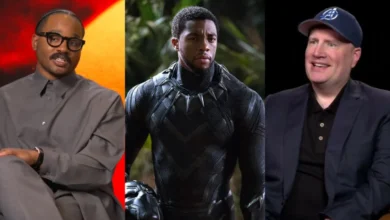
Kevin Feige and Ryan Coogler reflect on the profound legacy of Chadwick Boseman and the evolution of the Black Panther franchise

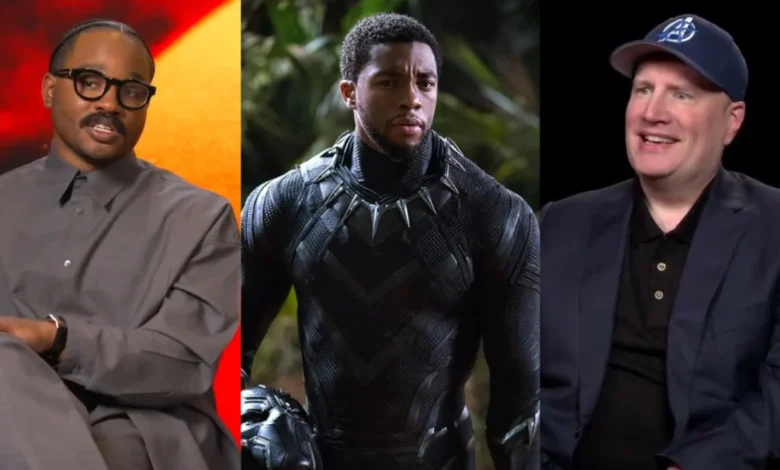
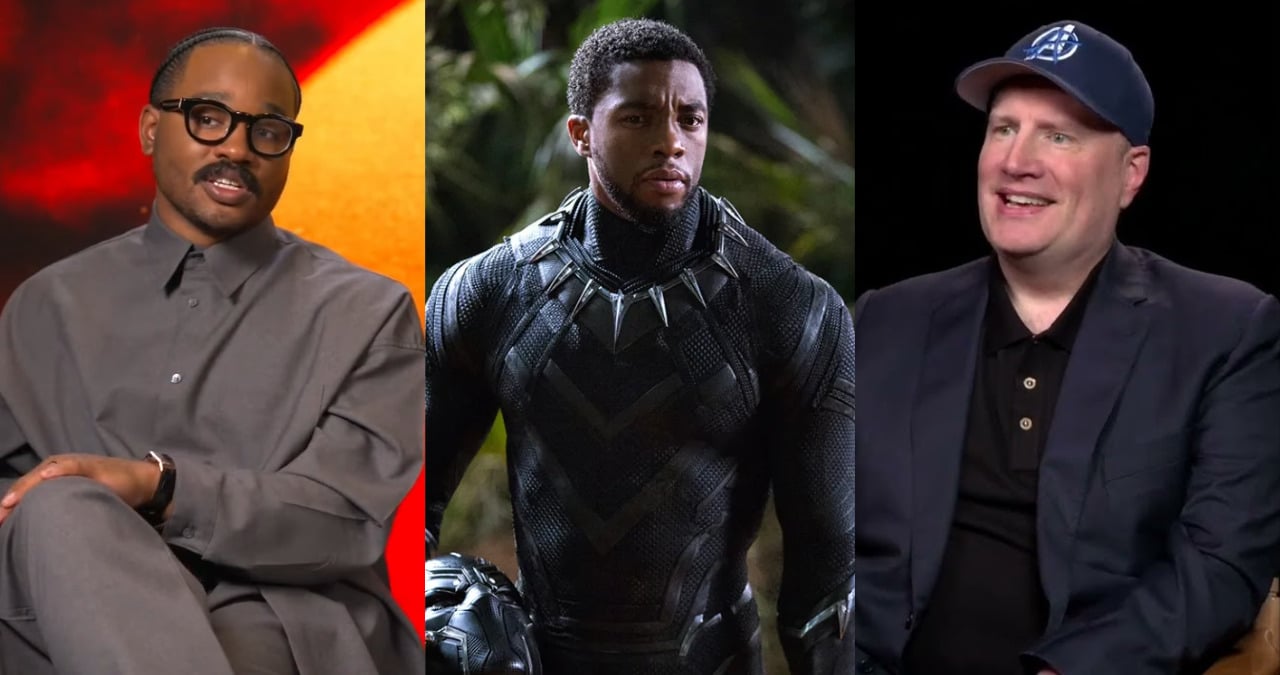
The untimely passing of Chadwick Boseman in August 2020 remains one of the most significant and sorrowful turning points in modern cinematic history. Boseman, whose portrayal of T’Challa in Marvel Studios’ Black Panther became a cultural phenomenon, succumbed to a private four-year battle with colon cancer at the age of 43. As the Marvel Cinematic Universe (MCU) continues to expand through its ambitious Multiverse Saga, the architect of that universe, Kevin Feige, and the visionary director behind the Wakandan saga, Ryan Coogler, have offered new insights into the personal toll of Boseman’s death and the delicate process of moving forward without their lead star.
During a recent appearance at the University of Southern California, moderated by The Hollywood Reporter, the two creative titans discussed their shared journey. The conversation served not only as a retrospective on their professional collaborations but as a poignant exploration of the fragility of human connection within the high-stakes environment of major studio filmmaking.
The Illusion of Tomorrow: Kevin Feige’s Reflection
For Kevin Feige, who has overseen the production of over 30 interconnected superhero films, the loss of Boseman served as a sobering reminder of the limitations of the industry. Feige noted that the fast-paced nature of Marvel Studios often led him to operate under the assumption that there would always be a "next time"—the next meeting, the next lunch, or the next project to catch up on old friends.
“We will be back in there, that was always my expectation,” Feige remarked during the panel. “So the need to set a dinner or a lunch to say hi, I just never do. Because we’re busy and because we’re going to have a next time. And that hit me like a ton of bricks when I realized that there wasn’t going to be a next time.”
This admission highlights a common tension in Hollywood: the conflict between the relentless demand for intellectual property expansion and the preservation of human relationships. Feige’s candidness reflects a shift in perspective, acknowledging that while the MCU is built on the concept of infinite possibilities within a multiverse, real life offers no such narrative safety net.
Behind the Scenes: The Human Response from Leadership
Ryan Coogler’s testimony regarding the immediate aftermath of Boseman’s passing provides a rare glimpse into the corporate culture at Disney and Marvel Studios during a period of intense public and private grief. While the media and fans were largely focused on the potential cancellation of Black Panther or the logistical nightmare of recasting a beloved lead, the leadership—specifically Kevin Feige and Disney CEO Bob Iger—prioritized the emotional well-being of the creative team.
Coogler recalled that during the COVID-19 lockdown, Feige and Iger visited him at his residence to offer support. “They came to our apartment in lockdown… and we walked around the Richmond Arena and just talked,” Coogler recounted. “And that was the first real check-in. And it wasn’t ‘Hey, what are we going to do about this franchise?’ It was about, ‘Hey, are you OK? How are you taking it?’ It was a real moment where you see the humanity beyond the corporate things and the financial responsibilities.”
This anecdote is significant as it demonstrates that, despite the multi-billion-dollar nature of the franchise, the decision-making process was anchored by an acknowledgment of the vacuum Boseman’s absence created. There was no immediate pivot to damage control; instead, there was a period of mourning that informed how the studio would eventually approach the narrative future of Wakanda.
A Chronology of the Black Panther Legacy
The timeline of the Black Panther franchise is a testament to both triumph and tragedy:
- February 2018: Black Panther is released to critical and commercial acclaim, grossing over $1.3 billion worldwide and becoming the first superhero film to receive a Best Picture nomination at the Academy Awards.
- August 2020: Chadwick Boseman passes away at his home in Los Angeles, having kept his stage IV colon cancer diagnosis private from the public and, for the most part, his professional collaborators.
- November 2022: Black Panther: Wakanda Forever is released. The film serves as both a sequel and a tribute, grappling with the grief of losing T’Challa, with Letitia Wright’s Shuri taking up the mantle of the Black Panther.
- 2025–2026: Ryan Coogler wins critical recognition for his original projects, including the film Sinners, while Marvel Studios begins pre-production development on Black Panther 3.
Economic and Cultural Impact
The cultural impact of Chadwick Boseman’s portrayal of T’Challa cannot be overstated. As the first Black lead in a major Marvel Studios production, he provided representation on a scale rarely seen in blockbuster cinema. The film’s success proved that diverse narratives were not only culturally essential but commercially dominant.
Data from the box office performance of Black Panther and its sequel suggests that audiences are deeply invested in the lore of Wakanda. Wakanda Forever grossed over $850 million globally, a significant figure given the absence of the franchise’s central star and the challenging post-pandemic theatrical landscape. This financial stability has granted Marvel Studios the luxury of time to decide how to handle the character’s legacy moving forward.
Implications for the Future of the MCU
As the Multiverse Saga approaches its climax, rumors regarding the direction of the Black Panther franchise have intensified. With Ryan Coogler expected to return for a third installment, the narrative path remains a subject of intense speculation. The industry is currently observing whether Marvel will pursue a total reboot of the character, a recasting, or a continuation of the mantle being passed through the royal lineage of Wakanda.
The challenge for Feige and Coogler is to maintain the integrity of Boseman’s contribution while ensuring the franchise continues to evolve. The inclusion of new characters and the expansion of Wakandan politics have served as effective stopgaps, but the question of who will lead the nation on screen remains the most pivotal creative hurdle.
Analytical Perspective: The Weight of Legacy
From an analytical standpoint, the partnership between Feige and Coogler represents one of the most successful director-producer collaborations in modern history. Their ability to navigate the loss of a lead actor while maintaining the creative vision of the series is a case study in crisis management.
By centering the franchise on the theme of legacy rather than just the hero, Coogler has ensured that the "Black Panther" title functions as a symbol rather than a static identity. This allows for a structural evolution of the story that honors Boseman’s work while allowing the series to remain vital and forward-looking.
As the studio prepares for the next phase of its expansion, the lessons learned from the loss of Chadwick Boseman seem to have permeated the corporate strategy of Marvel Studios. There is a perceptible shift toward more deliberate pacing and a greater emphasis on the human elements behind the camera.
The upcoming Black Panther 3 will inevitably be a crucible for this new approach. It will serve as a definitive statement on whether the studio can successfully bridge the gap between its past successes and its future ambitions. For now, the focus remains on honoring the singular performance that Boseman delivered—a performance that, as Coogler noted, was uniquely his. "There was only one Chad, bro," Coogler stated. "And there was only one character that was really meant for him."
As the industry moves forward, the legacy of that collaboration remains etched not just in the records of box office performance, but in the evolving, more human-centric ethos of the Marvel Cinematic Universe. Whether or not a new actor steps into the role of the titular hero in the future, the foundation laid by Boseman and the leadership provided by Coogler and Feige have ensured that the story of Wakanda remains one of the most poignant narratives in contemporary film.