“Leviathan Freedom”: Marc Guggenheim on seeing history as space opera On reimagining an important historical events as science fiction projects

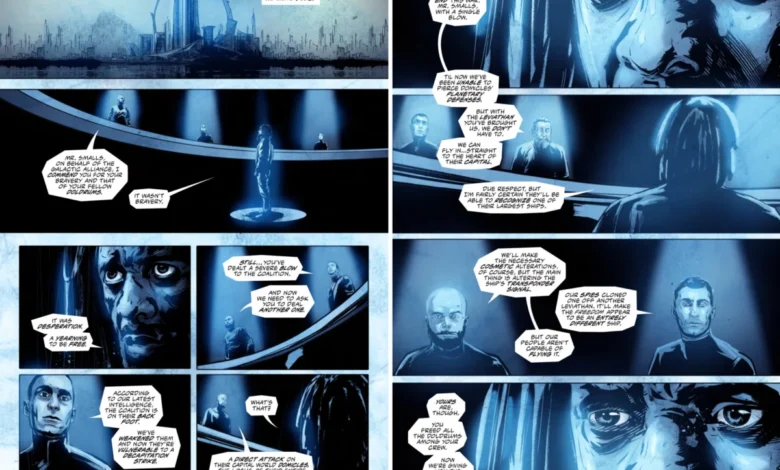
The intersection of historical triumph and speculative fiction has long offered creators a unique lens through which to examine human resilience. In the latest comic book limited series Leviathan Freedom, writer and producer Marc Guggenheim, alongside rock legend Tom Morello and illustrator Szymon Kudranski, has transformed a pivotal and daring chapter of American history into a sweeping space opera. Released digitally via Comixology Originals, the final issue, Leviathan Freedom #5, arrived on October 13, bringing a dramatic cosmic conclusion to a narrative deeply rooted in real-world courage.
Rather than setting the story in the antebellum American South, the creative team transports the core dilemma to the stars. The comic serves as a science fiction retelling of the extraordinary true-life story of Robert Smalls. Born into slavery in South Carolina, Smalls executed one of the most audacious escapes of the American Civil War by commandeering a heavily armed Confederate steamship, navigating it past hostile fortifications, and delivering himself, his family, and numerous fellow enslaved passengers to freedom and the blockade-free waters controlled by the Union Navy. By recasting this historic act of self-emancipation as an interstellar voyage, Guggenheim and Morello explore universal themes of bondage, liberation, and defiance against overwhelming systemic oppression through the grand, imaginative scope of science opera.
The Real History Behind the Cosmic Retelling
To fully appreciate the narrative weight of Leviathan Freedom, one must examine the remarkable historical record of Robert Smalls, whose life remains one of the most inspiring accounts of the Civil War era. Born in Beaufort, South Carolina, in 1839, Smalls was enslaved from youth and eventually sent by his enslaver to Charleston, where he worked various maritime jobs. Over the years, Smalls developed an exceptional mastery of Charleston Harbor and its intricate network of tidal creeks, shoals, and Confederate naval defenses. By the spring of 1862, he was working as a pilot aboard the CSS Planter, a high-pressure sidewheel steamer used as an armed Confederate transport and dispatch boat.
On the night of May 12, 1862, while the white officers of the Planter disembarked to spend the night ashore, Smalls and a crew of enslaved fellow mariners executed a meticulously planned escape. In the predawn hours of May 13, Smalls donned the captain’s straw hat and imitated the mannerisms of the ship’s commander to successfully pass the heavily guarded Fort Sumter and other Confederate checkpoints. He carefully signaled the correct Confederate passwords to shore batteries and harbor patrols. Once safely beyond the range of enemy guns, Smalls and his crew hoisted a white flag of truce—a bedsheet belonging to his wife—and surrendered the vessel to the United States Navy warship USS Onward.
The tactical intelligence Smalls provided to the Union military was invaluable. He handed over the Planter intact, complete with its cargo of heavy artillery, rifles, and ammunition, alongside crucial maps detailing Confederate minefields and harbor defenses in South Carolina. Smalls’ actions not only secured physical liberation for his family and crewmates but also helped shift federal policy regarding the enlistment of African American soldiers and sailors into the Union armed forces. Following the war, Smalls purchased his former enslaver’s home in Beaufort, entered politics, and served five terms in the United States House of Representatives during the Reconstruction era, followed by a distinguished career as a customs collector.
Translating History into a Sci-Fi Universe
In adapting this foundational historical account into a science fiction framework, Marc Guggenheim and Tom Morello faced the challenge of preserving the emotional core and high-stakes tension of Smalls’ escape while inventing a futuristic mythology. Speaking on the creative process behind Leviathan Freedom, Guggenheim noted that historical events often possess the intrinsic grandeur, moral clarity, and larger-than-life characters necessary for epic storytelling. By shifting the setting to the stars, the creators were able to amplify the physical and psychological barriers of the escape into literal planetary and cosmic obstacles.
The collaboration between Guggenheim, known for his extensive television and comic book writing credentials, and Morello, celebrated globally as the guitarist for Rage Against the Machine and Audioslave, brought together two distinct artistic sensibilities united by a shared interest in themes of social justice and resistance. Illustrated by Szymon Kudranski, whose atmospheric and gritty art style lends a distinct visual gravity to the project, Leviathan Freedom utilizes the visual vocabulary of classic space opera—massive dreadnoughts, distant planetary colonies, and authoritarian interstellar regimes—to mirror the oppressive machinery of nineteenth-century chattel slavery.
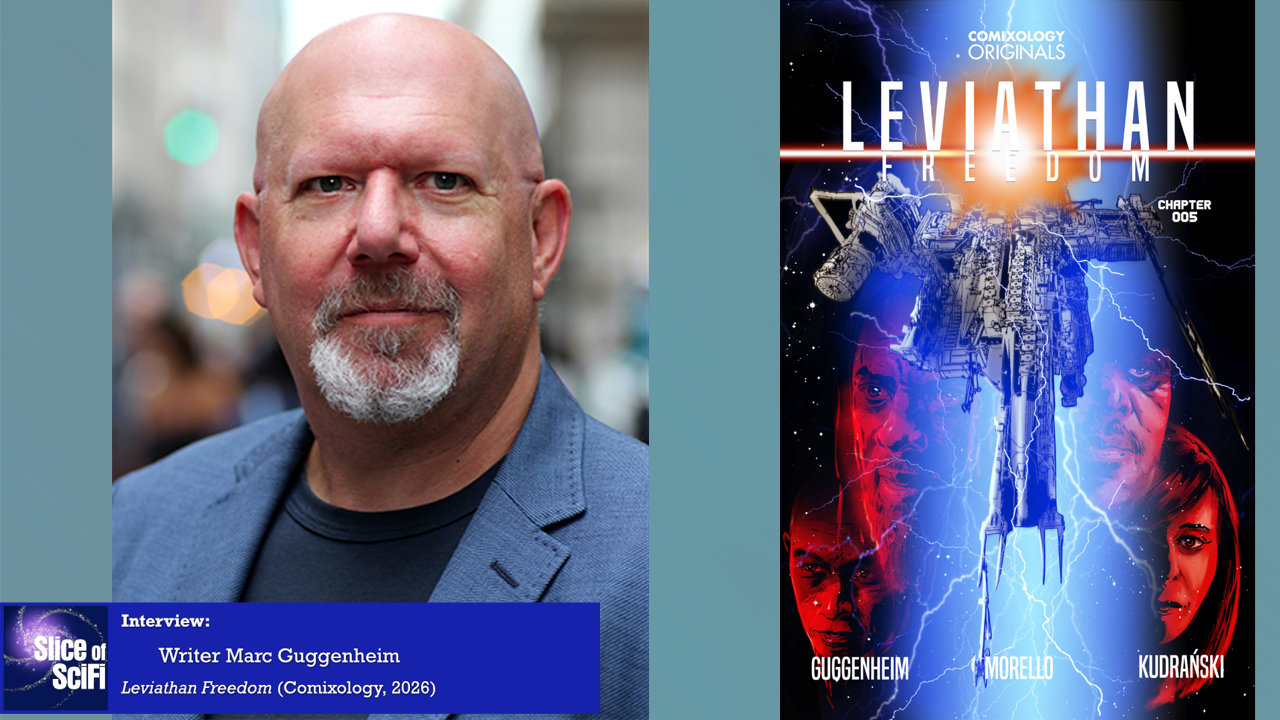
The five-issue publication schedule culminated with the release of Leviathan Freedom #5, solidifying the project as a notable entry in the burgeoning subgenre of historical speculative fiction. The series has drawn attention from both comic book enthusiasts and literary critics interested in how modern storytelling can recontextualize historical resistance for contemporary audiences.
Broader Implications and the Appeal of Historical Sci-Fi
The reimagining of historical events through science fiction is not an entirely new literary device, but recent years have seen a surge in creators utilizing speculative genres to shed light on marginalized or overlooked narratives. By detaching a story from specific geographic and temporal constraints, creators can bypass conventional historical biases or audience fatigue, presenting familiar moral struggles in fresh, imaginative environments.
For narratives involving the institution of slavery and the fight for human dignity, space opera provides a canvas where the scale of oppression matches the immense courage required to overcome it. An interstellar empire serves as an effective analogue for entrenched institutional power, while a stolen warship becomes a symbol of ultimate self-determination. This approach allows younger readers and audiences less familiar with deep historical archives to engage with the themes of sacrifice, strategy, and liberation on an emotional and visceral level.
Furthermore, projects like Leviathan Freedom open broader cultural conversations regarding the types of stories that deserve epic treatment. Traditionally, large-scale science fiction and fantasy epics have drawn inspiration primarily from medieval European history, classical mythology, or contemporary geopolitical conflicts. By centering a narrative on an analogue to Robert Smalls—a figure of tactical brilliance and profound personal bravery whose contributions were monumental—Guggenheim and Morello demonstrate that historical reality often outpaces fiction in terms of sheer daring and heroism.
Critical Reception and Future Horizons
As the final issue completes the arc of Leviathan Freedom, discussions within the speculative fiction community have turned toward the viability and impact of historical adaptations in modern media. The cross-medium appeal of the series—bridging traditional comic book distribution via Comixology Originals with extensive behind-the-scenes discussions on interview platforms and podcasts—highlights the evolving landscape of digital publishing and creator-owned storytelling.
Industry analysts note that digital-first platforms like Comixology Originals have provided a vital incubator for high-concept, creator-driven limited series that might otherwise struggle for space in traditional direct-market comic shop distribution models. This digital accessibility has allowed niche historical and speculative projects to find dedicated global audiences quickly.
While no official announcements have been made regarding subsequent collaborations between Guggenheim, Morello, and Kudranski, the success of Leviathan Freedom suggests an appetite for further explorations into historical speculative fiction. Whether through television adaptations, collected graphic novel editions, or new comic book arcs, the story of Robert Smalls—both in its true historical context and its new cosmic iteration—continues to resonate as a timeless testament to human agency.
For readers and listeners interested in exploring the creative mechanics behind the series, Marc Guggenheim’s official website and associated literary platforms offer further insights into the development of the universe. As discussions surrounding the intersection of history and science fiction continue to expand, projects like Leviathan Freedom establish a compelling precedent for how past struggles can be honored, reimagined, and projected into the stars for future generations.
Related posts: