The Elder Scrolls VI Sentinel marks a significant milestone in the franchise’s long-awaited expansion

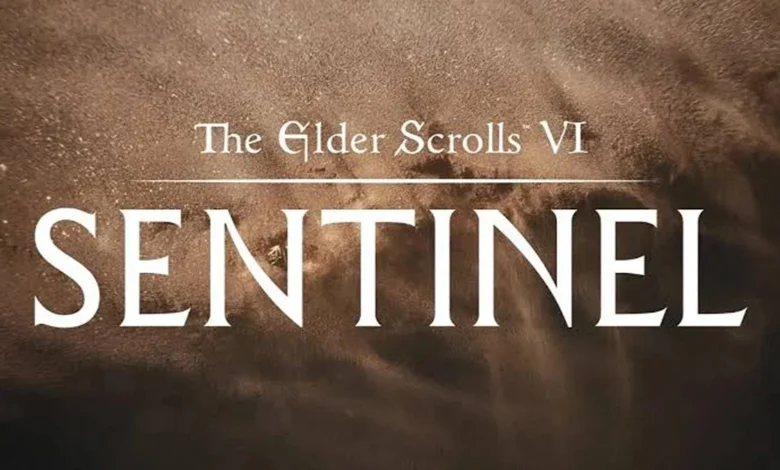
The recent official title reveal for The Elder Scrolls VI: Sentinel has provided the most substantial information regarding the next chapter in Bethesda Game Studios’ flagship fantasy role-playing series since its initial announcement in 2018. While the 2018 teaser served primarily as a confirmation of development, the latest promotional material offers concrete details regarding the game’s setting, thematic tone, and chronological placement within the established lore of Tamriel.
Setting the Scene: Hammerfell and the Regional Context
The reveal trailer confirms that the game will take place in the province of Hammerfell, the ancestral home of the Redguards. Visual evidence presented in the footage highlights the iconic arid landscapes, expansive desert dunes, and unique architectural styles that define the region. In the lore of the Elder Scrolls, Hammerfell is a province of profound political and cultural complexity, characterized by its history of independence from the Empire and its strategic location in the western reaches of the continent.
The focus on Hammerfell is significant. Unlike the northern province of Skyrim, which was defined by its frigid climate and Nordic culture, Hammerfell presents a vastly different aesthetic and mechanical environment. The shift toward a desert-centric map suggests a focus on the rugged, survivalist nature of the Redguard people and their complex geopolitical struggle against the Aldmeri Dominion—a central tension that has persisted throughout the series’ recent history.

Chronological Placement and Narrative Clues
A pivotal element of the new promotional material is the inclusion of a specific quote attributed to "Yazar, Moth Priest of High Queen Iradne of Hammerfell," dated to the year 4E 206. This timestamp is of critical importance to fans of the franchise, as it anchors the narrative within a specific era.
The Fourth Era (4E) is the current period in the game’s timeline. The events of The Elder Scrolls V: Skyrim occurred in 4E 201. By placing the narrative in 4E 206, the developers have established a five-year gap between the conclusion of the previous mainline entry and the setting of Sentinel. This timeline is notably brief compared to the 200-year gap that separated the events of The Elder Scrolls IV: Oblivion and Skyrim. This close temporal proximity suggests that the political instability caused by the civil war in Skyrim and the ongoing fallout of the Great War may still be shaping the landscape of Sentinel.
Understanding the Moth Priests
The reference to a "Moth Priest" in the reveal material serves as a deep-lore connection to the Order of the Ancestor Moth. In the Elder Scrolls universe, these individuals are members of a monastic order dedicated to the study, preservation, and interpretation of the Elder Scrolls themselves—the mystical artifacts that serve as the series’ namesake.
These scrolls are not merely historical records; they are windows into the nature of reality, time, and prophecy. The cost of such knowledge is high, as the act of reading these scrolls leads to inevitable blindness. The inclusion of a Moth Priest’s testimony suggests that the plot of Sentinel may involve major prophetic elements or cataclysmic events that threaten the stability of the continent, a hallmark of the series’ overarching narrative arcs.
Historical Context and Development Timeline
The development history of The Elder Scrolls VI has been one of the most scrutinized in the gaming industry. Following the release of Skyrim in November 2011, the studio spent years supporting that title before pivoting toward other projects, including the development of Starfield and Fallout 76.
- 2011: The Elder Scrolls V: Skyrim is released to critical and commercial acclaim.
- 2018: Bethesda officially announces the development of The Elder Scrolls VI at E3 with a brief cinematic teaser.
- 2018–2024: Extended development cycle, during which the studio focused on the production of Starfield.
- 2024/2025: Official title reveal of The Elder Scrolls VI: Sentinel.
The long development window is consistent with Bethesda’s historical approach to its "flagship" titles. Historically, the company has operated on a cycle of roughly five to eight years between major releases. The extended wait for Sentinel is a departure from previous patterns, likely influenced by the technical requirements of the Creation Engine 2 and the scale of the open-world environments expected of a modern high-fidelity RPG.
Economic and Industry Implications
The Elder Scrolls series remains one of the most commercially successful franchises in interactive media. Skyrim alone has sold tens of millions of units across three console generations. The economic stakes for Sentinel are high, as the title serves as a primary driver for the Xbox and PC ecosystem under Microsoft’s ownership of ZeniMax Media.
Market analysts suggest that the title’s release will be a defining moment for the RPG genre in the current decade. The industry is currently observing how Bethesda balances its traditional "sandbox" design philosophy—which emphasizes player freedom and environmental storytelling—with the evolving expectations for modern graphical fidelity and reactive game worlds.

Analysis of the "Sentinel" Title
The use of the name "Sentinel" is evocative. Sentinel is a major city-state in Hammerfell, known for its harbor, its wealth, and its strategic importance. By naming the game after this location, Bethesda implies that the city may serve as a hub or a central focal point for the game’s narrative. Historically, Bethesda titles have been named after the province (Morrowind, Oblivion, Skyrim), so the shift to a city-based subtitle suggests a more concentrated narrative focus, or perhaps an expansion of the game’s scope to cover multiple regions beyond just one province.
Future Projections and Industry Speculation
While public excitement remains high, industry experts caution against anticipating a release date in the immediate future. Developing a title of this magnitude requires rigorous quality assurance, asset creation, and technical optimization.
While some segments of the gaming community have speculated on a 2027 gameplay reveal, conservative estimates suggest that the project is still in the middle stages of full production. A release date between 2028 and 2030 is considered a more realistic target based on the studio’s historical output rate.
Conclusion
The announcement of The Elder Scrolls VI: Sentinel acts as a confirmation that Bethesda is moving into the next phase of its premier franchise. By providing a clear setting, a specific chronological anchor, and a thematic hook involving the Elder Scrolls themselves, the developers have provided enough information to satisfy the immediate curiosity of the player base while maintaining the mystery central to the series’ marketing strategy. As the industry looks toward the next generation of open-world RPGs, Sentinel is positioned as a primary focal point, carrying the weight of a decade-long wait and the expectations of millions of players worldwide. The coming years will undoubtedly provide further insights into the mechanics and scope of this highly anticipated installment.