Unearthing the Holy Grail of Horror: All American Massacre Investigative Drama-Documentary Set for Halloween Release on DragonFlix

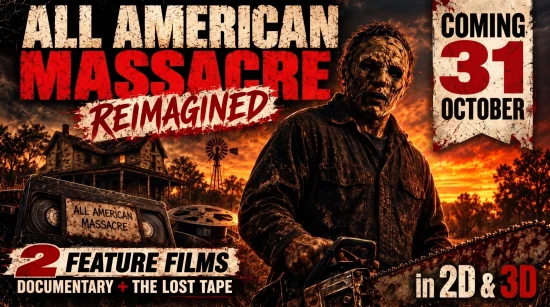
The landscape of horror cinema is littered with "lost" films—projects that were either abandoned during production, destroyed by studio interference, or vanished into the ether of legal limbo. Among these, few have achieved the near-mythic status of All American Massacre. After years of speculation, rumors, and fervent fan discourse, Dragon Studios and Marketing Macabre have officially confirmed that the definitive investigative drama-documentary detailing the film’s chaotic history will premiere on October 31, 2026, exclusively via the streaming platform DragonFlix. The project, which attempts to demystify the origins and ultimate collapse of this legendary endeavor, is currently available for pre-order at a price point of $19.99.
The Genesis of a Lost Legend
To understand the significance of this upcoming release, one must first examine the cultural gravity of the project itself. All American Massacre has long been discussed in forums and fan conventions as a "holy grail" of unfinished horror. Its history is inextricably linked to the broader lore of the Texas Chainsaw Massacre franchise, specifically regarding the character of Chop Top, portrayed by Bill Moseley. The film was envisioned as a deep dive into the psychosis of the character, existing somewhere between a traditional narrative and a stylized, gritty character study.
For decades, the project existed only as a series of fragmented clips, leaked behind-the-scenes photographs, and conflicting accounts from those who were involved in its initial development. The lack of a completed, widely available version created a vacuum that was quickly filled by urban legends and hyperbolic fan theories. By chronicling the production’s trajectory, the new documentary seeks to pivot from myth-making to historical documentation, providing a factual basis for why the film failed to reach completion during its original production window.
Chronology of a Failed Production
The timeline of All American Massacre is indicative of the volatile nature of independent horror production in the early 2000s. While the precise dates of principal photography were often obscured by the project’s informal production style, researchers have pieced together a timeline that spans several years of fits and starts.
- Early Development (Circa 1998–2000): The conceptual phase began with a focus on exploring the backstory of the Chop Top character. The intent was to capitalize on the cult status established by the character in the 1986 sequel, The Texas Chainsaw Massacre 2.
- Principal Photography (2000–2002): Production occurred in a piecemeal fashion. Unlike major studio productions, the team faced constant financial hurdles and logistical challenges that hampered continuity.
- The Hiatus (2003–2010): Following a series of funding shortages and creative disagreements, the project was effectively mothballed. It became a fixture of the "lost film" community, frequently appearing on lists of horror movies that would likely never see the light of day.
- Archival Recovery (2011–2024): A long-term effort by preservationists and Dragon Studios involved tracking down original 35mm and digital media assets. This phase required legal clearances and the painstaking digitization of raw footage that had been stored in suboptimal conditions for over a decade.
- Production of the Documentary (2025–2026): Dragon Studios commissioned a team to synthesize the recovered materials into a coherent narrative. This involved securing rights, conducting high-definition interviews, and applying modern post-production techniques to stabilize and color-correct the legacy footage.
Expert Perspectives and Testimonies
A critical component of the upcoming documentary is the participation of key figures who were directly involved in the project. The inclusion of Bill Moseley, whose performance as Chop Top remains a hallmark of the genre, provides a grounded perspective on the creative intent behind the film. Moseley’s involvement ensures that the documentary captures the "why" behind the artistic choices that were made during the initial filming.
Furthermore, the participation of Miquel Núñez, known for his work in The Return of the Living Dead, adds a layer of genre expertise to the narrative. The documentary does not merely rely on the recollections of the cast; it employs a rigorous investigative approach, utilizing archival research to verify claims made by participants. By cross-referencing production logs, budget sheets, and call sheets with the oral histories provided by the cast and crew, the documentary provides a multi-faceted view of the production’s collapse, moving beyond mere speculation into evidence-based reporting.
Supporting Data and Production Scope
The documentary is described as a "feature-length drama-documentary," a format that blends traditional investigative journalism with archival footage. Dragon Studios has confirmed that the release is not merely a collection of clips but a curated piece of media that frames the source material within its historical context.
The release includes a "treasure trove" of bonus features, which are expected to include raw, unedited dailies, production design sketches, and interviews that were deemed too tangential for the main feature. This repository of materials serves as an important resource for film historians, offering a rare glimpse into the logistical realities of independent filmmaking during the transition from analog to digital production methods. For the casual fan, these materials offer a definitive conclusion to a decades-long mystery; for the student of film, they provide a case study in the risks of independent financing and distribution.
Implications for the Horror Community
The decision to release this documentary on a specialized platform like DragonFlix highlights the growing market for "archival horror." As streaming platforms compete for niche audiences, the acquisition and restoration of unfinished or obscure genre films have become a viable business model. By documenting the failure of a project like All American Massacre, the industry is effectively archiving the "lessons learned" for future independent filmmakers.
Furthermore, the release underscores the role of firms like Marketing Macabre in bridging the gap between independent creators and their audience. By professionalizing the rollout of this material, the firm ensures that the film’s legacy is preserved in a format that is accessible and historically accurate. The $19.99 pre-order price point reflects a premium on the historical value of the content, catering to a dedicated fan base that values the preservation of genre history over mass-market appeal.
A Legacy Reclaimed
As the October 31, 2026, release date approaches, the excitement within the horror community is palpable. For many, the documentary represents the final piece of a puzzle that has remained incomplete for over twenty years. By moving the conversation from internet forums to a structured, investigative format, Dragon Studios is providing a service to the legacy of the original filmmakers.
The documentary serves as a reminder that every piece of cinema, regardless of its completion status, is the result of thousands of hours of human labor, artistic vision, and logistical coordination. By shining a light on the production of All American Massacre, the filmmakers have not only satisfied a long-standing curiosity but have also contributed a vital chapter to the history of horror cinema. The film’s ultimate journey—from a lost, mythical object to a fully realized documentary—mirrors the evolution of the genre itself: a constant, restless search for the truth hidden beneath the surface of the macabre.
For those interested in the technicalities of the production, the forthcoming release on DragonFlix provides the most comprehensive look at the project to date. It stands as a testament to the resilience of independent art and the enduring power of horror as a cultural touchstone. Whether the documentary changes the perception of the original project remains to be seen, but its release is undeniably a milestone for horror enthusiasts worldwide.