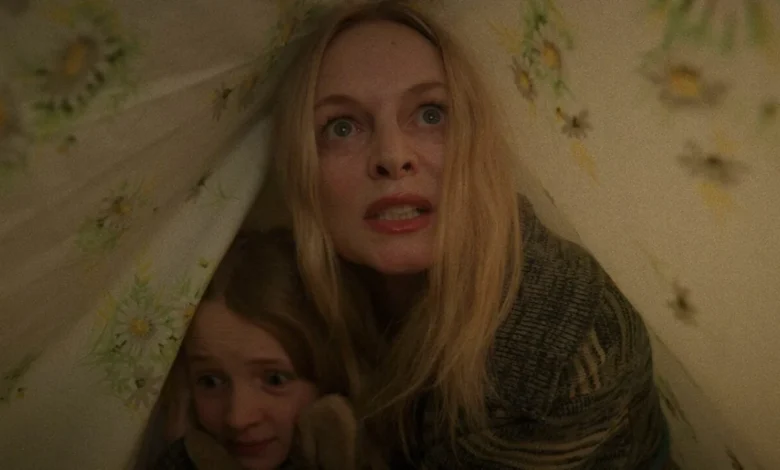
‘What Happened to Doris?’ – Heather Graham Discovers a Man Under the Bed in Creepy New Clip

The Historical Foundation of the Narrative
The premise of What Happened to Doris is grounded in the real-world experiences of Doris Bither, a California woman whose claims of being physically assaulted by an invisible entity in the mid-1970s captured the attention of the scientific and paranormal communities alike. In 1974, Bither reached out to researchers at the University of California, Los Angeles (UCLA), specifically seeking help from parapsychologist Barry Taff and his colleague Kerry Gaynor.
The investigation that followed remains a point of intense debate. According to the original case files, Bither claimed that she was repeatedly attacked, molested, and terrorized by multiple invisible entities within her home in Culver City. The investigators, who arrived with sophisticated equipment for the era, reported witnessing strange light phenomena, materializations, and physical disturbances that they could not explain through conventional physics. The case eventually gained national notoriety, becoming the subject of Frank De Felitta’s 1978 novel, The Entity, and the subsequent motion picture directed by Sidney J. Furie. By revisiting this case, Nick Simon’s film moves beyond a simple remake, opting instead to explore the psychological toll such an ordeal takes on a single mother and her children.
Cast and Production Dynamics
The inclusion of Heather Graham in the lead role signifies a notable pivot toward a more grounded, performance-heavy approach to the supernatural genre. Graham, who recently garnered critical acclaim for her work in the Lovecraftian horror-thriller Suitable Flesh, brings a level of gravitas that the production team clearly hopes will anchor the film’s more abstract elements.
The supporting cast is equally robust. Mimi Rogers adds a layer of seasoned prestige to the project, while Marcus Coloma, Kevin Keppy, Daniel Reed Ferrell, and Margo Parker provide the necessary ensemble support to flesh out the domestic environment that serves as the film’s primary setting. The screenplay, penned by Thomas Fenton, reportedly emphasizes the investigative process—highlighting the tension between the desperate family and the skeptical, yet increasingly alarmed, scientific observers.
Chronology of the Investigation
To understand the significance of this cinematic retelling, one must look at the timeline of the original 1974 events:
- August 1974: Doris Bither approaches the UCLA Parapsychology Department, claiming she is being tormented by unseen entities.
- Late 1974: Barry Taff and his team begin a series of on-site investigations at the Bither residence, documenting electromagnetic fluctuations and photographic anomalies.
- 1978: The publication of Frank De Felitta’s The Entity brings the case to a global audience, embedding it into the cultural consciousness of the late 20th century.
- 1982: The theatrical release of The Entity cements the story as a staple of the "haunted house" subgenre.
- 2024-2026: Development and production of What Happened to Doris, aimed at providing a modern technological and psychological lens on the original testimonies.
The Evolution of Paranormal Representation in Cinema
The transition from the 1982 depiction of the Bither case to the modern interpretation in What Happened to Doris reflects a broader shift in how horror cinema addresses the supernatural. In the early 1980s, the focus was largely on the shock value of physical manifestation and the victimization of the protagonist. Today’s audiences, however, are increasingly drawn to narratives that explore the intersection of mental health, trauma, and scientific skepticism.
By integrating the perspective of the investigators—the "UCLA researchers"—the film positions itself as a procedural thriller as much as a horror film. This duality allows the audience to experience the fear through two distinct lenses: the subjective terror of the mother (Graham) and the objective, albeit confused, observation of the scientists. This dual-narrative structure is a hallmark of Nick Simon’s directorial style, which often emphasizes the mechanics of fear alongside the emotional fallout.

Anticipation and Industry Implications
As the world premiere at Fantastic Fest approaches, the film has already begun to generate significant buzz within the horror community. The release of a short, unsettling clip showing Graham’s character grappling with the knowledge of an entity beneath her daughter’s bed has served as an effective teaser, signaling that the film intends to lean into the claustrophobic nature of the home environment.
The commercial and critical implications for What Happened to Doris are substantial. If the film successfully balances the historical weight of the Bither case with the high-octane tension expected of modern horror, it could trigger a renewed interest in the "based on true events" subgenre, which has seen fluctuating success over the last decade. Furthermore, the film provides a platform for investigating how archival paranormal data can be translated into contemporary cinematic language without losing the nuances of the original eyewitness accounts.
Analysis of the "Entity" Phenomenon
From a sociological perspective, the enduring interest in the Bither case—and why filmmakers continue to return to it—lies in its status as a "bridge" between folklore and science. Unlike many ghost stories that rely on purely supernatural tropes, the Bither case was unique because it involved a major public university and a team of researchers who were, at the time, attempting to quantify the unquantifiable.
When analyzing the film’s potential impact, one must consider the role of technology. In the 1970s, the equipment used by Taff and his team—cameras, tape recorders, and crude EMF detectors—was cutting-edge. Today, that same investigative process is often viewed through the lens of digital media and instant connectivity. The film’s ability to bridge this gap between the analog terror of the 70s and the modern digital age will likely be a primary focus for critics.
Looking Ahead: The Fantastic Fest Debut
Fantastic Fest has long been known as a launchpad for genre-bending films that challenge traditional narrative structures. The choice to debut What Happened to Doris at this venue suggests that the production is not merely a standard jump-scare vehicle but a film with a distinct stylistic vision.
The inclusion of the UCLA-themed plotline is particularly relevant in an era where skepticism is often pitted against personal experience. By casting Graham in a role that requires navigating the line between reality and hallucination, the filmmakers are setting the stage for an intense character study. As the industry turns its eyes toward the upcoming premiere, the focus will remain on whether the film can honor the gravity of the original case while providing the visceral experience that modern audiences demand.
In summary, What Happened to Doris represents a significant moment for the horror genre. By revisiting a foundational case of the paranormal with a modern cast and a procedural focus, the film attempts to redefine how we interpret the "true" in "based on a true story." Whether it succeeds in cementing its own legacy alongside the 1982 original remains to be seen, but the groundwork for a compelling, unsettling experience has clearly been laid. As the film prepares to enter the public sphere, it stands as a testament to our ongoing fascination with the unseen and our persistent need to document the unexplained.