The universe of science fiction is replete with sagas that have captivated audiences for decades, and among them, those bearing the celestial moniker "Star" have proven remarkably resilient. While Star Wars and Star Trek are undeniably dominant forces, the enduring legacy of Stargate often warrants a more prominent place in this pantheon of long-lived franchises. Recently, a beacon of hope for Stargate enthusiasts flickered with the announcement from Amazon MGM Studios that a new series was slated for Prime Video. However, a report from Variety has since dimmed that optimism, indicating that these ambitious revival plans have been significantly scaled back, if not altogether shelved.
The individual at the helm of this potential resurgence was Martin Gero, a seasoned writer with a deep connection to the franchise, having contributed to the critically acclaimed Stargate SG-1 and Stargate: Atlantis. His vision for a new Stargate iteration, however, has reportedly been met with reservations by Amazon. The studio’s assessment suggests that Gero’s proposed direction may not have sufficiently appealed to a broader audience, those not already deeply immersed in the intricate lore and established characters that define the Stargate universe. This strategic divergence raises questions about Amazon’s broader intentions for the beloved franchise.
A Legacy Forged in Film and Extended Through Television
The Stargate saga commenced its journey in 1994 with a feature film starring James Spader and Kurt Russell. The movie, a moderate commercial success, laid the groundwork for an expansive narrative universe, though it did not immediately spawn a direct sequel. Instead, its success catalyzed the creation of Stargate SG-1, a television series that would go on to become a cornerstone of science fiction television.
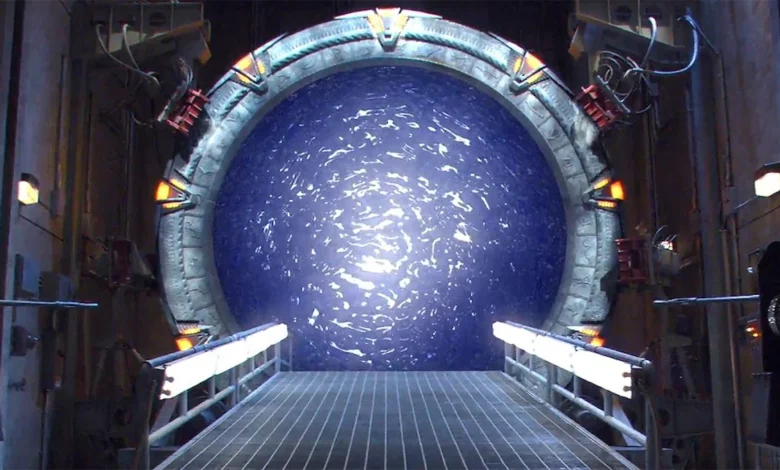
Stargate SG-1 premiered in 1997 and enjoyed an impressive ten-season run, amassing a dedicated fanbase through its compelling storytelling and memorable characters, including those portrayed by Richard Dean Anderson, Michael Shanks, Amanda Tapping, and Christopher Judge. The series was instrumental in establishing the foundational mythology of the franchise, introducing audiences to the titular Stargate, an ancient alien device that facilitates interstellar travel.
The narrative momentum generated by SG-1 led to further expansions. In 2004, Stargate Atlantis debuted, a spin-off that explored a new galaxy and introduced a host of fresh challenges and alien species. This series proved equally popular, running for five seasons until 2008. Following the conclusion of Atlantis, Stargate Universe emerged in 2011, attempting a different tone and focus, exploring the crew of a spaceship lost in deep space. An animated series also contributed to the franchise’s visual storytelling efforts.
Beyond the television screen, the Stargate universe has been further cultivated through various media. Two direct-to-video films, Stargate: The Ark of Truth and Stargate: Continuum, provided narrative continuations for SG-1. More recently, the web series Stargate Origins (2018) delved into the early history of the Stargate program, though its reception was mixed. The franchise’s reach extends even further into the realm of interactive entertainment and literature, with numerous video games, novels, and comic books enriching its lore and providing fans with additional avenues to engage with its expansive universe. This multi-platform presence underscores the deep and abiding affection the Stargate franchise commands.
The Shifting Sands of Amazon’s Revival Strategy
The initial announcement of a new Stargate series for Prime Video, spearheaded by Martin Gero, ignited considerable excitement among long-time followers of the franchise. Gero’s extensive experience with SG-1 and Atlantis suggested a deep understanding of what made the Stargate universe so compelling: its blend of military action, exploration, intricate alien cultures, and the underlying human element of discovery and survival.
However, the recent report from Variety paints a picture of strategic reassessment within Amazon MGM Studios. The studio’s decision to place Gero’s revival plans "on the back burner" suggests a divergence of creative and commercial objectives. The core issue, as reported, appears to be Amazon’s concern that Gero’s proposed series might be too niche, requiring significant prior knowledge of the Stargate canon to be fully appreciated. This presents a familiar dilemma faced by many established franchises seeking to attract new audiences while retaining their existing fanbase.
This situation echoes sentiments previously expressed by executives at Hulu regarding a planned revival of Buffy the Vampire Slayer. In that instance, the project was reportedly shelved because it was deemed to demand too much familiarity with the original series for a mainstream audience. The parallel suggests a broader trend in how major studios are evaluating intellectual properties for revival, with an emphasis on accessibility and broad appeal.
For Stargate, this means that the path to a new television series is now considerably more uncertain. While Amazon has publicly stated its continued interest in exploring the franchise, the specifics of how they intend to achieve this remain vague. The potential for a reboot that retains the Stargate name but deviates significantly from its established narrative and thematic elements could prove disappointing for its devoted following. Such a move would risk alienating the very fans who have sustained the franchise for over two decades.
Analyzing the Implications: Balancing Legacy and New Audiences
The current impasse surrounding the Stargate revival highlights a critical challenge in the modern media landscape: how to leverage established intellectual property for new projects without alienating the core fanbase or failing to attract new viewers. Amazon’s apparent concern about Gero’s proposal being too insular suggests a strategic imperative to broaden the franchise’s appeal. This is a commercially sound objective, as wider viewership translates to greater potential for profitability.
However, the Stargate franchise has a rich and complex mythology built over multiple television series, films, and other media. Its appeal often lies precisely in this depth, offering intricate alien civilizations, consistent in-universe physics (however fantastical), and character arcs that have developed over many years. A revival that attempts to be overly accessible might risk diluting the very elements that have made Stargate so enduring.
The comparison to the Buffy the Vampire Slayer situation is pertinent. Both franchises have deep lore and dedicated fanbases that have invested considerable time in understanding their respective worlds. Forcing a reboot to be entirely standalone might necessitate sacrificing nuanced storytelling and established character dynamics, which could be perceived as a disservice to the legacy.
Potential Strategies for Amazon:
- Gradual Introduction: One approach could be to reintroduce the Stargate universe through a series of interconnected projects, perhaps starting with a film on Prime Video that serves as a more accessible entry point. This could then pave the way for a television series that builds upon the established foundation, allowing new viewers to catch up organically.
- Creative Reinterpretation: Alternatively, Amazon might opt for a more radical reimagining, one that uses the core concept of the Stargate and intergalactic travel but tells a completely new story with a fresh cast and a different narrative focus. This carries the risk of alienating existing fans but could potentially attract a new demographic.
- Focus on Specific Eras: The franchise has distinct eras and character groups. A revival could focus on a specific, perhaps less explored, period or a new team, allowing for a fresh perspective while still acknowledging the broader universe.
The decision to put Gero’s plans "on the back burner" suggests that Amazon is actively exploring these—and potentially other—avenues. The studio’s commitment to "exploring ways to explore the franchise" indicates that the Stargate IP is still valuable to them. The question remains: what form will that exploration take, and will it satisfy both the diehard fans and the broader market Amazon seeks to capture?
A Glimpse into the Franchise’s Past and Potential Future
The original Stargate film, released in 1994, was a critical and commercial success, grossing over $196 million worldwide against a budget of $55 million. This performance, while respectable, was not enough to warrant an immediate theatrical sequel. However, its innovative concept of an alien artifact enabling faster-than-light travel through a network of wormholes captured the imagination of its audience.
Stargate SG-1, which premiered on Showtime in 1997, became the longest-running live-action science fiction series in American television history, with 214 episodes aired until its conclusion in 2007. Its longevity can be attributed to its blend of action, adventure, humor, and exploration of diverse alien cultures and mythologies. The show’s success allowed for the creation of spin-offs, expanding the narrative universe and further solidifying its cultural footprint.
Stargate Atlantis (2004-2009) ran for 100 episodes on the Sci-Fi Channel, exploring the Pegasus Galaxy and introducing the Wraith, a formidable new antagonist. Stargate Universe (2010-2011), a more serialized and character-driven series, aired for 29 episodes on the Syfy Channel, attempting to inject a darker, more dramatic tone.
The franchise’s expansion into other media has been consistent, if not always uniformly successful. Novels have explored further adventures and character backstories, while video games have offered interactive experiences. The Stargate convention circuit remains vibrant, a testament to the enduring passion of its fanbase.
The current situation with Amazon MGM Studios signifies a pivotal moment for the Stargate franchise. The studio holds the keys to its future, and its decision-making process will undoubtedly be influenced by a complex interplay of creative vision, commercial viability, and the desire to honor a legacy that has spanned nearly three decades. While the immediate prospect of a new Stargate series has been deferred, the enduring appeal of its central premise—the exploration of the cosmos through an ancient gateway—suggests that the universe of Stargate is far from closed. The intergalactic portals may be temporarily dormant, but the possibility of their activation once more remains a tantalizing prospect for science fiction enthusiasts worldwide. The industry will be watching closely to see how Amazon navigates this intricate path forward, aiming to reignite the Stargate flame for a new generation while respecting the foundations built by its predecessors.